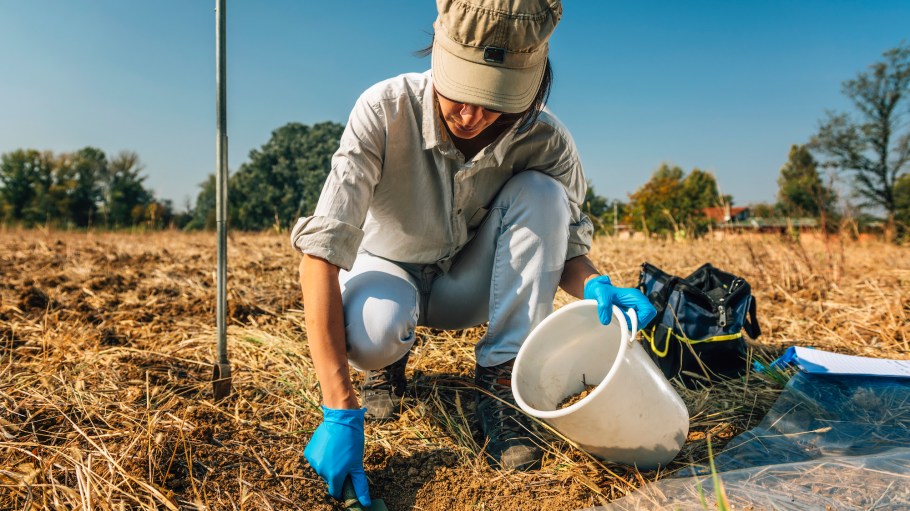
Regenagri wants to help farmers monetize sustainability.
The global regenerative agriculture program launched what it calls the world’s first global carbon insetting program, which gives farmers and growers a way to monetize sustainable practices through Regenagri certification.
Carbon insetting allows companies to reduce their carbon footprint and emissions by investing in initiatives such as regenerative agriculture, reforestation and renewable energy within their supply chain. Through Regenagri’s program, certified farms and growers can tap into those investments to benefit their businesses.
Related Stories
Regenagri CEO Franco Constantini said that an initial group of producers across the U.S., Brazil, India, Turkey, Ivory Coast and Pakistan have joined the program, representing 871,827 acres of farmland.
“This group includes different types of Regenagri-certified organizations, from individual farms to smallholder collectives and farm cooperatives, growing a diverse range of crops, including cotton, coffee, nuts, soybeans, sugar and cereals,” he said.
The carbon insetting initiative builds on Regenagri’s global certification program, which allows farms to verify and be recognized for the regenerative agricultural practices they use.
“As part of the Regenagri annual certification process, farms undergo annual third-party audits to validate their greenhouse gas (GHG) and carbon reduction data, according to approved methodologies and protocols including the GHG Protocol and IPCC (Intergovernmental Panel on Climate Change) principles,” Constantini says.
Olam Agri’s Ivory Coast-based cotton operation, which is a major supplier to the U.S., is one of the initial participants in Regenagri’s carbon insetting program.
“By embedding carbon reduction directly into Olam Agri’s supply chain, this localized approach drives measurable environmental, social, and economic benefits,” said Mahesh Ramakrishnan of Olam Agri. It empowers farmers, enhances community resilience, and restores ecosystems, creating a holistic model for sustainability.”
Quarterway Cotton Growers in Texas also joined the initial class of carbon insetting farmers, and CEO Todd Straley says the program will allow growers to do more to improve sustainability.
“We believe innovation and collaboration are key to progress in agriculture,” he says. “With this partnership, our farms can help solve the world’s carbon issues.”
Innovation has fueled Regenagri’s approach to improving sustainability in the textile supply chain. Last year, the outfit partnered with Swiss product traceability company Haelixa to apply their DNA marking technology to textile fibers and raw materials.
Over the past year, Regenagri saw a fivefold increase in the number of farms and supply chain operators adhering to its regenerative agriculture standards. According to the organization’s impact report, that translated to the area of land under its certification tripling from 487,000 hectares in 2022 to more than 1.46 million hectares the following year.
Regenagri estimates that by the end of 2025, the carbon insetting program is expected to expand to 1.5 million acres of farmland, generating more than 600.000 carbon insetting units.
“For those registered for the insetting program, carbon insetting units will be issued based on the reduction in carbon footprint—offering the opportunity of an additional financial benefit to producers, as well as benefitting the planet,” Constantini said. “The insetting program also provides supply chain organizations with the opportunity to decarbonize their supply chains by purchasing carbon insetting units generated by the very farms they source from. This ensures direct impact.”