From classic tartans to velvet bows, Christmas 2025 will be remembered as the moment the nostalgic “Ralph Lauren aesthetic” fully went viral. Editorials dissected how to achieve the brand’s traditional, patrician look, while TikTok and Instagram filled with home décor hauls inspired by the label’s timeless Americana.
While the initial surge began in November 2024, the trend reached new heights during the 2025 holiday season. According to Kendall Becker, Trendalytics fashion and beauty director, online conversations mentioning Ralph Lauren jumped 400 percent year over year across Instagram and TikTok.
Related Stories
At 86, Ralph Lauren isn’t coasting on legacy—he’s still shaping the cultural and commercial conversation.
The American heritage label ranked No. 9 on The Lyst Index’s hottest brands of Q3 2025, fueled by a 6 percent surge in search interest and a viral pop-culture moment when Taylor Swift’s engagement announcement—made in a striped Ralph Lauren dress—“became an online flashpoint, blurring the line between celebrity endorsement and skillful brand storytelling,” according to the premium shopping app.
The buzz is translating into business. The company exceeded fiscal third-quarter earnings projections. Q3 net income rose 21.6 percent to $361.6 million, with adjusted earnings per share rising to $6.22—42 cents ahead analysts’ forecast. In North America, revenue increased 8 percent to $1.1 billion. In Europe, revenues were up 12 percent to $676 million, and the topline in Asia expanded by 22 percent to $620 million.
That kind of global pricing power, said Christine Rucci, founder of Godmother NYC Inc. and former Ralph Lauren designer, is something few brands today can sustain. Rucci ran the denim category for the company and was the former product design director at Double RL in the late ’90s to early 2000s.
Rucci describes a Ralph Lauren purchase as “an investment in fashion that can be worn year after year,” adding that the brand’s quality and designs stand the test of time compared to fast fashion. “A cable knit sweater bought 40 years ago is relevant today,” she said.
However, for the Ralph Lauren aesthetic to go viral during the holiday season made sense to Rucci.

Hallmarks of the brand, such as the Polo bear, tartan and a classic prep school color palette of pine green, red and navy, are Christmas-adjacent themes. Decorating a Christmas tree is like building an outfit, Rucci noted. You start with foundation ornaments or ones with a personal meaning—like jeans—and begin to add on layers, she explained.
“I think we all feel nostalgic for old-time family Christmas, baking cookies, drinking hot cocoa and that [was reflected in the Ralph Lauren Christmas trend],” she said.
Sign of the times
Ralph Lauren Christmas was just the tip of the iceberg for young consumers.
It’s no coincidence that a brand so deeply entwined with the American Dream has re-entered the zeitgeist at a moment when that ideal is increasingly slipping away. Ralph Lauren’s archive aligns seamlessly with today’s fashion climate: high quality, enduring design, genderless appeal, a safe but exciting purchase.
To label Ralph Lauren a “viral trend” is something of a fashion oxymoron. The brand’s codes are so deeply woven into American style that they function less as moments and more as a foundation. They continue to inform young designers working across denim, sportswear, streetwear, and evening.
The designer’s embellished cavalry jackets of the ’90s paved the way for this season’s military-inspired blazers; his ornate denim from the early 2010s foreshadowed the fabric’s elevation to haute couture status on current runways. And the iconic American flag sweater seems perpetually poised for revival, ready to resurface in whatever coastal aesthetic Gen Z decides to obsess over this summer.
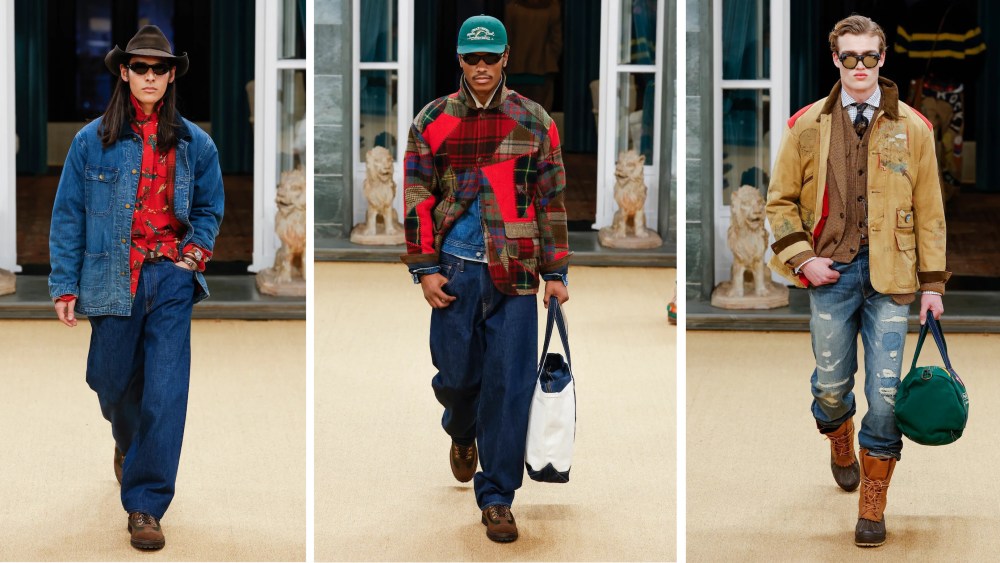
Ralph Lauren’s Fall/Winter 2026-2027 men’s show, presented last month during Milan Fashion Week Men’s, was a study of these signatures and how they’re evolving for a younger audience. Polo Sport rugby shirts, varsity knits and embroidered corduroy pants were followed by leather racing jackets, suede fringe, tuxedos and jeans marked with paint.
The runway show’s star-studded front row—ranging from 56-year-old Colman Domingo to 21-year-old “Stranger Things” star Noah Schnapp—underscored the brand’s cross-generational appeal.
The brand’s influence can arguably be seen in areas across men’s and women’s fashion, including the Western trend that has touched just about every fashion and accessories category and price point during the last two years. The American West has long been a source of design inspiration for the label, evident in everything from suede fringe skirts, denim Western shirts and Southwestern-style blanket fabric coats to hand-tooled leather belts and engraved watches.
Boho—from the tiered fiesta skirts in Ralph Lauren’s Resort 1982 collection to the dark floral prints and ruffles in the Fall/Winter 2010 RTW collection—has also orbited the brand’s Western fare.
While the cowboy aesthetic is saturated in the market, Rucci anticipates that Ralph Lauren’s eye for “English prep school riding mixed with military and a hint of grunge” will resonate in 2026.
Tartan aligns with all those aesthetics and plaid is already proving to show its strength. “We’re expecting a strong year for plaid, given the attention on heritage styles,” Becker said. “Currently, plaid is up 31 percent in average weekly searches in comparison to last year and up 6 percent in market adoption across brands and retailers.”
Checks and tartan were also abundant at Pitti Uomo earlier this month. Recent data from Heuritech also supports this forecast. The AI-powered trend insights firm reported that interest in checks among EU women increased 20 percent from November to December 2025. Worldwide adoption is the strongest in Japan, China and South Korea—regions that strongly influence the direction of global streetwear and denim trends.
Relaxed bottoms with rolled cuffs, shrunken knits, cropped jackets, belted jackets, riding coats, and bandana neckerchiefs are some of the Ralph Lauren signatures Rucci says are destined for a resurgence. She also sees growth opportunities for items from discontinued lines, such as boy-sized polos from the Ralph by Ralph Lauren and Victorian and military-inspired styles from the Denim & Supply.
Ralph Lauren’s enduring love for rugged denim has long been a through line in his all-American vision. His personal uniform—denim shirt and jeans—has been documented for decades and consistently echoed on the runway. “Whether it’s resin rinse selvedge, destroyed, patched, or embellished, Ralph Lauren has made reproduction vintage denim an art form, Rucci said.
Becker added that the Ralph Lauren revival opens a window for more traditional fabrics. “While much of the market is leaning into softer-handed denim, Ralph Lauren makes the case for classic, stiffer denim that creates a more structured look,” she said. “Their washes are typically mid-tone, dark wash, and white/cream rather than the light washes seen at more Gen-Z-centric brands.”
Additionally, Rucci feels strongly that black-black denim will be strong, particularly as Canadian tuxedos, which remain a fixture in Ralph Lauren collections for decades for men and women.
Democratic fashion
“While Ralph Lauren was synonymous with this holiday season, we expect it to still have its place within the zeitgeist of 2026. From consumer behavior to styling, there’s a shift to simply: slowing down, being present, and dressing with intention––all facets aligned with Ralph Lauren. Their ability to make heritage feel relatable and contemporary is unmatched and will do well this year. Because it’s made such an impact this year and scored emotionally with consumers, they’ll continue to adapt and seek out new styles,” Becker said.
Despite its relatability, Ralph Lauren also remains aspirational. Rucci said the brand represents old money and prosperity.
Though it is a sartorial symbol of wealth, it is possible to shop Ralph Lauren—and all its sublabels—on the secondhand market. Original owners have held onto the brand’s classic knits, graphic tees and jeans, and their perceived value means they are less likely to end up in a fast-fashion wasteland. Rucci added that most of the brand’s jeans are made with 100 percent cotton heavyweight denim—built to last—which very much resonates with consumers’ growing awareness for durability and quality.
Additionally, the brand’s tiered pricing allows a wider range of consumers to own a piece of the Ralph Lauren lifestyle.
Young consumers are shopping the look for less, and in the process, using the brand’s heritage to create a new and modern style.
“Ralph Lauren’s style is about layering and building your look to create your personal style,” she said. “I found my style after working for Ralph, and his words to me were: You have to look backwards to be forward.”