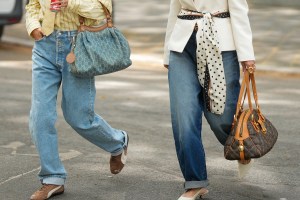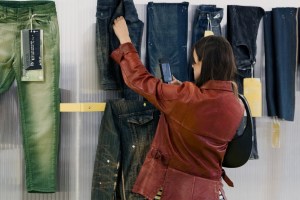
As consumer wallets are stretched thinner amid inflation and tariff-related pricing bumps, they need more convincing to add new jeans to their wardrobes.
“Everyone is willing to consider denim as a daily wear category,” said Dennis Hui, global business development manager, denim at Lenzing. “But on the other hand, the buying power and also the lifestyle of the people, they’re not willing to buy so many new garments.”
Mills and manufacturers are responding to this cautious consumer mindset with product development that offers something shoppers don’t already own. In what is currently a highly competitive industry, mills and their brand customers therefore need more than the standard blue jean to stand out and meet consumers’ trend-focused preferences. “Previously, it was more into the authentic denim. Now the brand is moving towards more novelties,” said Moeed Usman, assistant vice president fabric sales at Crescent Bahuman Limited (CBL). “Now people are more and more thinking of the newness, rather than just going for the basic five-pocket denims.”
Related Stories
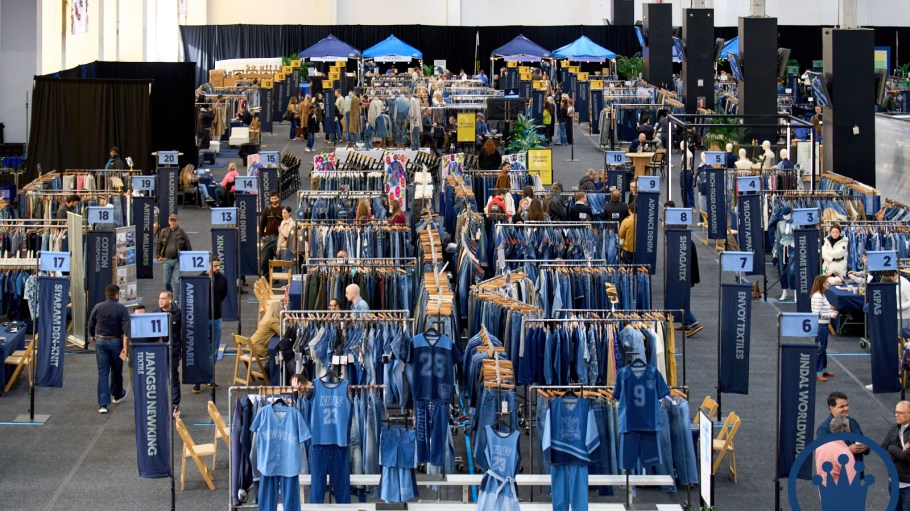
On the floor at Kingpins Show New York last week, suppliers from around the globe presented newness in different forms for the Spring/Summer 2027 season.
Differentiation can come from visual design details. Some producers spotlighted their printing capabilities, allowing for designs like multicolor florals or patterns. Others leaned into jacquard or dobby weave effects, creating patterns including stripes and herringbones and surface textures. Some collections added sparkle via lurex blends and rhinestone embellishments, while others incorporated patchwork and destruction. Mills and manufacturers also played with color, including creating white denim styles in line with Pantone’s Color of the Year, Cloud Dancer.

Noting the growing trend toward fast fashion, garment manufacturer Bitopi’s chief operating officer of TAL, Kamal Uddin Mia, said that basics and big quantities are on their way out. Sharing a similar sentiment, Meko Denim Mills’ Rizwan Aslam Khan, general manager of marketing, explained that customers are following what fast-fashion players, such as Inditex, are doing.
“Customers are now wanting more change in the product every now and then. With the social media, with the technologies over there, everybody wants to be in the trend,” said Sabur Iftikhar Qureshi, manager sales and marketing, North and South America at Artistic Fabric Mills (AFM), adding that it has turned into a “fashion-oriented business.” Whereas brands used to refresh their product two or three times a year, this pace has picked up.
Newness also comes through in novel material compositions. For Spring/Summer 2027, mills created blends with linen, giving a luxe touch to jeans. Advance Denim is among the early mill partners for Lenzing’s Tencel Lyocell – HV100 fibers, which mimic the look of cultivated natural fibers like cotton by incorporating varied fiber lengths. NZ Denim integrated Filagen, a fiber made from fish scale collagen peptides that gives garments properties like UV protection and deodorizing.
While not visible in a garment or swatch, sustainability offers another path toward differentiation. However, getting customers to shell out for environmentally friendly solutions in the current climate can be difficult. Combatting this, Siddiqsons has introduced two sustainable solutions that are cost neutral: Cryo, a room temperature sulfur dye method, and CleanKore dyeing technology that saves water and energy. “Everybody wants to be sustainable, but if your consumer can’t afford it, then it doesn’t matter,” said Scott Gress, president North America at Siddiqsons.
Budget-conscious newness is ruling the day.
Monica Betancur, marketing, merchandising and product manager at Kaltex, noted that fabrics don’t need to be expensive, but the characteristics that matter are differentiation and touch. “The hand feel is very important,” she said. “Everything is super cozy and super thin, and you feel comfortable.”
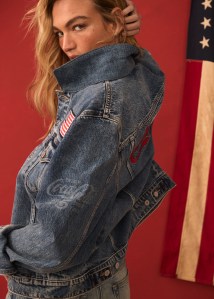
At the same time as more maximalist designs take hold, the heritage look trend is hanging on. Per AFM’s Qureshi, the “authentic American look is still alive,” particularity for the U.S. market. Mills are recreating the look of jean fabrics of the ‘70s, ‘80s or ‘90s with constructions that offer enhanced comfort. For instance, XDD’s Souffle solution uses low-twist technology to get a “fluffy” hand feel while retaining a vintage look. Cone Denim has created vintage-look fabrics with visible yarn texture that are modernized through a lighter feel and blends containing Tencel Lyocell.
Calik Denim’s answer to this comfortable vintage concept holds some of the mill’s recent bestsellers. “Last couple of years, we are very keen into our comfort during the day and night,” said Selen Baltaci, marketing manager at Calik Denim. “That’s why it’s very important for us to feel comfortable in denim as well.”
After seeing active brands embrace casual wear for beyond the gym, Panther Denim has leveraged its capabilities in denim, piece dye and active fabrics to create a hybrid. Woven materials with high stretch are given denim wash down treatments to bring that look to non-denim apparel like leggings. “We’re trying to grab the best ingredient from each category and bring it to others, trying to create the newness,” explained Sam Chan, assistant sales director at Panther.
Advance Denim’s director of North American marketing, Mark Ix, noted that while buyers expect to see innovation on the show floor, it sometimes takes time to reach adoption. Solutions and newness also cannot be too expensive, so development must hit a pricing “sweet spot.” With tariffs especially, margins are being squeezed and there are “value concerns.”
“Value doesn’t necessarily mean cheap or inexpensive or low priced,” said Siddiqsons’ Gress. “It just means that for whatever it is, the perceived value has to be really excellent. You can’t have something that’s ordinary and expensive.”
With margin expansion an oft-cited goal for its brand customers, AGI Denim’s vice president of marketing and product development Henry Wong noted this has become “twice as hard” because it not only includes product price engineering but tariffs. “Our customers are looking for sharper prices,” he said. “They’re also asking us for innovations that can help support their pricing strategy, because one of the ways they’re protecting IMU [initial markup] and average selling costs is through less discounting.”
With a range of customer bases, manufacturers were divided on whether mass or premium will drive the market.
“People are looking for something more unique and individualistic. So I think premium is where there is more movement now, and even all the mass is looking to go more premium…they’re looking for something that is little bit more unique,” said Siddharth Sinha, founder and executive chairman of Vogue Velocity Group. “However, given the price pressure, tariffs and all that stuff, there is that other side that keep cutting the product down to the very basic.”
Amid tariffs, as suppliers shoulder at least some of the cost increases, volume is appealing in the U.S. to make up some of the difference. “Eventually, if you’re doing volume business and then absorbing more cost, there would be a point that you can make slight profit on it,” said AFM’s Qureshi.
Johnny Lou, vice president, marketing and R&D at Tuong Long Denim, said that while the market is seeking out large volumes for a reason, the premium market offers the opportunity for image and reputation building.
Stretch shifts
Despite buzz about the return of the skinny jean, the market has not reverted to high-stretch fabrications.
“Stretch made a comeback, but it was for a very, very brief period, just for one season, and that wasn’t even a big time, that was on a limited scale,” said CBL’s Usman.
Echoing that, Najam Saqib, head of R&D at NZ Denim, said that while in previous years, high stretch was more common, this has shifted. “From last year we have seen again the baggy fits, the loose weave fabrics and all the rigid fabrics are coming back,” he said.
As styles lean toward looser fits, rigid options remain popular. For slightly more fitted silhouettes—such as straight legs that hug the thighs more—a small percent of comfort stretch is increasingly coming in. This adds some give in the top block—the upper part of the jean that sits on the waist and hips. For instance, Advance Denim’s Reflex line incorporates Lycra’s VintageFX dual core yarn, which is designed to create vintage looking jeans that offer comfort stretch with improved performance, including better recovery.
Per Andy Shaw, director of business development, Americas at Nishat Mills’ denim division, one recent evolution has been adding a touch of stretch to roomier silhouettes, departing from the usual rigid constructions for baggy jeans. “We’re starting to edge back up in stretch again,” he said. “We’re not in the high stretch that we were maybe five years ago, but we’ve also moved on from the rigid.”
Although it’s not the style du jour, high stretch is still actively sought out by certain customers. “It hasn’t gone away,” said Siddiqsons’ Gress. “It’s gotten smaller, but that customer is always going to be there.”
For styles like bootcuts and low-rise silhouettes for women, Cone Denim has seen market adoption of 50 percent stretch fabrics, giving some more hold. “There’s always expansion whenever there’s a shift in silhouette,” said Sarah Posluszny, product design manager at Cone Denim. “Stretch fabric is where the expansion really is in spring/summer.”
Katie Tague, senior vice president global marketing, client relations and sales at Artistic Milliners, sees stretch being incorporated in a functional way, such as her mill’s use of Lycra’s FitSense technology that provides shaping. “If the stretch can meet the functional needs, then stretch ends up being applicable,” she said. “Otherwise, the rigid, non-stretch fabrics are definitely taking a much bigger share of the pie now.”
There is a gender divide on stretch, with a few mills noting that men are gravitating toward slight stretch while women opt for rigid jeans. “[Men] finally got a taste of the comfort, and it now looks so authentic, it’s ticked all the boxes that they needed, and so they don’t want to go back,” said Tague. “The pendulum hasn’t swung like it has for women’s, because women’s had stretch for so long.”
The divide is also seen across generations. Kaltex’s Betancur sees teens gravitating more toward rigid jeans, while Rajesh Gupta, creative director of Arvind Limited’s denim division, sees younger shoppers going for comfort stretch and more mature customers opting for higher stretch.
Everything is cyclical, and high stretch is bound to come back. Mill forecasts diverge, with executives saying it could be a couple seasons, years or a decade from now. In the meantime, high-stretch product development hasn’t stopped, and some mills are working on solutions to be ready for the wider return of slimmer styles.
On the map
In sourcing, risk mitigation and diversification remain popular game plans. “There’s a lot of sourcing shifts that are happening right now because of the uncertain tariff landscape, and everybody is just ensuring there’s a mitigation strategy in place for many different scenarios,” said AGI Denim’s Wong. He noted that many companies are adjusting to the tariff situation as the “new normal.”
From its vantage point in India, Raymond UCO has seen production moving to places like Pakistan, Sri Lanka and Bangladesh in South Asia as well as Egypt, the Middle East and Vietnam. “We’re facing this tariff issue, so the brands are [considering] shall we place the orders, or do we move to other Asian countries, which is becoming a significant task for us to retain the customer,” said Syed Parvez, head of marketing and sales at Raymond UCO. “Our capacities can’t go idle. We’re finding ways out how we can partner and bring in a strategic relationship to continue the business.”
Manufacturing in Egypt, Velocity has seen increased interest due to the country’s comparably favorable tariff rate. “We’ve seen people looking at us, as compared to other areas, they can add a little bit more value and then still get the same pricing,” said Sinha.
As their customers are diversifying, mills are also expanding beyond their initial locations. Panther Denim’s booth at the show spotlighted its recent Cambodia opening, and Advance Denim is “bullish” about Vietnam and is building up capacity in the country. In the Western Hemisphere, Artistic Milliners recently acquired a majority stake in Cone Denim, planting more roots in Mexico.
Manufacturers are also widening their customer bases. Panther Denim has gone beyond its typical U.S. focus to target the EU, Japan, China, Australia and Canada. Bitopi has seen U.S. customers grow by 10 to 15 percent in the last few years, and Bangladesh is the leading origin for denim garments in Europe. But there are also opportunities in Colombia and Mexico, per Mia. Both Bangladesh-based NZ Denim and Pakistan-based AGI Denim have entered Australia as a newer market. Located in Pakistan, Siddiqsons is seeing an uptick in inquiries from Mexican manufacturers for programs staying in the domestic market.
Countries like India and China are also coming into their own as denim consumers, creating new opportunities. From TL Group’s Lou’s point of view, denim is still “hot” and the “cake is getting much bigger than before.”
Even though reaching the U.S. market has become more expensive for many suppliers, it remains a key destination for the manufacturers showing at Kingpins. Some major denim brands had solid holiday seasons and fourth quarters, which manufacturers expect to see lift the market either already or soon.
CBL’s Usman noted that the U.S.—one of its biggest customer bases—is on the upswing after a period of softening and cautious underbuying. “We were seeing a decline in the U.S. sales, but now it’s all picking up. So last two quarters was not very good in terms of the U.S. sales, but now for the last quarter, we have seen a good, rapid growth.”
It’s a challenging time for denim, but Arvind’s Gupta noted the category is growing. “Denim is in a good space right now,” he said. “Our markets are growing, not in a big way, but in a slower, incremental way. So there was a time when denim was low, but it neutralized or came back.”