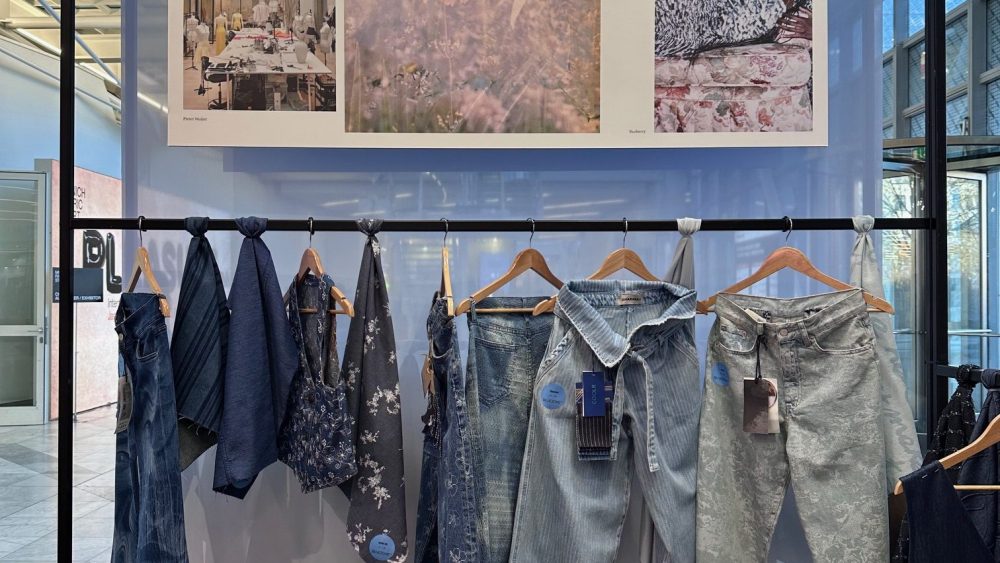
From trade tensions and shifting sourcing strategies to evolving fabric trends, Bluezone in Munich once again served as a barometer for where the denim industry is headed.
Rising labor and energy costs and a “too high” inflation rate are some of the factors driving Turkish companies and global brands into Egypt. The complex situation in Turkey has made it difficult to offer customers the right price, Dilek Erik, Sharabati Denim’s global marketing manager, said, adding that “profit is decreasing.”
Related Stories
This shift was evident at Denimandjeans Egypt last month despite it overlapping with Kingpins New York. Erik said most U.S. customers were in Egypt instead of New York, there to attend the show and tour factories.
Sharabati saw Egypt’s potential as a denim destination years ago. Though the company has factories in Turkey, its headquarters are now in Egypt. Next, the mill’s founder Mohamad Sabbagh Sharabati is turning his attention to his native Syria where Sharabati will start production later this year.
The state of sourcing is in a constant flux due to geopolitical issues, according to a Diamond Denim representative. Though the Pakistani mill hasn’t been as negatively affected by tariffs compared to countries like China, he said clients expressed concern last year when tensions between Pakistan and India spiked. However, he added that neither country is interested in starting a war.
“Anytime there’s something wrong in China, we see business pick up and vice versa,” the rep added.
Despite 2025 being a tumultuous year for Chinese goods to the U.S., Lucas Van de Woestyne, Freedom Denim’s marketing director for Europe, said Freedom Denim’s U.S. business is “running well.” The main difference, he noted, is that the mill is shipping fabrics out of China more often to be made into garments outside of China. “We have a big network of countries that we ship to,” he said.
The industry is adjusting to new ways to source and produce denim.
Chemical manufacturer SABF is challenging traditional dye processes. The Pakistani company showed Denim Reborn, an organic indigo dye alternative; Aqua Care, a waterless dye that saves 98 percent water compared to conventional dye processes; Snow Black, a temperature-free sulphur black and more.

While SABF has stayed out of the trade show circuit up until now, its products are already widely used by leading Pakistani mills like Soorty, Artistic Milliners, AGI Denim, Rajby and Siddiqsons, and H&M launched products made with Denim Reborn last year.
“We wanted to prove the product and build confidence,” said Muhammad Raza Khemji, the company’s executive director, south region.
Whether its chemicals or trends, the market is eager for new ideas.
While demand for soft and authentic fabrics remains strong—Sharabati achieves both through fiber blends such as Tencel, Egyptian cotton and hemp—Erik said there is a shift in aesthetics.
“Customers are bored with marbled looks,” she said.
The mill is injecting newness with transparent coatings that give fabrics a slight shine and soft touch as well as stripes, herringbone and other knit-looking weaves. The mill is also seeing interest in a new “streaky” collection that uses two different shades of indigo on the warp. “It’s a little aggressive, but people are asking for it,” Erik said.
Freedom Denim plays into summer dressing with indigo yarn dyed shirting weights, double and triple gauze weaves and soft touch cotton fabrics achieved without additives. Cotton, Tencel and linen are used throughout as well as ramie, a less expensive and more accessible alternative to linen. A 100 percent lyocell chambray, a 50 percent linen and 45 percent cotton and a 50/50 cotton and ramie blend are especially popular.
Crosshatch, chunky twills, indigo stripes and sulfur dyes that wash down from clay to pink give denim a fresh look. Overall, Van de Woestyne said clients are shifting away to salt and pepper looks to cleaner “back to basics” fabrics.
Flocked and coated denim are seasonal standouts for Istanbul-based textile manufacturer Rota Textile. Ozan Kaya, the company’s marketing and business development manager, added that the company is in the process of developing a corn-based PLA yarn.
Nature inspires Diamond Denim’s color palette of brown, beige and olive. A collection of ecrus in varying weights, printed linen and yarn dye fabrics with colorful wefts add to the novelties.
Iskur Denim focused on fabric collections that provide brands with opportunities to create marketing stories around their products, including color denim. A representative said overdyed green and brown in a variety of constructions tell a strong visual story.
The Turkish mill’s cashmere blend (93 percent cotton, 5 percent cashmere and 2 percent elastane) is also finding an audience with premium brands despite its higher price. The fabrics cost $3-$4 more per meter than traditional fabrics.