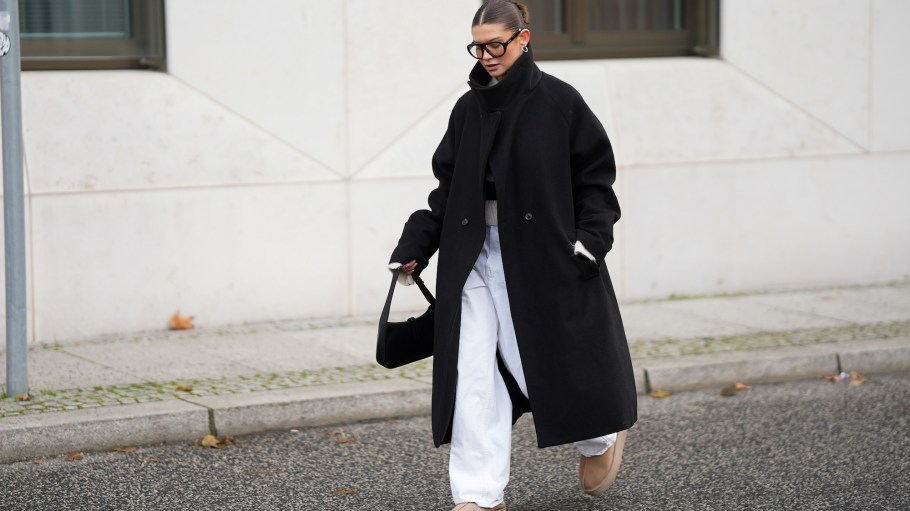
At first glance, Cloud Dancer—the controversial version of white that Pantone named the Color of the Year for 2026—can feel devoid of the emotional charge and creative energy fashion thrives on. During a period when brands and retailers are already struggling to convert scrolls into sales, the quiet restraint of such a soft, lofty white risks falling flat, missing the urgency the industry commands.
Denim presents one of the clearest opportunities for Cloud Dancer to gain traction. Neutrals have long anchored denim collections, and while white jeans are traditionally associated with summer, today’s increasingly blurred fashion calendar—combined with a renewed demand for elevated basics—opens the door for this understated color to make a meaningful impact.
Related Stories
As designers and brands look to translate white into a commercial denim reality, the technical considerations behind achieving the correct color come sharply into focus.
Fabric selection
Bill Curtin, owner of BPD Washhouse Inc., says it is always good to source from a denim mill that has the capability to run white without contamination from indigo dyed denim. “This way you get true white denim,” he said, noting that most mills follow proper protocols to produce white denim without issue.
“I rarely run into problems purchasing white denim,” he added.
When selecting fabrics, Matteo A. Urbini, managing director of Soko, suggests designers look at the shade of white before and after washing, besides the structure of the denim. “Even if white is white, it is precisely in the nuances of this non-color that sophistication and refinement emerge,” he said.
As with traditional indigo denims, Kristie Rhodes, Cotton Incorporated’s manager, woven product developments, said consideration should be given as to the type of garment the fabric will go into. She added that a denim that is undyed, or left natural, is called a bull denim. Bull denim can share many of the same characteristics as an indigo or sulfur dyed denim, including durability, slub yarns, a variety of weave structures such as 3×1 twills, broken twills, plain, oxford and basket weaves, as well as comparable weights ranging from 8 oz. to 15 oz. or more.
“White denim is more commonly achieved by bleaching bull denim fabric. In some cases, optical brighteners are added to make the white fabric appear even brighter. When a specific natural or white shade is needed to match a color system hue, the fabric may be dyed after bleaching to achieve the desired match,” Rhodes explained.
Bale management advice for white denim is the same for any product, according to Vikki Martin, Cotton Incorporated VP, fiber competition. Martin said consistency in controlling the +b (yellowness) and micronaire (because fineness and maturity impact perception of color) are key to ensure a uniform level of white or “natural” after scouring.
For undyed or natural denim, Curtin said the variable will be the amount of “trash requested.” Shade bands on natural will need to be wider since variation is unavoidable no matter the quality of cotton. He pointed out that it’s also challenging to adjust the natural tone in the wash.
In the laundry
Producing white denim is no less complex as its indigo counterpart. White denim poses its own set of challenges to trouble shoot in the laundry.
“Scouring/bleaching is much more critical than selecting any particular cotton variety. Likewise, avoiding a yellow or grey cast is more related to wet processing than fiber quality control,” Martin said.
Urbini described yellowing, which commonly occurs after oxidation process such as ozone, hypochlorite and permanganate, as “the enemy of white.”
There are several factors that can contribute to the yellowing of fabrics. Enzymes, softeners and resins all pose the risk, Curtin said.
“The types and amounts of finishing products such as softeners should be vetted carefully to minimize the detrimental effects of garment wash processes on whiteness,” said Buddy Garrett, Cotton Incorporated’s associate director, textile chemistry research. Certain finishing chemistries are more prone to yellowing than others, so the ability to maintain whiteness in each finishing process can be product specific.
“Some softeners can negatively affect whiteness if they are not processed correctly. Typically, softeners should be applied with a slightly acidic pH (pH< 6.5) to minimize yellowing during processing, drying, and storage. Some resins require higher temperatures for curing which can affect whiteness as well. Careful selection of softeners and resins is necessary to minimize the effect of these on long-term color stability of white fabrics,” Garrett said.
Higher drying or curing temperatures can also contribute to yellowing. Any finishing processes that require lower temperatures to process are safest.
Though the processes and poorly performed neutralizations of oxidizing agents can lead to discoloration, Urbini said it can be avoided. “Good preparation is essential to reduce subsequent yellowing. Preparation can also be done at the garment stage, but this involves washing, which isn’t always required,” he said.
Soko has developed specific products for this problem, including SuperCast, which completes the neutralization of the oxidizing agents, removes the residues and eliminates yellowing. Urbini also recommends anti-ozone and low-yellowing softeners. He added that non-specifically designed softeners can affect have a long-term color stability as well as some resins.
Garrett said newer preparation systems that utilize enzymatic bleaching and better surfactant chemistry packages have progressed in recent years to allow for better bleaching results with less water and chemistry compared to older technologies. However, he said fabric whiteness is often improved with optimized levels of Caustic and Hydrogen Peroxide as well as optimal bleach bath temperature in conventional Caustic-Peroxide bleach systems
“In other words, higher whiteness values required for a bright white are often achieved at higher levels of alkali, peroxide, and bath temperature compared to the whiteness values of a prepare for dye (PFD) bleach,” Garrett said.
Whether its winter white or summer white, Curtin said white denim is a staple.
Though Pantone’s Cloud Dancer skews cool ,denim brands may adapt a more natural version of the hue. Urbini anticipate higher demand for ecru denim over pure white, adding that even neutrals evolve with each season. The color is also more aligned with the fiber mixtures brands are pursuing to be more sustainable such as cotton-linen blends.
Ecru emerges as a defining theme in Spring/Summer 2027 fabric collections from Isko Luxury by PG Denim, Candiani Denim, Sapphire Finishing Mills, and Maritas Denim. The widespread adoption of this “non-color” underscores its staying power—whether labeled white, natural, bull, ecru, or Cloud Dancer, this hue is set to endure well beyond 2026.