Electives like sewing and home economics haven’t been eliminated entirely from school curriculum, but many students graduate without knowing simple sewing skills.
A new survey conducted by Levi Strauss & Co. (LS&Co.) found that 41 percent of Gen Z report having no basic repair knowledge, such as fixing a tear or sewing a button, which is nearly double the rate of older generations. Meanwhile, 37 percent of the cohort says not having the right tools or materials is their biggest barrier to repair clothing.
Related Stories
At the same time, 35 percent of young consumers say they would keep their clothes longer if they knew how to fix them. Instead, 54 percent of the consumers surveyed said donation is their preferred option for what to do with damaged or other unwanted clothing.
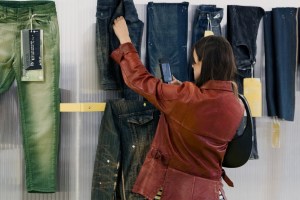
Consumer insights like these are a thorn in the side of brands and retailers such as Levi’s, Nudie, and Uniqlo, all of which have devoted significant store space to repair services and invested heavily in promoting and educating consumers about keeping their jeans in use for longer.

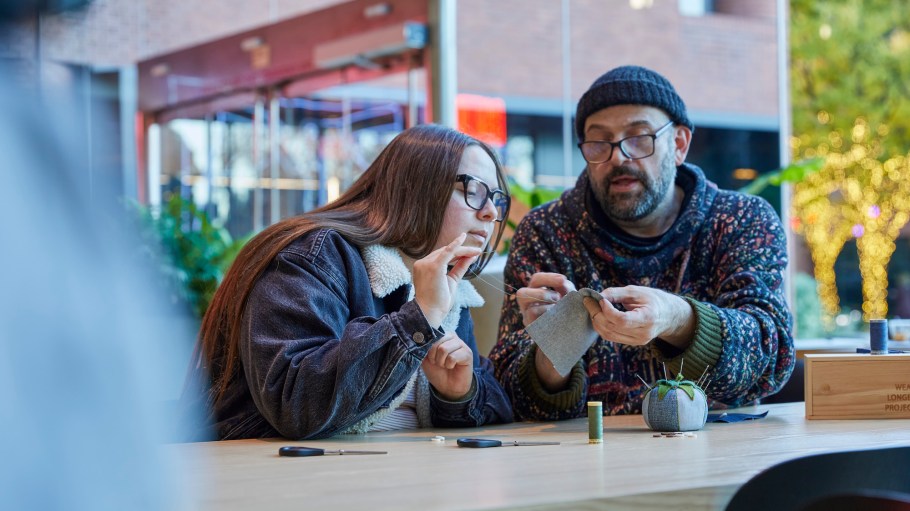
However, LS&Co. is not giving up. On Wednesday, the denim giant kicked off the Levi’s Wear Longer Project, a new national initiative developed in partnership with Discovery Education aimed at equipping students with practical clothing repair and customization skills, from sewing a button to patching a hole or tailoring a hem.
The project provides free resources for primarily students in grades 9 through 12. The curriculum is aligned with national K-12 education standards and is now available to educators and students nationwide on a free platform. LS&Co. employees will also serve as volunteer ambassadors, bringing hands-on instruction into schools and local communities.
In addition, schools using Discovery Education Experience, the cross-curricular supplemental resource, can integrate Levi’s Wear Longer Project directly into classroom instruction.
“At Levi Strauss & Co., we’ve spent more than 170 years designing clothes to be worn and loved for as long as possible. The Levi’s Wear Longer Project builds on that legacy by giving young people the confidence and tools to extend the life of what they already own,” said Michelle Gass, LS&Co. president and CEO. “By building up repair skills within the next generation and emphasizing the idea of durability, we’re helping spark a culture of creativity, sustainability, and pride in taking care of the things we value.”
Wear Longer is launching in Levi’s hometown of San Francisco before it expands nationally. The program will begin with a Wear Longer Project workshop for local high school students at the LS&Co. Eureka Lab. Additional trainings and workshops will continue throughout the year, including activations during Super Bowl weekend in San Francisco.
Ginny Fang, president of Spark, San Francisco Public Schools, said programs like Levi’s Wear Longer Project resonate with students because they are hands-on, creative, and rooted in real life.
“When students can learn practical skills like repairing and caring for their clothes, they’re not only embracing sustainability, they’re gaining confidence, independence, and a sense of pride in what they can create and maintain themselves,” she said.
Consumers will increasingly be called upon to help address the textile and fashion industry’s growing waste crisis. LS&Co. reports that the average American throws away 81.5 pounds of clothing each year, which leads to more than 2,100 pounds of textile waste entering U.S. landfills every second.
Teaching young people with the skills to extend the life of their clothing reinforces LS&Co.’s efforts to use its scale, reach and platform to drive toward a more sustainable, less resource-intensive apparel industry.