Kappahl Group is cutting ties with ripped jeans.
The decision to move away from selling (and producing) trashed denim is rooted in the Swedish fashion chain’s design philosophy, guided by the principles of being made with less—and for more, according to the “fashion fit for life” label owner.
“These principles reflect our commitment to minimizing negative impact on people and the planet, while creating high-quality garments that are durable in both style and material—designed to last and to circulate,” said Sandra Roos, vice president of sustainability at Kappahl Group, the owner of Kappahl and Newbie brands. “One of our key KPIs is the ‘share of assortment enabled for a circular economy’ and we are steadily working toward increasing that share.”
Related Stories
As of April, 19 percent of the Nordic company’s assortment was manufactured for a circular economy, according to the group. The goal is to hit 50 percent, at minimum, by 2026. That includes products designed for durability, reparability and recyclability as well as those offered through secondhand services. Rather than following the recycled trend that sees new jeans made just to be deliberately destroyed, Kappahl suggests considering more clever creations.

“We want to inspire people to explore trends in a sustainable way—to create, reuse and give jeans new life,” said Annika Hedin, creative lead at Kappahl Group. “It’s both fun and important for a more sustainable wardrobe and fashion future.”
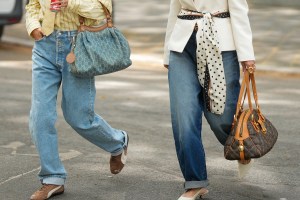
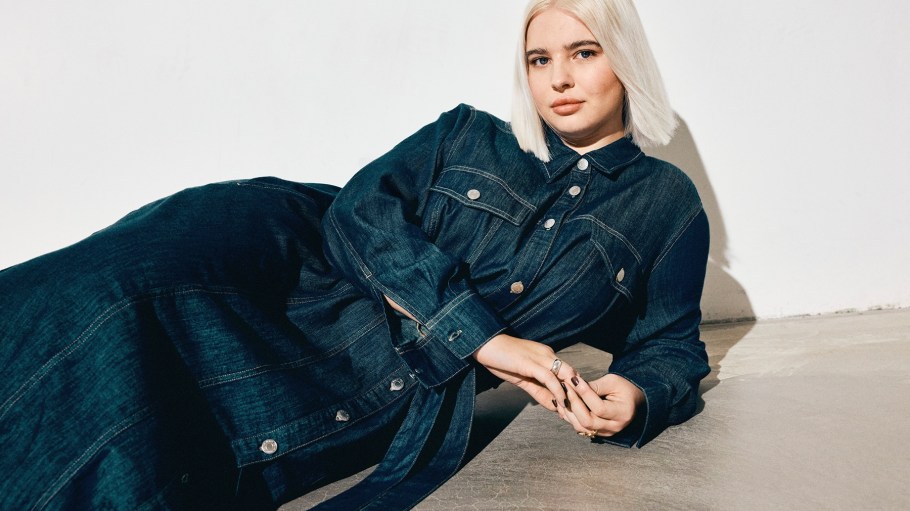
“This season is all about silhouettes, even in denim—from relaxed and baggy to straight and slim, in various lengths, from long shorts to extra-long jeans,” Hedin said. “A new silhouette can bring a sense of freshness while still remaining relevant for a long time. Right now, we’re seeing a wide variety of silhouettes, which is great because it allows for more inclusive fits and personal styles.”
Jeans are a wardrobe staple for many customers, per Hedin, and for the fashion market at large. While new silhouettes entered the fold recently, existing cuts weren’t made to feel flat.
“This makes it easier for customers to incorporate secondhand pieces into their looks and style them in a modern way. Regardless of style, jeans should have a comfortable fit and suit a sustainable lifestyle,” Hedin said. “Our design philosophy is grounded in our customer promise—to create fashion that fits real life—and in the idea of designing for longevity.”
This guides both the fashion influences the company chooses to follow, as well as the creation of functional, emotionally durable garments. For Kappahl, Hedin continued, staying within a consistent style—rather than trend chasing—nets a greater intersectional gain.
“Naturally, we cannot justify producing new garments from virgin materials only to pre-damage them before they even reach the customer,” she said.
On the secondhand scene, Kappahl grew its resale offering last year, which nearly tripled in sales. The group—wholly-owned by Swedish investment firm Mellby Gård—currently sells secondhand children’s clothing in 55 stores across four markets—comprising 16 percent and 13 percent, respectively, of the company’s internal (and conservative) reach of 340 stores across 30 markets. Kappahl offers secondhand clothing, across all categories, online in Sweden through circular software partner reCRQL, with further expansion plans on the horizon.
“We actively share knowledge with other brands and industry players and participate in several collaborative projects aimed at building a more sustainable and circular fashion industry,” Roos added. “One example is the System Demonstrator for a Sustainable Textile System, led by the University of Borås, where we work alongside other brands to test new business models and textile collection systems.”
Since 2023, Kappahl has onboarded almost every supplier to trace their supply chains all the way down to the raw material level—for example, per Roos, identifying the region where the cotton in the group’s denim is grown. In the context of traceability, 96 percent of the group’s 103 Tier 1 suppliers began mapping their supply chains in the TrusTrace traceability tool in 2024.
“This level of transparency was unknown terrain for the group’s suppliers, per Roos, but in “just a few months,” it became a natural part of the daily work; more and more brands began requesting it.
“We’re continuously working to bring our customers along on this journey and help them see the value of traceability,” she said, noting studies show that traceability data adds value and positively influences conversion rates in our online store. “So, while customer awareness is still growing, we’re seeing steady progress in how traceability is perceived and appreciated.”
On the collaboration front, Kappahl is preparing for the upcoming digital product passport through a pilot project with partners, including Brussels-based barcode broker GS1. The nonprofit is a neutral, global collaboration platform for developing and maintaining its own standards, such as DPP.
“Our denim is made with high quality to be worn again and again; creating holes in a newly made garment does not add value,” Roos said. “It also holds additional value in that we offer full traceability, which enables responsible practices regarding working conditions for everyone in the supply chain—that is, everyone involved in making our clothes.”