Can fit contribute to a better planet? That’s the question designers are exploring through Future Fit Forum, an ongoing creative collection organized by Hyosung, the maker of Creora spandex, and New York City-based consultant Michelle Branch.
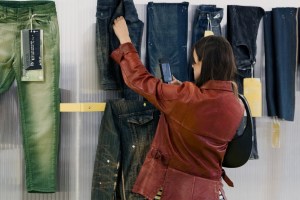
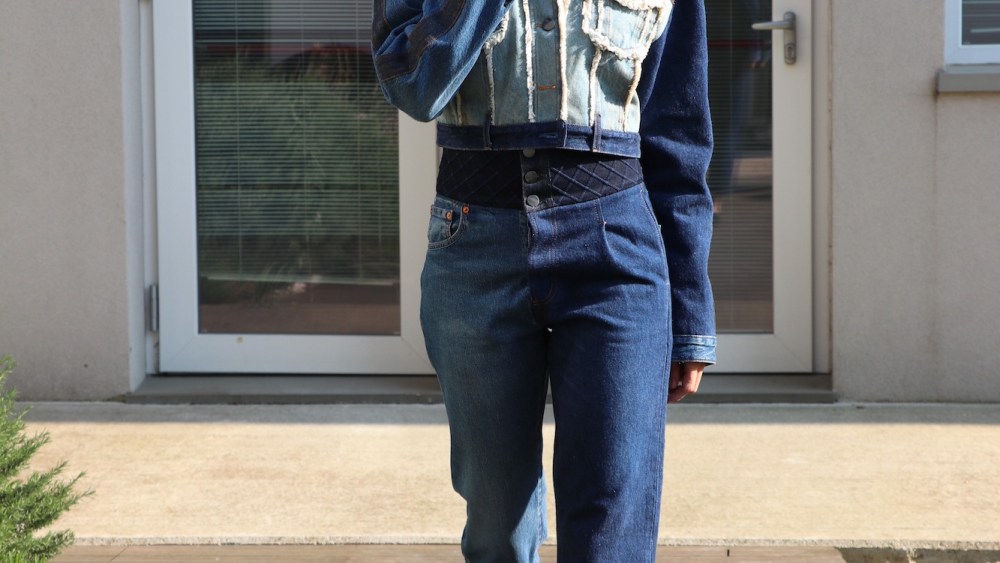
Each season Future Fit Forum challenges a new group of designers from various backgrounds to explore what denim fits may look like in the future. For this cycle, each designer was given two pairs of secondhand Levi’s 501 jeans and two yards of new denim fabric from Soorty made with Creora bio-based spandex to craft their vision. Their garments were displayed last week at Kingpins Amsterdam.
Related Stories
From zero waste patterns and multi-use garments to ways to repurpose existing garments and textiles, Branch said fit should play a larger role in brands’ efforts to reduce waste and keep garments in rotation for longer. “Our industry has made great strides in ingredient and processing developments for sustainability, but very rarely do we talk about fit,” she said during a panel discussion with four of the seven Fit Forum designers.
Several designers chose to construct layered garments in their approaches to fit. Anna Weber, a Germany-based designer and founder of Artworks & Denim, promoted function and the freedom of expression with her convertible designs. Garments feature a system of strings which can be adjusted to change the silhouette. Climate change was a factor, she said, as consumers need garments that can change with extreme weather patterns. Additionally, multi-purpose, versatility garments are likely to stay out of the landfill for longer.
Layers added depth and visual interest to Los Angeles-based upcycle designer Natashia Lunt’s design. For Future Fit, the founder of Showroom 316 culled inspiration from her English heritage by making garments loosely based on protective armor. She partnered with digital printing startup Lab Denim, which prints denim using inks made from micro algae, to recreate a print from a scan of distressed jeans from the 1970s. Lunt said she wanted to combine techniques because “the trick to innovation isn’t just picking one lane.”
“It’s a collaboration and I think if we can all come together and collaborate, then we can make a huge impact on the environment and the planet, and make the industry more accessible,” she said.
Denim veteran Piero Turk plugged into his roots in Italian luxury with garments that utilized the comfort of stretch denim without fitting tight on the body. He chose to focus on classic fits and quality fabrics—two essential qualities for garments that can endure decades of wear and tear.
Turk noted how 3D pattern making is making the fit process more sustainable. “In my time, you would have wasted hundreds of prototypes by testing, mending and correcting patterns… it’s a waste of time, money, energy, everything,” he said. “But if I can imagine with artificial intelligence how it could look, how the denim and fit relate… it’s a big step to avoid waste.”
Margaret Sam, founder and creative director of Sum London, a brand inspired by her British Asian heritage, reworked the fabrics into a traditional horse face skirt. “It’s inspired by the Qing Dynasty and the gold miners who would have been working there during the California gold rush…I wanted a chance to tell that story about them being the one in five of the gold mining workforce, and tie that into the origins of the 501, which is from San Francisco,” she said.
Sam added how the skirt is another way to view workwear, which is often viewed with a westernized perspective as denim dungarees or a work jacket.
Whether its workwear or armor, there are lessons to last to learn from the past about fit, sustainability and building garments.
Lunt said she finds value and inspiration in rediscovering old artists and the origins of things, adding how combining this knowledge with technology is a way to move forward. “History has all the answers, and I think for fashion, especially denim, there’s a lot of things that we can take away from that,” she said.