Diesel’s circularity project with the United Nations is coming to fruition.
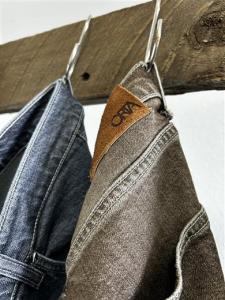
The OTB-Group owned brand is set to market 28,000 pairs of jeans this fall made using a minimum of 20 percent recycled fibers, derived from cutting scraps sourced from its Tunisian supply chain.
Last year, Diesel teamed with United Nations Industrial Development Organization (UNIDO) to establish a closed-loop recycling system for fabric-cutting scraps. The idea behind the project, part of the EU-funded SwitchMed Programme, is to show how production scraps can and should be treated as a resource and that more responsible raw material use can be achieved through circular business models extended to the entire supply chain.
Related Stories
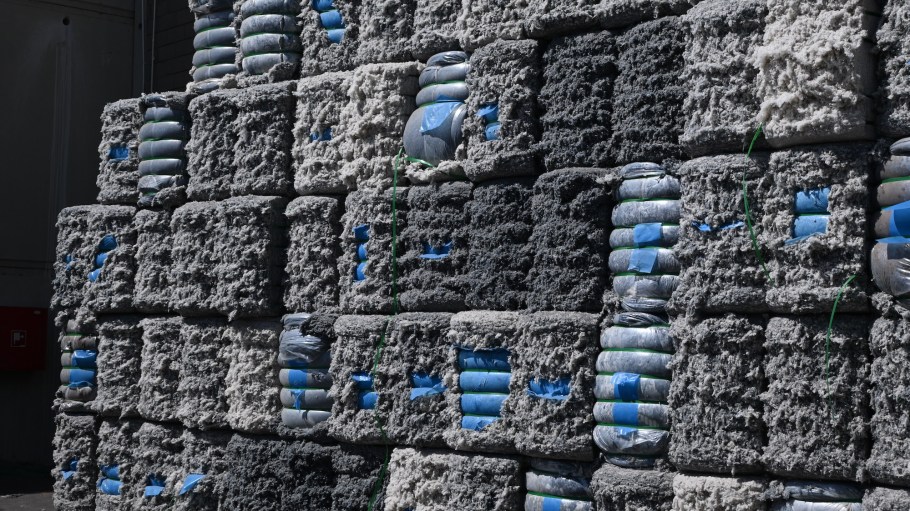
UNIDO and Diesel have primarily focused on establishing a local business ecosystem in Tunisia to enhance the value of pre-consumer textile waste. This begins with the sorting of cutting scraps at the garment factories. The scraps are then converted into regenerated cotton fibers using a mechanical recycling process and reintroduced into the spinning and weaving process for denim fabrics.

Approximately 7,500 kg of textile cutting waste from Diesel’s denim production in Tunisia have been collected and sent to recycling facilities. The 46,000 meters of recycled fabrics these facilities produced were sewn into 28,000 pairs of jeans. A further 4,200 kg of textile-cutting waste has been dispatched to recycling facilities to be incorporated into fabrics for Diesel’s Spring/Summer 2024 collection.
The initiative aligns with Diesel’s For Responsible Living long-term sustainability strategy and supports the brand’s efforts to meet the UN Sustainable Development Goal 12, responsible consumption and production, said Andrea Rosso, Diesel’s sustainability ambassador. “Here at Diesel, we foster creative ways to reuse or recycle products and waste across our value chain and we believe that production scraps should be treated as a resource and a way to create innovation with our own product,” he said.
A recent study commissioned by UNIDO found that Tunisia’s textile industry produces approximately 31,000 tonnes of textile waste, of which 55 percent is classified as scrap. Using recycled fibers could significantly reduce the industry’s environmental impact, including conserving water, reducing carbon emissions, and minimizing the release of hazardous chemicals.
“This pilot project demonstrates that capturing the value of waste within the local supply chain in Tunisia is not only technically feasible, but also economically and environmentally more attractive and beneficial than transporting such waste to other regions for recycling, or even worse discarding it altogether,” said Roberta De Palma, UNIDO chief technical adviser.
UNIDO previously piloted a circular project, also in Tunisia, with Swedish brand Nudie Jeans to refashion second-quality jeans—those with slight defects such as a discolored wash, inconsistent stitching or irregular cuts—into new ones. The project repurposed 6,530 pairs of second-quality jeans into 16,000 new pairs made of 20 percent recycled cotton, more than the 15,000 it initially targeted.