With 10 manufacturing facilities around the world, a multibillion-dollar company like spandex fiber manufacturer Hyosung relies on keeping the operation moving. “That’s a beast that thrives on the same old same old,” said Malvina Hoxha, the U.S. marketing director for Creora by Hyosung.
However, strong industry demand for solutions that will lower denim’s carbon footprint and align with brands’ public sustainability goals could not be ignored. Hoxha said the South Korean company’s $1 billion investment to build the largest bio BDO facility in the world is a result of that demand. The Vietnam facility will be completed in 2026 and will have 200,000-ton capacity.
Related Stories
Hoxha added how working with mill partners’ value chains to identify synergies is the only way to commercialize, educate and bring innovation to the forefront.
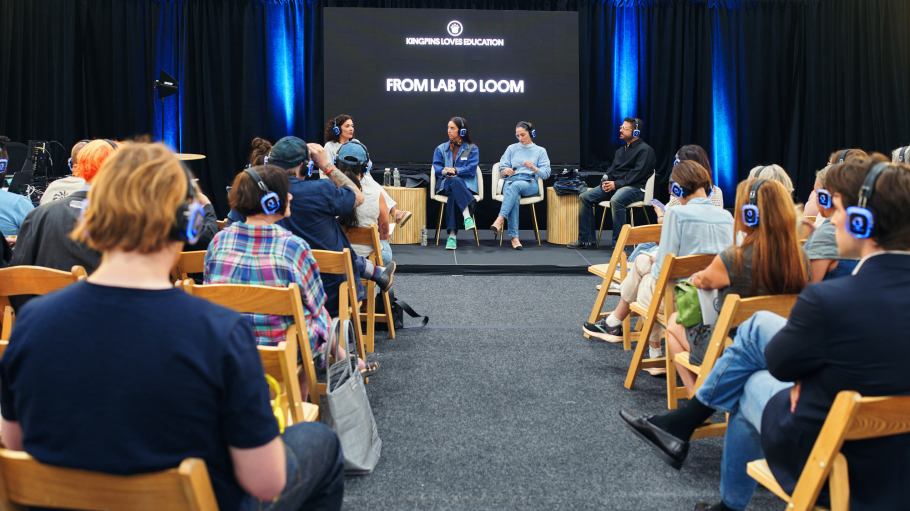
At Kingpins New York, representatives from innovating companies discussed the challenges in bringing a product to commercial reality and how brands can provide support.
“We are at an age of innovation that I’ve never seen before in my career in textiles and fiber, and I think it’s truly exciting, but we have to understand the challenges that it’s taking to bring these products to market and see what we can do collaboratively to make this happen,” said Tricia Carey, moderator and chief commercial officer at Avalo, a North Carolina-based startup that employs AI-powered genomic analysis to optimize certain traits in crops.
Overcoming initial resistance, whether it’s due to cost or uncertainty about the product’s performance, is a persistent challenge for all innovators. The apparel industry can also be its worst enemy waiting for a single cost-effective solution that ticks off all the boxes.
During her time as Stony Creek Colors’ director of impact initiatives and strategic growth, Devon Murrie observed that many brands were reluctant to share the manufacturer’s natural indigo story, even though there were clear opportunities to explore the narrative of U.S.-grown indigo. Companies like Levi’s, for instance, were cautious about spotlighting natural indigo, fearing it might raise questions about the synthetic dyes and chemicals used in the rest of their collections.
Now as director of partnerships and strategic growth at Living Ink Technologies, which has a patented process to transform algae biomass waste into black pigment, brands are increasingly requesting a broader range of color options. However, she noted a counterproductive mindset—some brands believe that if they can’t use 100 percent algae-based pigment across their entire product line, then it’s not worth pursuing at all.
“We’re taking incremental steps to develop new materials. And as those continue to scale and become more accessible, then maybe it can be 100 percent,” she said.
Murrie emphasized the adage, progress over perfection.
“We have to continue moving and stop villainizing groups if they’re not able to do 100 percent because even if every supplier in this room wanted to switch to natural indigo right now, they actually could not because there’s not enough supply for them to do it at scale,” she said.
Creora introduced a three-tier range of bio-based spandex options, offering yarns made with 30 percent, 70 percent, and 98 percent renewable content. Hoxha described the approach as a “good, better, best” strategy, allowing sustainability-minded brands to choose the level that best aligns with their product narrative. With each tier priced progressively higher, the structure tests how far brands are willing to go in their pursuit of truly sustainable products even when the technology is available.
“There is a cost for sustainability. There isn’t necessarily a willingness to pay right now, and some of that is because we haven’t been forced to respect Mother Nature, but there is a cost for it and the planet is paying for that right now,” Hoxha added.
Brands can take simple steps to help pioneering technologies. Murrie urged brands to ask their suppliers for samples made with new innovations, noting that it a single request carries weighta and shows there’s commercial interest.
Additionally, companies are posing pricing questions too early, writing off some innovations too early. “The assumption is that it will be be too premium, because it’s not yet a commodity product, but the help from brands and suppliers to get to scale ensures that it will be, and in the meantime, I’m willing to work creatively with early adopters. You get that value add story,” she said.
While Lab Denim has seen “tremendous” demand for from brands for its digitally printed denim technology, Dustin White, Lab Denim’s CEO, said suppliers are showing more resistance.
Many of these companies, he explained, have invested heavily in traditional analog technology and they’re not excited to jump into something new until they see more demand. White said it’s a complicated conversation to have with companies that may have spent $5 million to upgrade their denim facility to now tell them brands want something else.
Meanwhile, others think the technology is too good to be true.
White anticipates suppliers’ minds will change when they realize the disruptive technology offers a cost savings, helps increase margins and eliminates a lot of steps, and then they can take that savings and invest it back into workforce.
“The goal is for this not to be a race to the bottom, where the brand’s enjoying all the benefits, and the supply chain has been depleted and you’re living on very thin razor margins. I think there’s an opportunity to improve margin,” he said. “It just needs to be done thoughtfully so we’re not flooding the market and we’re working with the right partners that have the right goals and objectives.”