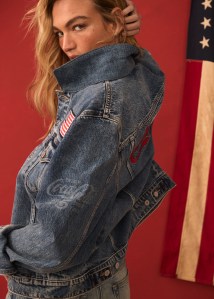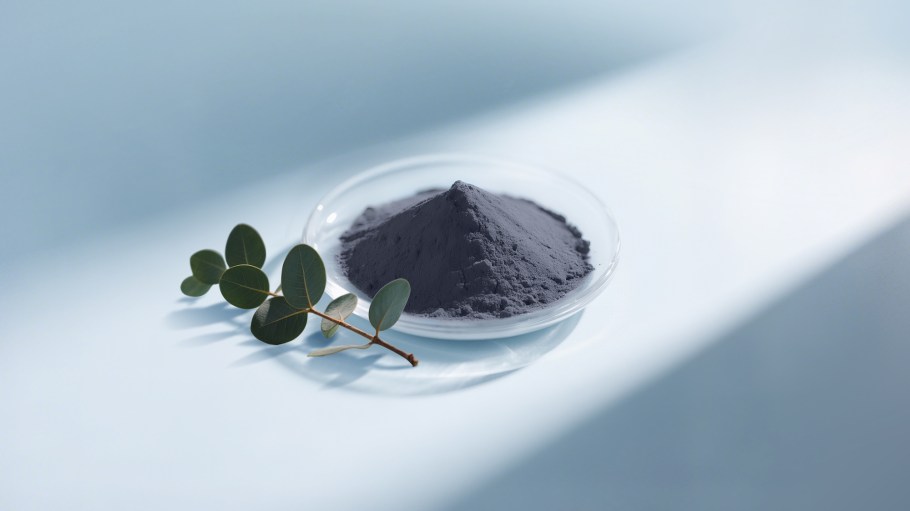
Indigo’s journey in commercial use has been a rollercoaster of transformation—both in the product itself and in the industry’s perception of it. Once derived solely from natural plant sources, indigo dye colored the earliest textiles in deep blue. The rise of synthetic indigo revolutionized production, making denim’s iconic hue accessible on a massive scale, but at an environmental cost.
Chloris Biochem is reimagining this story. The Utah-based company aims to inspire denim mills and brands to rethink how they achieve their product’s signature color with Claessen Blue, a natural blue amino-acid dye.
Related Stories
“Denim is the toughest benchmark for color. If you can deliver ring-dye aesthetics, predictable washdown, and industrial throughput on indigo lines, you prove bio-manufactured color can scale without compromise,” Li Li, Chloris chief brand and strategy officer, told SJ Denim. “We prioritized performance parity first so adoption by mills and brands becomes low risk.”
Li emphasized Claessen Blue is not the indigo molecule; it is a bio-based blue dye engineered to run on indigo lines and deliver indigo-like denim aesthetics. Like brewing beer in bioreactors, Chloris cultivates the natural-origin blue pigment through microbial fermentation. Agricultural residues, like corn stover, feed the process. After pigment recovery, remaining biomass is turned into organic fertilizer.
“In short: color grown by biology—clean, efficient, and scalable,” Li said.
Compared to synthetic indigo, Claessen Blue uses a milder process with no harsh reducers like sodium hydrosulfite and lower alkalinity, resulting in cleaner wastewater and lower water and energy demand.
On safety and environment, Li said the company’s fermentation and formulations avoid aniline, formaldehyde, and heavy metals. “At equivalent target shade and wash, trials show fewer rinses and lower chemical input, yielding a cleaner effluent profile,” she said. “For GHG, reductions are driven by lower water, energy, and auxiliaries at the process level; we’re advancing footprint assessments with partners under consistent methodologies and third-party review.”

The pigment, which runs on existing indigo lines, also protects elastane and blended constructions and achieves washdown with less heat and chemistry.
Li said the color builds the familiar ring-dye, white-core look designers expect, then fades predictably in laundry while maintaining high light fastness (Grade 4–5) and strong anti-yellowing. “Visually, you can achieve classic denim blues across dark to light shades, with smoother contrasts and softer hand due to the gentler process,” she said.
Claessen Blue reacts faster in wash, enabling soft contrasts and smooth touch with less chemistry and lower temperatures. Once fixed, Li said it holds color in wear thanks to high light fastness and anti-yellowing. “Designers get the authentic fade when they want it, and durable blue in daily use,” she explained.
There are benefits to using Claessen Blue over plant-based indigo as well. Li noted how controlled fermentation yields high purity and batch-to-batch repeatability at industrial volumes. It also requires no cropland for dye plants. It’s circular feedstocks and closed systems reduce land and water intensity.
On the financial side, Li said pigment cost premiums will narrow with scale. Additionally, total process cost often improves due to water, energy and chemistry savings.
While the denim industry is still learning how to navigate indigo alternatives, Claessen Blue is beyond the lab stage. Chloris has a R&D staff of more than 150 employees, over 50 patents and has scaled past 10,000 tons of bio-dye production. Claessen Blue is in production trials and early commercial runs with over 20 premium mills across Turkey, China, and Southeast Asia, operating on standard indigo infrastructure.
Li said feedback highlights easy integration, faster washing, fiber protection, and reduced water and chemistry. Meanwhile, designers are praising the pigment’s predictable fade.
Claessen Blue is just one step in Chloris’ color journey. In the next few years, Li said to expect cost convergence through scale, deeper mill integration, and shared data frameworks with alliances to standardize claims and speed adoption. The company is also building a Bio Color Circle, broadening blues and adding reds, yellows, and neutrals for fashion (beyond denim), beauty, and other industries.
“Sector-wide, performance-first bio color will coexist with legacy chemistry while steadily displacing fossil-derived volume wherever parity is proven,” she said.