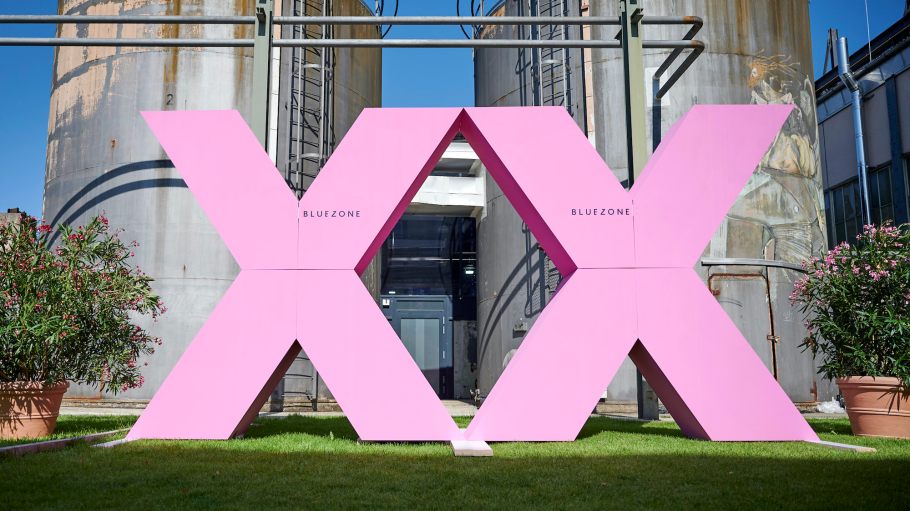
With the theme “ConneXXion,” Munich trade show Bluezone celebrated its 20th anniversary last week with roughly 100 collections on display. Though foot traffic was slow at the event, which coincided with Kingpins New York and the European summer holiday season, the show homed in on the hot topics in denim, from fashion to sustainability.
Ukrainian designer and recent Adidas collaborator Ksenia Schnaider presented her line of unconventional jeans. Ruedi Karrer, the founder of the Jeansmuseum in Zurich, displayed a sampling of the best fades from his collection of over 14,000 pairs of jeans. Bryan Szabo, the founder of the Indigo Inventional, showcased a gallery of some of the top fades in his online contest and Long John founder Wouter Munnichs highlighted his collaboration with Blue Blanket.
Related Stories
“Relevance is the currency of our days. Bringing the right people together in the right place at the right time and presenting them the right topics, inspiration and information in a professional working atmosphere—that is what we do,” said Frank Junker, Munich Fabric Start creative director and partner.

Naveena Denim Limited (NDL) continued to tell the story of Swift n’ Sway, its line of cotton and Tencel fabrics with natural absorbency and wicking properties. The Pakistani mill also showcased its new collaboration with XLance, the Italian polyolefin-based stretch yarn that has recently started growing its presence in denim. The yarn is resistant to harsh washing processes and the threads are stable and have a cotton-like look even after lasering.
Turkish denim producer Isko anchored one of Bluezone’s two halls with a wide assortment of fabric families now available in Ctrl+Z, a blend of recycled and regenerated content that the company says outperforms the market’s traditional and recycled denim products. At the request of clients, Isko added specialty plant and animal fibers to the Ctrl+Z range this season, including robust and durable hemp and linen, and cashmere for soft, luxurious touch. Plant-based fibers Soya, Tencel, modal and Naia acetate also enhance softness as well as sheen.
Closely following the market’s trends, Isko teased its first range of non-denim fabrics made with viscose and recycled polyester fabrics. Called the Casual Line, it’s suitable for trendy cargos, classic chinos or stretch jeggings. The cotton-free range opens a new area of business for Isko and allows brands more ways to utilize the mill’s popular fabric families like Jeggings and Reform. Isko previewed the Casual Line for Bluezone buyers in eye-catching colors. The company plans to launch the category in a bigger way this fall.
Organic cotton is a key ingredient in Turkish denim manufacturer W Denim’s collection. A rep said F/W 24-25 fabrics are comprised of at least 50-90 percent organic cotton.
Though known for their Terra Colors, a range of denim that gets its earthy colors from clay-based dyes, Maritaş Denim emphasized undyed denim at Bluezone. A rep said any article in the collection can be requested in its natural color. The Turkish mill also presented Freelax, a line of soft-touch comfort-stretch fabrics in weights ranging from 7.5 oz. to 14.5 oz.
India’s Raymond UCO Denim is focusing on regenerative cotton, which a rep said is more price accessible than organic. The mill also showed a range of denim made with recycled polyester and biodegradable polyester. Hemp and jute were other speciality ingredients in the collection, as well as natural indigo.
Tencel plays a significant role in Panther Denim’s collection. The Chinese mill’s Dream Feel collection offers fabrics with a marbled aesthetic made with Tencel and cotton blends. Lyocell is also the main character in the Botanic collection, which has 100 percent Tencel Matte constructions.
A rep from Turkish weaver F Blue Denim said fabrics made with Tencel, Tencel with Refibra technology, organic cotton, linen and hemp are appealing to the premium market, which is proving to be the mill’s healthiest business. Prior to 2020, the rep said most of F Blue’s sales were in lower-cost basics. Now 60 percent of business is in premium fabrics with specialty fibers.
The post-pandemic world, coupled with the war in Ukraine and a looming recession in Germany, is putting pressure on basic and mid-range denim brands, the rep said. The premium category will be the last to be affected.
Color Science
Xenon Color is Isko’s new solution to enhance laser effects on black denim. Xenon achieves more visible and whiter results, mitigating the brown or gray color that lasering typically creates on black denim. Isko’s “blacker than black” solution is also part of the collection. The dust-repelling fabric is made with Revotec, a blend of viscose and post-consumer polyester that produces black fabrics that darken in the wash.
F Blue Denim added an indigo version of its long-lasting color fabric Stay Black, which has been a bestseller for the last 10 years. A rep said the fabric maintains its original color for at least 20 at-home laundries.
Italian chemical company Montega presented Second Life, a line of “ecological treatments” that do not require water. The concept is intended to be an easy and efficient way for brands to give unsold or deadstock denim products a fresh new look.
Italian chemical company Officina39 brought its Aqualess Activator, a pumice stone replacement and waterless solution that enhances the abrasion effects of Aqualess Aged, a Bluesign-approved waterless technology.
Derived from waste from the marble industry, the powder contains an activator that attracts it to fabric surfaces. Aqualess Activator works at room temperature in conventional machines to give stone-wash effects to indigo and black denim. The technology reduces energy and water consumption, but also creates 90 percent less sludge than pumice stone and doesn’t damage machinery.
The activator launched at ITMA in June, where Andrea Venier, Officina39 managing director, said it was well received. The company is now trialing it with clients to see if results are consistent or different in various environments.