From waiting in line for the latest iPhone to tracking down limited-edition Nike sneakers, consumers often develop a passionate loyalty to certain brands that goes far beyond typical purchasing habits. How can denim brands adapt their design and storytelling strategies to inspire that same level of fanaticism?
That’s the question Tilmann Wröbel, founder of the denim consultancy Monsieur-T, posed at Bluezone in Munich last week. Under pressure to deliver fresh designs, lower price points and instant trends, he said denim companies have lost sight of making products that consumers fall in love with.
Related Stories
“Rolex is not selling watches. Rolex is selling status. Nike doesn’t sell equipment. Nike is selling motivation. Apple is not selling computers or telephones. Apple is selling innovation,” he said. “The denim industry needs to understand that we’re not selling products or a good price point anymore. We’re selling emotions.”
Wröbel urged companies—from mills selling fabrics to brands selling jeans—to go beyond function and to provide customers with emotional engagement. “Be with your consumers,” he said. “Make your consumer feel like being part of your brand or company.”
There’s still room for trends, however. Wröbel described five themes with longevity for Spring/Summer 2026 and beyond.
Collaborations continue to be a beacon of light in a complex retail environment. The most successful tie-ups sell out instantly due to their limited nature, Wröbel said.
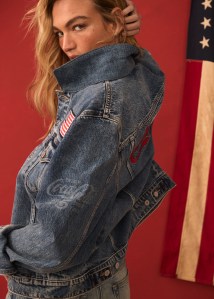
Wröbel called out Levi’s as being a leader in denim collaborations, partnering with everyone from ERL, Undercover and Denim Tears to Starter and McLaren. Diesel has also blended its DNA with unlikely partners like Coca-Cola, Savage x Fenty and Durex. The more unusual the pairing or product crossover, the better, Wröbel added.
The denim supply chain can act on this as well. C&A put its partnership with The Lycra Company front and center when the German retailer introduced Lycra Adaptiv for men’s denim. Lucky Brand teamed with Cotton Incorporated to promote Cool in Cotton, a collection of more than 200 men’s and women’s styles comprised of cotton.
Denim is also entering a cycle of deconstructing and reconstructing its stories. The theme is less about upcycling and more about reinventing brand identities and core products, Wröbel said.
“There are tons of brands that were cool in the 1980s, 1990s and 2000s that can become modern again,” he said. “Take your most iconic products, deconstruct them and reconstruct them, maybe with the help of an artist or famous designer. Build it again.”
On the product side, Wröbel said True Religion’s efforts to reinvent itself are taking shape. The throwback brand has benefited from collaborations, new product categories and famous fans. Oscar nominee Timothée Chalamet has been seen in the Y2K brand’s signature jeans and jackets with chunky white stitching in New York, Paris and Rome during the press tour for “A Complete Unknown.” His bold denim looks are a sharp contrast to the classic Levi’s style he wears as Bob Dylan in the biopic.
“The idea is really to take your DNA and iconic products and totally switch up your image,” Wröbel said.
“Reiimagine,” Levi’s campaign with Beyoncé, is an example of how to revamp a famous advertisement through a contemporary lens. Whereas the original 1985 ad called “Launderette,” played up the sex appeal of heartthrob Nick Kamen undressing, Wröbel said the new version shot by female filmmaker Melina Matsoukas deconstructs the image and “made it totally relevant to what our society is today.”
After being dimmed by the pandemic, street style is rebounding in a big way.
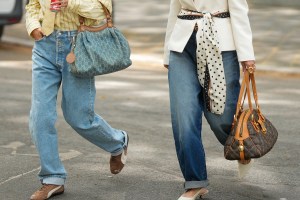
Trends are bubbling up from the street, once again, with an emphasis on oversized silhouettes, neon colors and extreme washes. In addition to wide-leg jeans, the theme calls for spliced, frayed, twisted and destroyed constructions. Textures are furry and nubby; others are buttery soft with a silk-like drape. Denim is also embossed with unique symbols.
Even though some luxury brands try their best to replicate these street looks, Wröbel said the authenticity of the trend comes from young designers. He urged brands to put these budding talents to work.
The rise of secondhand fashion is influencing fashion trends as well.
Designers are leveling up to consumers’ interest in vintage and secondhand fashion by incorporating it into their new collections. Wröbel called out Coperni for using vintage Disney merch in its Spring 2025 collection. Meanwhile, brands like Lee, Diesel and Timberland are combining their deadstock to make new coveted garments.
“It’s nothing new,” Wröbel said. “Designers have always gone into secondhand stores for inspiration, but what’s new now is that the secondhand market has its own trends.”
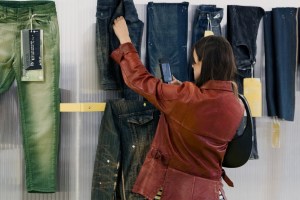
One of those trends is colored denim, he said, especially styles with natural fades and washes. These patinas are informing how brands are finishing their new collections.
While sustainable denim still needs to look good, designers are pulling back from adding all the bells and whistles to sell it.
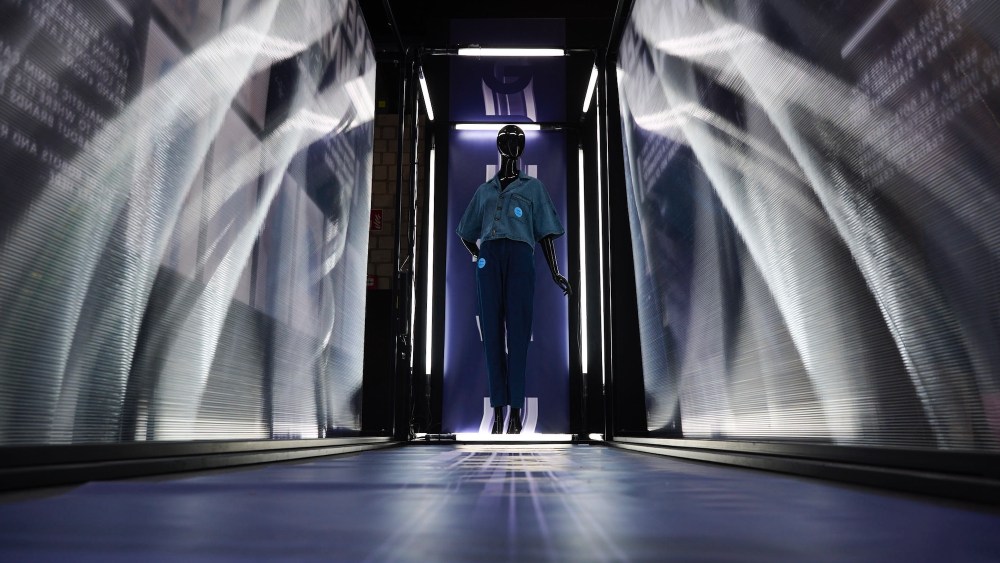
Taking a cue from quiet luxury, minimalism and sustainability are coming together, Wröbel said, resulting in “super simple” and “super clean” denim styles that are raw or have a flat appearance.
“These products could be manufactured in a little factory next to our homes. We don’t need huge laundry plants. We don’t need huge machines and lasers—just a few sewing machines,” he said.