More of defunct trucking company Yellow’s terminals are being sold off to two former less-than-truckload (LTL) competitors seeking to expand their U.S. real estate.
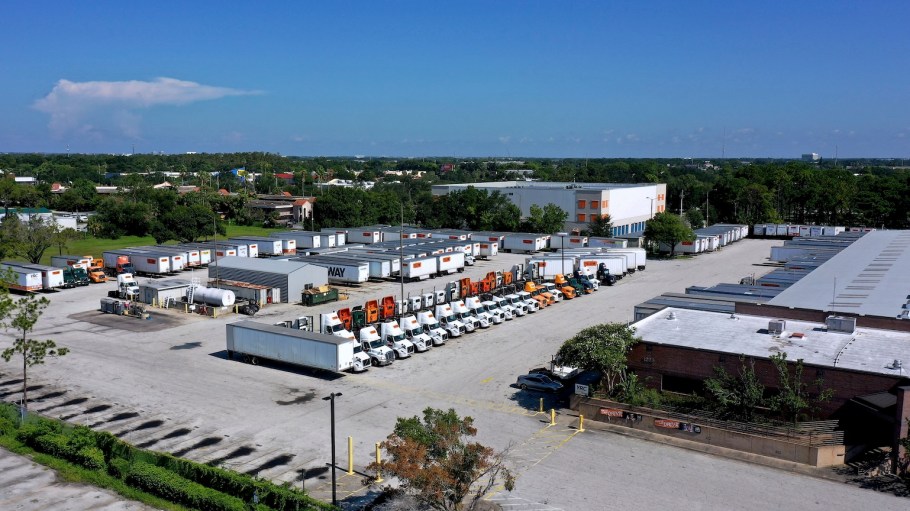
Estes Express Lines and Ramar Land Corporation, an affiliate are R+L Carriers, will acquire more terminals from Yellow’s administrator for a combined $192.5 million.
The Richmond, Va.-based Estes will pay $142.5 million for seven owned properties and the four leased terminals with a combined 939 doors. Ramar Land Corp. will pay $50 million for one owned terminal, a 304-door, 51-acre Maybrook, N.Y., facility.
Related Stories
Unlike previous sale proceedings that took place via an auction, Yellow’s remaining estate engaged in direct “good faith, arm’s-length” discussions with both Estes and R+L.
“The Debtors believe that the alternative to consummating these transactions as private sales…risks diminishing the significant value that has been achieved under the Asset Purchase Agreements,” the Dec. 10 filing said. “Rather, the Debtors, in consultation with the Committee, have determined in their business judgment that the Asset Purchase Agreements maximize the value of the Subject Properties and should be authorized as private sale transactions.”
One of the largest of Estes’ seven owned acquired terminals is located in Cincinnati, while another smaller service center is in Omaha, Neb. Two of the remaining five are in Indiana, along with terminals in California, Maryland and Georgia.
The four leased properties are in Miami; Norway, Mich.; Dunmore, Pa; and Orange, Calif.
This is the third major sale of Yellow’s terminal assets. The prior two were held as auctions that raised $1.88 billion and $82.9 million through the sale of 130 and 23 of Yellow’s owned and leased terminals, respectively.’
The first auction results were approved last December, with LTL competitor XPO scooping up 28 terminals for $870 million and both Estes and R+L winning big. Estes won out on 24 terminals for $248.7 million, while R+L Carriers got real estate assets in the deal, paying a price of $211.5 million.
In that auction, Saia secured bids for 17 properties totaling $235.7 million, while another LTL rival, Knight-Swift, won the rights to own 13 terminals with $51.3 million price tag.
Later that month, Estes spent another $35.3 million to outbid others for five properties, while Ramar Land Corp. landed three terminals valued at $9 million.
Over the past month, Estes recently announced that it has opened several of the terminals it acquired from Yellow last year in areas like Detroit; Milwaukee; Austin, Texas; Wichita, Kan. and more.
Estes had been one of Yellow’s biggest suitors in the auction process for the bankruptcy trucking company’s assets, with the company placing multiple bids including a massive $1.525 billion stalking horse offer for 166 terminals.
The most recent purchases by Estes and Ramar followed a request for non-binding bids for all the Yellow real estate left over from the previous auctions by Oct. 19. After that deadline, both LTLs held private negotiations with the administrators before sale agreements were made Dec. 6.
Yellow still has 39 owned terminals and 61 properties with long-term leases that remain unsold. Jan. 6 is the binding bid deadline for the remaining facilities.
The biggest of the owned unsold properties is a 426-door, 103.6-acre facility in Chicago Heights, Ill. The largest leased properties on offer were a 325-door, 54.2-acre facility in Bloomington, Calif., and a 193-door, 55.8-acre site in Kansas City, Mo.
Yellow Corp. shut down its operations July 30, 2023 before filing for bankruptcy early the next month.
In the wake of its bankruptcy, the trucking company is still awaiting a settlement of roughly $6.5 billion in claims by 11 pension funds. According to Dec. 12 court filings, a settlement is now unlikely before February at the earliest.
Yellow had been found liable for these “withdrawal liability” claims, ruled bankruptcy judge Craig Goldblatt in September, but has long been in dispute that it owed any money. At the very least, Yellow contended the court massively reduce the scope of the funds’ demands since they had already received billions of dollars in federal bailout money under the American Rescue Plan Act of 2021.
However, Goldblatt ruled in favor of the pension funds, first on Sept. 13 and again on Nov. 12, although on Nov. 5 he raised the estate’s (and stakeholders’) hopes by saying his September ruling contained an error and may need to be reversed.
Oral arguments related to the funds’ claims are now set to take place at a Jan. 28 hearing at the Delaware bankruptcy court.