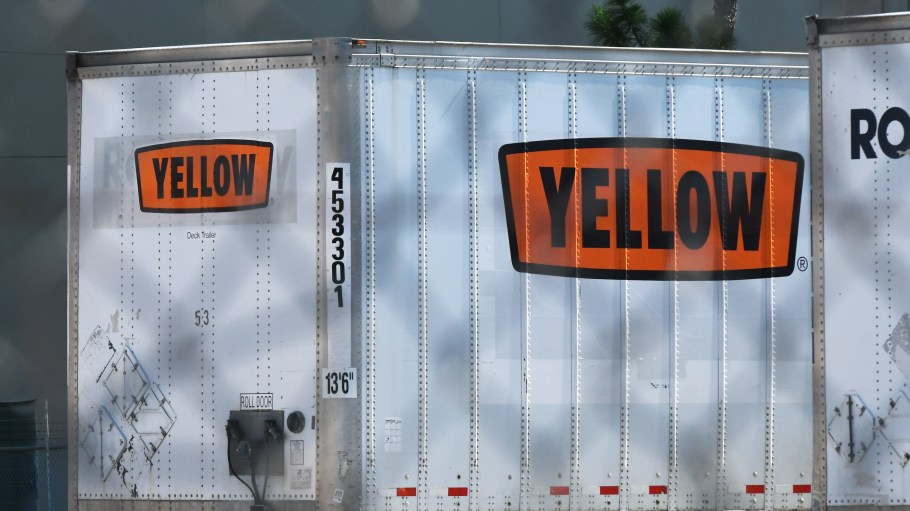
An appeals court has reinstated Yellow Corp.’s $137 million lawsuit against the Teamsters, in which the defunct trucking company blamed the union for its 2023 bankruptcy and accused it of interfering in its attempt to restructure its business.
A Kansas federal court initially dismissed the breach of contract suit in March 2024, saying Yellow failed to follow the internal grievance procedures under the terms of its contract with the Teamsters before making the claims.
The three-judge Tenth Circuit panel reversed the court decision, determining that it erred by denying Yellow’s post-judgment motion for leave to amend its complaint to include new evidence alleging that the Teamsters repudiated the terms of their collective bargaining agreement.
Related Stories
The panel’s decision focused on the legal principle of repudiation, which exempts a party from following grievance procedures if the other party, in this case the Teamsters, indicates that they refuse to participate in the process.
The case will now return to the district court where Yellow can file the amended complaint.
Yellow first filed the lawsuit in June 2023, less than two months before the less-than-truckload (LTL) company ceased operations and filed for bankruptcy.
The firm alleged that the Teamsters, directed by then-newly elected president Sean O’Brien, intentionally and unlawfully obstructed the second phase of the trucking company’s “One Yellow” restructuring plan.
That plan would have merged four separate subsidiaries within Yellow and consolidated operations at its terminals, and was designed to help the company cut costs amid swelling debt that soared to $1.3 billion by the time the suit was filed.
Yellow has claimed that the move from the Teamsters violated the collective bargaining agreement, while the union has always contended they have fully honored the terms of the agreement. The Teamsters represented 22,000 of Yellow’s 30,000 employees at the time.
As part of the agreement, Yellow had to present any restructuring plans, called change of operations (CHOPS) proposals, to the Teamsters.
According to the order, written by circuit judge Richard Federico, the changes required by Phase 2 were “substantively the same” as Phase 1, but the Teamsters rejected the proposed second proposals as leverage for unrelated wage increases.
“Yellow tried to cooperate with the Teamsters and made multiple changes to the CHOPS plan to accommodate their demands, but the Teamsters continued to reject the CHOPS,” wrote Federico. “A hearing of the CHOPS committee to consider Phase 2 was scheduled, but then unilaterally cancelled by the Teamsters. Yellow was willing to have Teamsters members, rather than the CHOPS committee, vote on the plan, but Teamsters leadership refused.”
The amended complaint from Yellow alleges that the Teamsters “categorically refused” to support the proposals under any circumstances absent renegotiation of the collective bargaining agreement.
In separate examples of repudiation alongside the cancelled meeting, the union sent notices to local teams to oppose the second phase proposals even after it had been revised to meet the Teamsters’ demands.
Additionally, the order cited union head O’Brien’s public statements, namely that the Teamsters “are done making concessions” and that they would “go after [Yellow] with everything we’ve got.”
O’Brien also allegedly told the Teamsters executive board that the union’s “position is that we do not in any way support Yellow’s proposed change of operations” and “will therefore not adhere to any such changes and will reject, up to and including striking, any proposals of such.”
In further alleging that the Teamsters “stonewalled” the CHOPS process, Yellow had requested a “substantial” volume of documents from the Teamsters as part of discovery during the initial case. However, the trucking firm claimed the Teamsters took their time in delivering the files to the point where company lawyers didn’t receive them until only a few days before the case was dismissed.
At the time, Yellow claimed it sifted through the documents, finding the evidence that would support its lawsuit. The company requested an opportunity to amend the complaint last April, but was denied, leading the LTL to appeal the Kansas court’s decision.
“The Teamsters defeated Yellow’s baseless complaint and look forward to defeating their baseless amended complaint,” said the union in a statement.
While the lawsuit initially sought $137 million in lost adjusted earnings before interest, taxes, depreciation and amortization, the damages were later expanded to at least $1.5 billion in lost enterprise value in the event the company were to shut down.