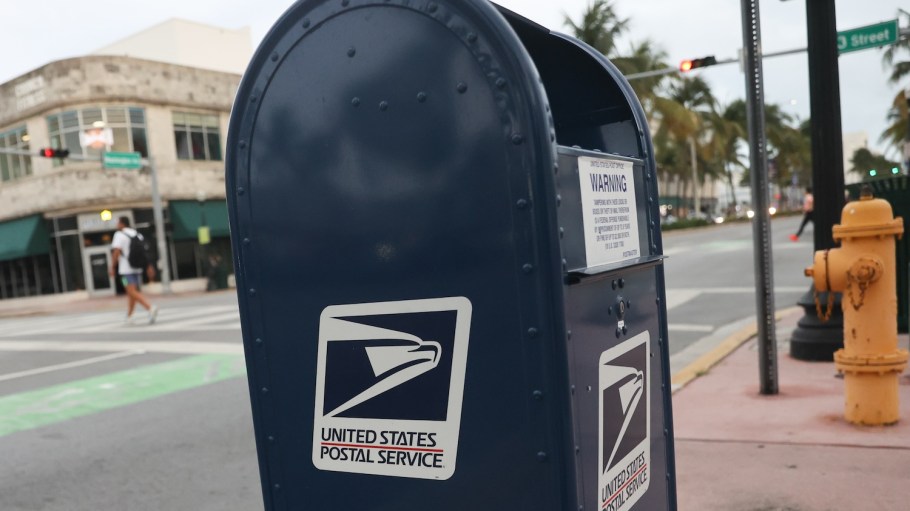
The United States Postal Service (USPS) is temporarily halting some consolidation within its network after delivery delays have plagued some major metropolitan areas and drawn the ire of consumers and lawmakers alike.
Weeks after a Senate hearing that saw Postmaster General Louis DeJoy field questions regarding delayed mail deliveries in markets like Atlanta, Houston and Richmond, Va., a bipartisan group of 26 senators called on USPS to “pause all changes” under its network modernization plan, until the Postal Regulatory Commission (PRC) can fully study the impacts of the changes.
Related Stories
In response to the callout, the USPS boss told members of Congress that the courier will hold off on consolidating mail centers at nearly 60 locations until at least Jan. 1, 2025. DeJoy said the USPS would not advance any efforts after that date until it advised the lawmakers of plans to do so, and from there, would only implement them “at a moderated pace.”
This plan would include moving mail processing further away from local communities, by transferring operations out of local facilities into more distant hubs, which the agency identifies as regional processing and distribution centers (RPDC) and sorting and delivery centers. By streamlining mail processing into fewer hubs, the USPS expected to save anywhere between $133 million and $177 million per year.
Multiple markets that have implemented these changes have seen issues with on-time mail delivery, with the senators pointing out in their May 8 letter that “it is not clear these changes will improve efficiency or costs.”
While USPS backpedals from its network modernization initiatives, which are part of the larger 10-year Delivering for America turnaround plan, the agency also is looking to recoup costs elsewhere.
As the courier rethinks how parcel volume is entered into its network, it wants to increase prices for high-volume, large- and medium-sized enterprises, proposing a 25 percent price hike per shipment on average for its Parcel Select ground delivery service.
Each individual price increase for Parcel Select users would be contingent on where the volume is entered into its network, meaning that shipments that are brought in further upstream will see lower price hikes.
For example, Parcel Select shipments entered at USPS destination delivery units, which are the final stop in the agency’s network before a package reaches the end customer, will see the steepest increases at 43.4 percent on average.
The PRC must first approve the proposal. If approved, the hike would take effect July 14.
The anticipated hikes are a source of controversy for partners in its supply chain including DHL and Pitney Bowes, which pick up and transport end customers’ parcels to USPS facilities for last-mile delivery.
USPS’ rationale for the change is that they no longer want to give incentives for parties to aggregate mail volume from multiple shippers and bring such volume directly to the destination delivery unit.
The proposed adjustments were already approved by the USPS Board of Governors last week.
No price increases have been proposed for USPS Ground Advantage, Priority Mail or Priority Mail Express.
However, USPS did indicate last month that it plans to raise the price of first-class Forever mail stamps to 73 cents from 68 cents effective July 14. The hike, which still has be approved by the commission, would raise mailing services product prices by 7.8 percent. The proposed hike would be the sixth time the USPS increased stamp costs in 2021.
DeJoy has previously said that the USPS aims to recover $2 billion in revenue by raising prices on mail products to offset 15 years of what he called a “defective pricing model.” In total, the USPS seeks to cut $5 billion in operating expenses by the end of 2025.
The agency still has a long way to go to recover years of ongoing losses. On May 9, the USPS reported a second-quarter net loss of $1.5 billion, with $1.4 billion of the incurred losses related to the amortization of unfunded pension liabilities. The net loss was an improvement from the $2.5 billion over the year prior.
Total operating revenue was $19.7 billion for the quarter, an increase of 2.1 percent compared to the same quarter last year.
Shipping and packages revenue for the courier increased $89 million, or 1.2 percent, on a 1.5 percent volume increase of 25 million pieces. USPS attributes much of this improvement to last year’s introduction of Ground Advantage, which gives businesses fee- and fuel surcharge-free residential delivery of packages up to 70 pounds within two-to-five business days.