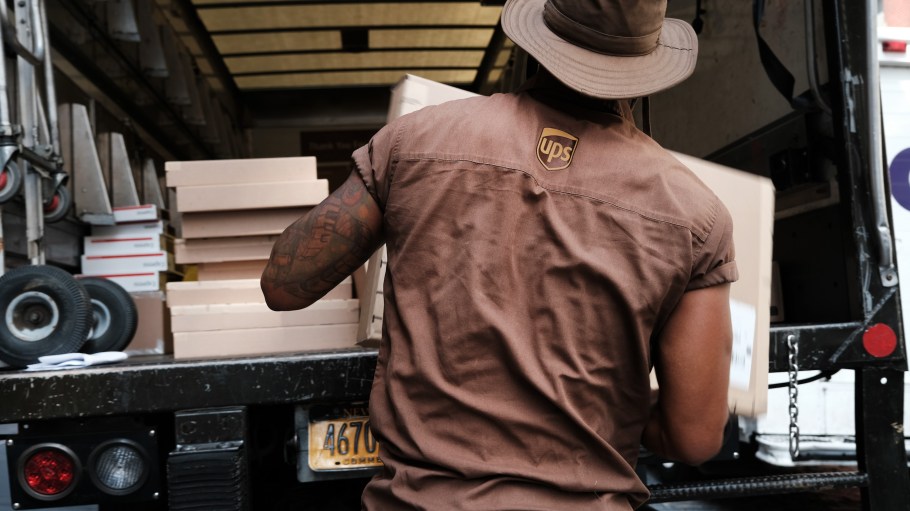
UPS wants a federal Massachusetts court to dismiss the Teamsters’ lawsuit against the company over plans to roll out a voluntary driver buyout program.
According to a filing on Friday evening, UPS called the lawsuit an “improper effort to drag the courts into a labor dispute.”
UPS paused their rollout of the employee separation program after the union filed the complaint Feb. 9.
The anticipated Driver Choice Program (DCP) follows last year’s Driver Voluntary Separation Program (DVSP), which saw more than 3,000 employees exit the company, according to the Friday filing. Like the DVSP, the 2026 iteration has drawn the ire of the Teamsters, who allege both programs violate the national master agreement the parties agreed to in 2023.
Related Stories
According to the union, the DVSP is a violation since it changes the terms of employment, which the Teamsters say must be bargained via direct negotiation with union representatives. The union is also crying foul because they say the five-year contract with UPS was drawn out to create up to 30,000 new jobs, with 7,500 of those positions coming from moving part-time Teamsters-represented employees to full-time.
UPS argues that the contract doesn’t address incentive programs like DCP, and said the Teamsters’ entire motion that any voluntary buyout agreements would be “irrevocable” was “an erroneous premise.” The company referenced the Norris-LaGuardia Act of 1932, a federal Congressional law that heavily restricted courts’ jurisdiction to issue injunctions in cases involving a labor dispute.
“In situations like this one, where arbitration clearly can provide meaningful relief, numerous decisions from this Circuit and others recognize that the Norris-LaGuardia Act bars courts from enjoining an employer’s actions, including a voluntary severance or separation program,” the 26-page opposition read.
The DCP buyout would include $150,000 in severance pay, in addition to any pension and healthcare benefits earned.
Approximately 105,000 drivers across the U.S. would be eligible for the program. The DCP rollout and offer period were timed for February and March to provide greater clarity as to staffing levels by the second quarter, and to allow for processing of employee resignations under the program in April, according to the company.
UPS also sought to avoid disruption prior to the summer vacation season and well in advance of the holiday peak season.
UPS is debuting the program due to the company’s decision to cut the volumes of Amazon packages flowing through its network by 50 percent, alongside the transitioning of some last-mile Ground Saver parcels back to the U.S. Postal Service.
Both reductions are “expected to impact substantially all domestic UPS centers and routes in some manner,” according to a letter from UPS’ president of global labor relations Daniel Bordoni to Teamsters president Sean O’Brien dated Jan. 30.
In the letter, Bordoni said UPS does not currently plan to offer another voluntary separation program for drivers after the DCP. But UPS expects to be overstaffed in all classifications over the course of 2026, and anticipates managing the high headcount through attrition and layoffs.
UPS says the DCP is designed to reduce the need for involuntary layoffs. In total, the company expects to reduce positions across the company by 30,000 in 2026, on top of 48,000 employees that were cut last year.
“The delay may cause employees who are interested in participating to lose their opportunity to do so,” said Michael Clayton, corporate vice president of labor relations at UPS, in a declaration as part of the filing. “Following arbitration, the DCP may no longer be practical or relevant for UPS due to the passage of time and/or staffing reductions through other means.”
The courier does not have an estimate as to the number of drivers are expected to take the buyout.
The letter also revealed 22 facilities that have been identified for closure in 2026, with Bordoni indicating that Teamsters locals have been notified of the closures and their anticipated impacts. All these facilities employ bargaining unit employees of the Teamsters.
Facilities are set to close in major metropolitan areas including UPS-headquartered Atlanta, Dallas, Miami and Las Vegas.
At this time, no additional facility closures are planned beyond the 22 announced.
The closures are another aspect of the network consolidation at UPS as the company aims to flow more of its goods through automated warehouses, with 93 sites being shuttered last year. The delivery company says it plans to increase the share of U.S. volume processed through automated facilities to 68 percent by the end of the year, up from 66.5 percent at the end of 2025.