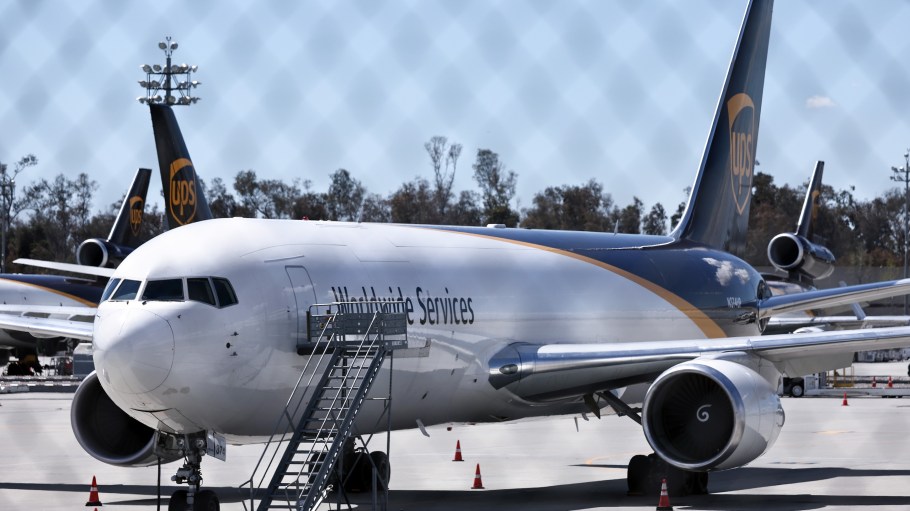
UPS is tacking on a processing fee for international packages shipped to the U.S. across various services as several major foreign parcel delivery firms like DHL are pausing shipments to America.
As of Sept. 8, the Atlanta-based package delivery company will charge an international customs processing fee of $2.50 per imported shipment sent via UPS Worldwide Express, UPS Worldwide Express Plus and UPS Worldwide Express NA1. All three services guarantee delivery within three days.
Effective Aug. 29, the day the U.S. officially closes off the duty-free de minimis provision to the rest of the world, UPS also added another charge for shipments originating in Canada.
Related Stories
The “entry preparation charge” for U.S.-bound packages from Canada will be $10 for shipments with a duty value of up to $200, and it will increase to $20 for shipments with a duty value between $200.01 and $800.
The de minimis trade exemption had enabled packages containing goods valued at less than $800 to enter the U.S. without extra taxes. But as of Friday, those imports will be forced to go through a more rigorous customs clearance process, with the shipments now subject to applicable tariffs depending on the country of origin.
UPS and rival FedEx typically introduce some level of extra surcharge for when their supply chain networks are at risk of get overworked. Both companies implemented fees in April that impacted imports coming from China and Hong Kong less than a month before the de minimis provision had already gotten the axe for Chinese goods entering the U.S. as of May 2.
While roughly half of the de minimis-eligible parcels come from China, the worldwide ban has clearly made international businesses reconsider how they must approach shipping to the U.S.
DHL’s Germany-based post office and parcel operations were among the prominent names that opted to temporarily suspend some postal and parcel shipments to the U.S. last week. Other top shipping companies in Europe also made similar decisions, including U.K.’s Royal Mail, Italy-based Poste Italane, Belgium’s Bpost and the Austria post, among others. The suspensions expand to services in Asia and Pacific countries including India, Australia, South Korea and Taiwan.
On Monday, Japan Post said it will suspend accepting some postal items to the U.S., namely those parcels with items valued at more than $100 in goods sold, as well as goods intended for consumption.
In a statement, Japan Post highlighted the concerns that it and its contemporaries in other countries have ahead of Friday’s change, noting that the new guidelines from U.S. Customs and Border Protection (CBP) require that transport operators pay customs deposits to CBP and prepare customs declarations.
“The procedures that transport operators and postal operators in each country must follow to comply with these guidelines are not clear, however, making implementation difficult,” Japan Post said.
France’s national postal service, La Poste, also stopped certain shipments to the U.S. on Monday, sharing similar concerns about communication coming out of the CBP.
“To date, the United States has not provided European postal operators with concrete procedures for collecting taxes,” La Poste said in a statement. “It is therefore impossible for us to undertake the work necessary to implement these new requirements.”
La Poste and DHL are part of the PostEurop association, which indicated that some technical details were only released Aug. 15, leaving its member postal carriers with “an extremely short timeframe to prepare.”
None of the firms have given a timeline for the end of the temporary suspension, but even a few days will cut into the amount of cargo moving into the U.S. via air freight.
UPS said during May and June that the elimination of de minimis for Chinese goods resulted in a 34.8 percent drop in average daily volumes from China to the U.S.
FedEx, while not giving concrete data, did indicate in a June earnings call that most of the impact on China-to-U.S. flights resulted from the de minimis closure.
At the Deutsche Bank U.S. Transportation Conference held Aug. 13, FedEx chief financial officer John Dietrich said “I think it’s reasonable to expect once [the de minimis suspension] applies to the rest of the world, we will feel some impact of that.”
Of the major international parcel shipping firms, Canada Post is still shipping packages to the U.S., but with a caveat.
The Crown corporation will only accept U.S.-bound label requests that include a valid declaration ID, which is a 13-character code that confirms duties are secured before the shipment is accepted.
To meet U.S. requirements, Canada Post is partnering with cross-border tax and customs compliance software Zonos to collect duties, which will be remitted directly to the CBP.