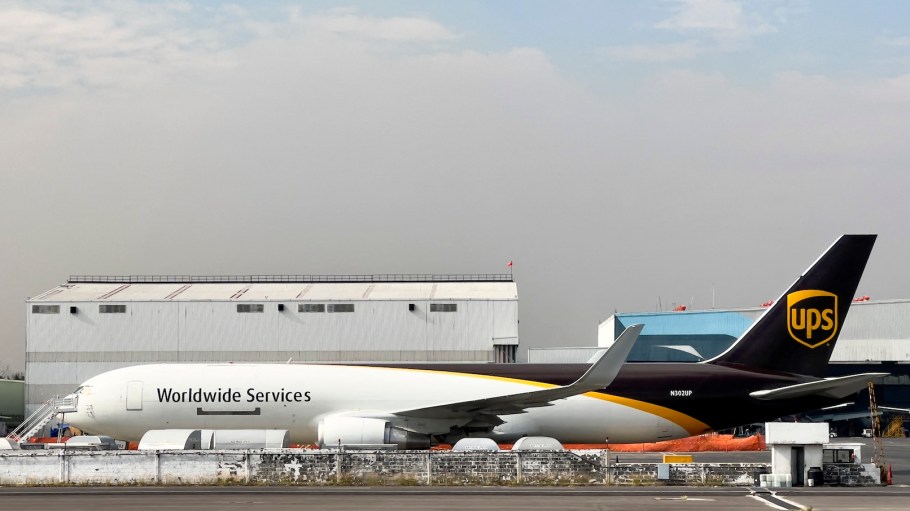
UPS is hiring 170 more pilots now that it has a new contract in place to move domestic air cargo for the United States Postal Service (USPS).
On April 1, USPS replaced FedEx, the national mail courier’s air cargo partner of more than two decades, instead securing a 5.5-year deal with the Atlanta-based parcel delivery giant.
UPS confirmed the total to Sourcing Journal, but did not provide additional comment as the company is currently in a quiet period ahead of its first-quarter earnings call on April 23.
The Independent Pilots Association, the union that represents roughly 3,300 pilots at UPS, said that total aircraft employees UPS expects to hire could exceed 300. FreightWaves first reported the news Friday.
“The IPA Executive Board was informed that UPS HR is resuming their UPS pilot hiring process to account for the additional volume surge that will occur as the year progresses,” an IPA spokesperson said in a statement. “The initial projected estimate for hiring is expected to be 300+ additional crew members, which is subject to adjustment once the network plan for the additional USPS volume is finalized.”
With UPS now tasked with providing domestic airport-to-airport transportation for the Postal Service’s U.S. Mail, Priority Mail and Priority Mail Express services after Sept. 29, the company will soon require more manpower, though its headcount has been slowly dwindling.
Late last year, the logistics company saw its pilot count decrease by 192 after offering a voluntary severance package in an effort to cut costs amid the slower demand for air cargo transportation after the peak of the Covid-19 pandemic.
And to kick off 2024, UPS unveiled it would be laying off 12,000 of 485,000 employees throughout the year. Then in March, the company unveiled further cost cuts, with a goal to save $3 billion by the end of the 2028 fiscal year. The cost cuts come after a fourth quarter in which UPS said total average daily volume through the air was down 15 percent versus the year-ago period.
UPS is in the midst of an adjustment period not just due to the lower overall parcel delivery demand, but higher operating costs resulting from the new Teamsters contract signed last year. This means cuts across the board have permeated the company, with 333 workers at its regional air hub at Ontario International Airport in California being terminated effective April 27.
As of Dec. 31, UPS owned or operated 294 planes and leased or chartered another 269. Twenty-three are currently on order to be delivered between 2024 and 2026, according to the company’s annual report released in January.
Based on volume projections when the report was released, UPS had anticipated that certain aircraft may be temporarily idled during part of 2024. The reduction in volumes in 2023—which were aided by the threat of a Teamsters strike in the summer ahead of the new deal—temporarily idled nine aircraft for an average of approximately five months last year.
The commitment to hiring new pilots at UPS comes as the USPS experienced a significant shift in how many packages it was putting up in the air. In August, Postmaster General Louis DeJoy said that the agency reduced volume moved by air by more than 90 percent over the two previous years. As part of a $5 billion cost-cutting plan through the end of 2025, the postal service is hoping the air-to-ground shift can cut $1.5 billion of those expenses to help reduce regional network transportation.
This ended up playing out poorly for FedEx, which received $1.7 billion from the USPS in fiscal 2023, down from the $2.4 billion it received three years earlier.
UPS’ air network is already pared down compared to FedEx, meaning the new deal may work in the company’s favor. UPS’ 3,300 pilots is well off of FedEx’s roughly 5,800 pilots, while their fleet of 563 owned and leased aircraft is still fewer than the 700 total owned and leased by their chief rival, as of May 31, 2023. FedEx also had 88 more aircraft on order to beef up its fleet.
Terms of the new UPS-USPS deal have not been disclosed.