The Teamsters are continuing their criticism of DHL for what the 1.3 million-member labor organization is calling “union-busting and anti-worker tactics”—this time taking their disapproval all the way to the logistics giant’s global headquarters over how much the company’s top-ranking execs are earning.
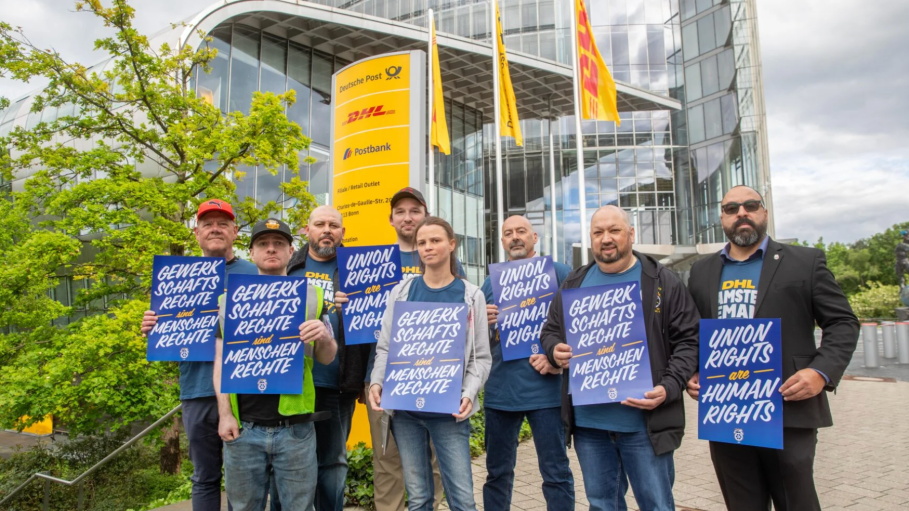
At DHL Group’s annual shareholder meeting in Bonn, Germany, the union said its workers took company executives and directors to task over various alleged workplace concerns, including poor safety conditions, racial discrimination and anti-labor behavior practices in the U.S.
Related Stories
The union took umbrage with DHL’s executive compensation, urging the firm’s shareholders to reject the changes in pay. The Teamsters argued that the board’s “employee engagement” metric is flawed and lacks critical disclosure, and criticized the fact that it was tied to executives’ annual bonuses.
However, the Teamsters’ case didn’t dissuade shareholders, who approved the company’s executive compensation for 2024 with 94 percent of the votes.
Sourcing Journal reached out to DHL.
According to a Friday’s press release from the Teamsters, DHL’s alleged anti-union campaign is designed to try to intimidate and prevent workers at the firm’s global logistics hub at the Cincinnati/Northern Kentucky International Airport (CVG).
The Teamsters allege that CVG sort package handlers currently have no guaranteed breaks and little to no notice of schedule changes. Some CVG workers have resorted to wearing diapers while sorting packages, the union claims.
One such DHL employee, Michael Morency, who is a member of the CVG sort workers’ organizing committee, said “there is a clear disparity in how we are treated compared to our German brothers and sisters.”
The denigrations hurled toward DHL come just months after the CVG employees went on strike for 12 days at the end of last year, which ultimately resulted in a new contract ratified in January.
That contract increased hourly wages by $2 per hour—a 9 percent jump over the previous average hourly base rate of $22.21. Starting in October, employees will see five separate wage increases through October 2026, amounting to a total $5 per hour wage increase over the next three years.
Alongside the wage bumps, the new deal doubles DHL’s 401(k) retirement contribution, establishes a worker safety committee at CVG and requires the company to pay for the costs of health care premiums.
The criticisms of the union go directly to the top, with the release saying that DHL Group CEO Tobias Meyer has condoned the alleged anti-worker behavior by dismissing the company’s labor practices as a “local management issue.”
In recent months, Teamsters branches nationwide have gone on record with various anti-union allegations, taking their case to the National Labor Relations Board (NLRB).
Since the beginning of December, separate workers within the DHL Express and Supply Chain segments have filed more than 31 complaints to the NLRB against the company. Charges included retaliation against pro-union workers, surveilling workers discussing the union off-site and intimidating workers on the picket lines.
Most recently, employees based out of a Crafton, Pa. location filed a case against the logistics giant on April 29.
“DHL’s top executives in Germany turn a blind eye to the exploitation of American workers for the sake of profit,” said Bill Hamilton, director of the Teamsters Express Division and international vice president for the unit’s eastern region. “Tobias Meyer has the power to end this abuse but chooses not to. He is responsible for fostering an environment where local management in the U.S. blatantly disregards our labor laws and universal basic human rights. The Teamsters will continue to shine a spotlight on these abusive practices in DHL’s backyard of Germany and across the U.S.”
The Teamsters have had a bit of a rise in the public consciousness ever since being at the center of contract negotiations between UPS and 340,000 workers the union represents, which resulted in a new five-year deal. During that same summer, the labor organization engaged in a back-and-forth with now-bankrupt trucking firm Yellow Corp. as the company lost its financial footing and saw the loss of 22,000 Teamsters jobs. In March, a judge dismissed Yellow’s breach of contract suit it filed against the Teamsters prior to the insolvency.
The union has also recently thrown its support behind the proposed Warehouse Worker Protection Act. If approved by the Senate, this bill would provide more protections to warehouse workers, including stipulations for quota transparency requirements and bans on quotas that impact workers’ ability to use the restroom or take meal breaks.