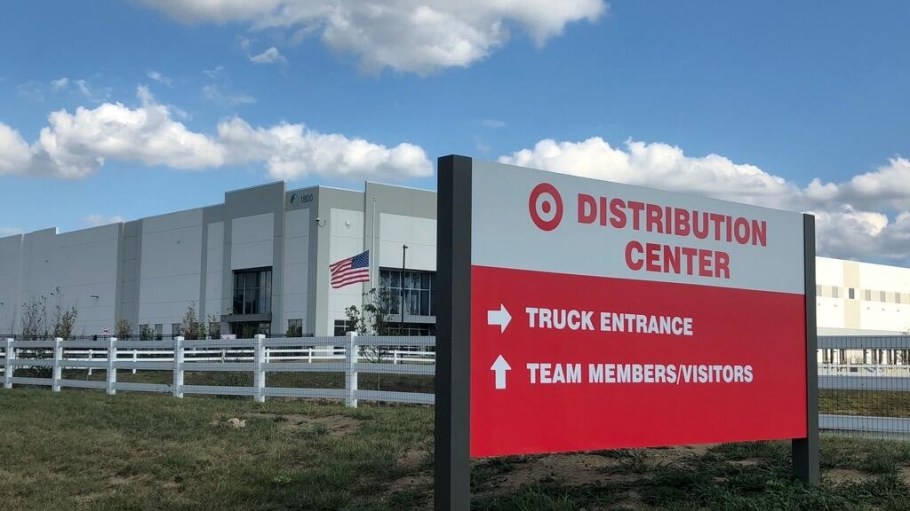
Target has agreed to pay $4.6 million to resolve a class action lawsuit claiming it failed to fully compensate employees for time worked at its three New Jersey distribution centers.
The settlement benefits individuals who worked for Target at facilities in Burlington, Perth Amboy and Logan Township since Aug. 6, 2019. Roughly 13,700 current and former employees are expected to qualify for the settlement.
According to the civil suit, Sadler v. Target Corp., the retailer failed to pay the employees for the time spent undergoing pre- and post-shift mandatory security screenings at the warehouses, as well as the time spent walking to and from their assigned departments to clock in and out of their shifts.
Related Stories
As a result, employees were allegedly denied wages they were owed for performing work-related duties.
Krystal Sadler first filed the class action suit in a New Jersey superior court in November 2022, alleging the retail giant violated state wage and hour laws by withholding the payments. Sadler filed the suit shortly after leaving a two-month stint at the Logan Township warehouse.
Sadler contended that Target underreported the employees’ hours worked and failed to pay proper regular and overtime wages to account for the extra tasks.
Under the New Jersey Wage and Hour Law, “hours worked” includes all time that employers require workers to “be at his or her place of work,” the suit observed. The plaintiffs also pointed to earlier cases in which courts held that mandatory screenings and time spent walking from time clocks to workstations were both compensable.
Target had denied the allegations, but agreed to settle with the plaintiffs, with both parties recognizing a “substantial risk of an uncertain outcome and delay.”
A Camden, N.J. federal court still must sign off on the settlement, and will hold a final approval hearing on Feb. 24.
Of the $4.6 million set to be distributed upon approval, $2.75 million will go to a “net settlement fund” to pay out eligible class members. About $1.53 million will go toward attorneys’ fees, and $10,000 is allocated directly for Sadler.
No claim form is required for former employees to benefit from the settlement. Class members who do not exclude themselves from the case will automatically receive settlement benefits.
Target had fought to pause the case earlier this year, but the federal court denied the retailer’s motion for a stay back in March.
A concurrent lawsuit was filed in a federal court in Albany, N.Y., in August, in which two plaintiffs alleged similar claims against the mass merchant in New York.
Jeanna Kratzert, a former employee at a warehouse in Wilton, N.Y., and Neil Mosher, who currently works at the facility, initially filed the lawsuit. A third employee who worked at the Amsterdam, N.Y. warehouse until September joined an amended complaint last month.
The Wilton warehouse has 1.5 million square feet of space, while the Amsterdam facility spans 1.8 million square feet.
According to the New York lawsuit, the extra walking time within the warehouses can add up to approximately $1,000 to $2,000 per year in unpaid dollars. This unpaid time adds up to more than $2 million dollars annually, that filing said.
“In this day and age, there is no technological barrier to paying plaintiffs and other employees for such time,” the New York filing said. “Target already tracks the times plaintiffs and other employees enter and, in some cases, leave the building, so it can readily calculate the time plaintiffs and other employees spend walking to and from their assigned time clocks inside the warehouse.”
The legal drama comes as Target seeks to right the ship on its wider business operations and turns the CEO reins over to company veteran Michael Fiddelke in February. Outgoing CEO Brian Cornell announced his impending resignation in August as the retail giant has struggled with declining foot traffic in recent years.
On Friday morning, the Financial Times reported that the company is facing pressure from an activist investor over its sluggish performance and slumping stock. Toms Capital Investment Management made a “significant” investment in the company, the report said, but it is unknown how much of a stake the hedge fund has built.
The retailer’s stock jumped as high as 4 percent in Friday morning trading on the report.
Comparable sales at Target have declined seven out of the past 10 quarters, with its 2025 third quarter seeing same-store sales dip 2.7 percent. Net sales slipped 1.5 percent to $25.3 billion, while net income fell 19.3 percent to $689 million.
Target did some light trimming in the quarter with the elimination of 1,800 corporate positions, laying off 1,000 employees and electing not to fill 800 previously vacant positions. Roles in the mass merchant’s stores and distribution centers were not impacted.