With the Israeli government signing off on the first phase of a plan that would end a two-year war in Gaza, the Suez Canal Authority is calling on the container shipping industry to return to the trade artery.
In late September, ahead of the U.S.-brokered ceasefire, Suez Canal Authority chairman Osama Rabie urged Maersk to gradually resume transits in the waterway, according to a report from Daily News Egypt.
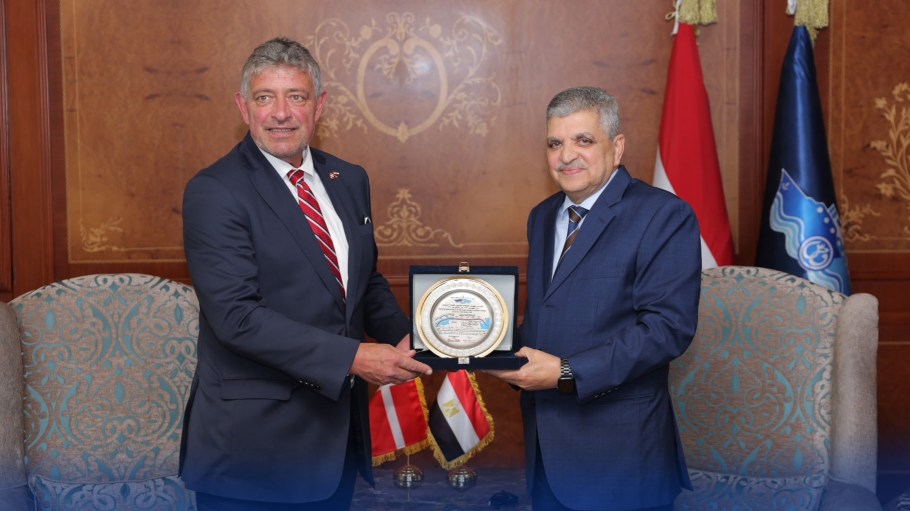
Rabie made the appeal in a meeting with Denmark’s Ambassador to Egypt, Lars Bo Møller, at the canal operator’s headquarters.
Related Stories
Maersk, like many of its major ocean carrier contemporaries including Hapag-Lloyd and Mediterranean Shipping Company (MSC), has avoided transits through the Red Sea since December 2023, two months after the start of the Israel-Hamas war. Instead, these vessels have opted to travel around southern Africa’s Cape of Good Hope.
The container shipping companies have steered clear of the Red Sea and the neighboring Gulf of Aden due to ongoing missile and drone attacks from Houthi militants based in Yemen. The Houthis have long said the attacks on commercial shipping are in protest of the Israel-Hamas war and in support of Palestinians.
These attacks subsided for much of 2025, before flaring up again over the summer. Most recently, on Oct. 29, the Iran-backed rebel faction attacked a cargo ship in the Gulf of Aden operated by Amsterdam-based Spliethoff that killed one crew member and forced the evacuation of 19 others.
The Houthis have not indicated if they would put an end to their onslaught during the ceasefire as they did after the first Israel-Hamas ceasefire from January to March.
According to Møller, who is not related to the family that controls A.P. Møller-Maersk, said the carrier is closely monitoring the situation in the Red Sea as it prepares for the eventual resumption of regular transit operations through the Canal.
In a statement, Maersk called the ceasefire news “a positive and much-needed development for the region,” but said it was still “too early” to make a decision on the Red Sea.
“We hope this agreement marks the first step toward ending the conflict and achieving lasting peace. There is a clear link between the security risks in the Bab al-Mandeb Strait and the conflict in Gaza, though it remains too early to assess how progress in Gaza will influence the situation in the Red Sea,” a Maersk spokesperson said in a statement. “Maersk remains firmly committed to safeguarding our seafarers, assets and our customers’ cargo. We will consider resuming transit through the Red Sea once a long-term and viable security solution has been established.”
The carrier has always maintained that it will not return to the canal without guaranteed safety. In February, CEO Vincent Clerc asserted after the initial ceasefire period that it would cost “hundreds of millions of dollars” if Maersk brought ships back to the canal, only for them to have to revert to the Cape of Good Hope route.
“The return of major shipping lines to transit through the Suez Canal again is inevitable…and the Canal is a fundamental gateway for global trade movement,” Miller said during the meeting.
If the January-to-March ceasefire between Israel and Hamas is any indication, Maersk and its contemporaries will still be staying put, especially with the carrier projecting in its earnings call that the Red Sea disruption would last all of 2025.
“At the time, the ceasefire did not lead to any imminent shift of shipping back to the Red Sea as shipping lines were wary of whether or not the ceasefire would stand the test of time,” said Lars Jensen, CEO of container shipping consultancy Vespucci Maritime, in a post on LinkedIn. “In the absence of any new groundbreaking developments it is likely the shipping lines will be equally cautious this time before switching the major networks back to a Red Sea routing.”
The meeting between Rabie and Møller came as the Suez Canal Authority has been actively trying to attract shipping companies back to the Red Sea. In May, the canal operator opened a 15 percent rebate program for all container ships that opt to transit the waterway. The lack of traffic cratered revenues 60 percent at the Suez Canal in 2024.
At the meeting, the parties also hailed expansion plans at the Suez Canal Container Terminal in East Port Said, which is located on the northern entrance of the trade gateway. Maersk subsidiary APM Terminals is the majority shareholder of the terminal.
Maersk and the Suez Canal Authority struck a $500 million deal in 2022 to build a new 1-kilometer berth at the terminal. According to an Oct. 1 post on X, development plans will be scheduled “in the near future.”