As China’s exports to the U.S. slide for the eighth straight month, Southeast Asia has stepped in to take a bigger slice of the market of air cargo entering the U.S.
Combined tonnages from Southeast Asia to the U.S. were up more than 42 percent in November, according to data from air cargo market intelligence provider WorldACD.
The month is a more pronounced example of the region’s larger role in U.S. trade in 2025 after shifts in U.S. trade policy. Year-to-date tonnages from Southeast Asia to the U.S. are up by over 27 percent, the firm says.
Related Stories
“That reflects a clear pattern among U.S. importers to source products from alternative production markets in Asia in response to increases in tariffs on U.S. imports from China and the removal of ‘de minimis’ exemptions,” WorldACD wrote in a Saturday update.
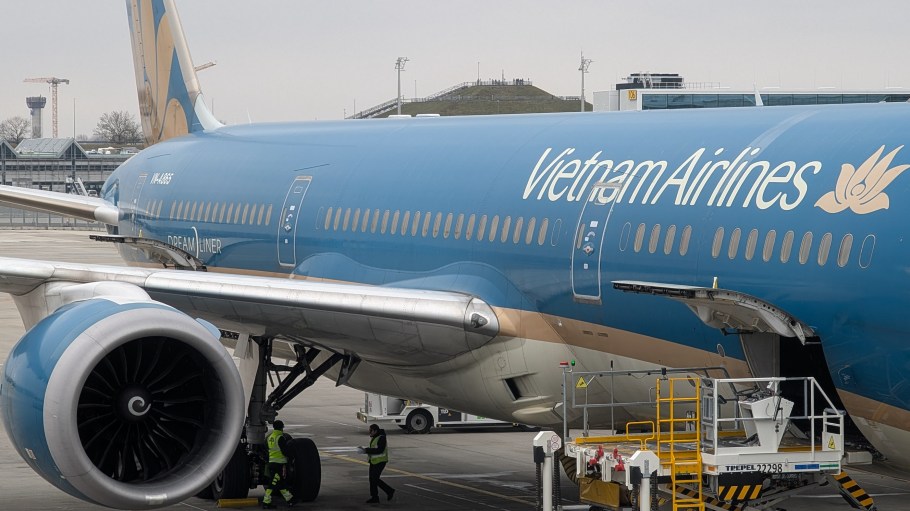
According to a recent report from global freight forwarder Dimerco Express Group, airline capacity out of Vietnam is expected to tighten throughout the holiday season due to the growth in demand, with space to the U.S. and E.U. will be limited before Christmas and New Year period. Vietnam, the top Southeast Asian trade partner of the U.S., saw exports to the country rise 22.5 percent in November.
That report had similar assessments of Singapore and Indonesia. For the former, shippers are rushing to move quarter-end volumes before the holiday period, leading to particularly tight space. And for the latter, both space and rates are tightening ahead of Christmas and New Year, Dimerco said.
High-volume flows into the U.S. have come from transit hubs such as Taiwan’s Taoyuan International Airport and Singapore Changi Airport, according to Dimerco.
The data did not break the numbers down by individual country, but the Southeast Asian export accelerations held up wider growth numbers from the Asia Pacific region to the U.S. Asia Pacific air cargo tonnages to the U.S. increased 6 percent from the year prior, despite decreases from China (5 percent), Hong Kong (14 percent), Japan and South Korea, the company said.
Although China-to-U.S. numbers are still declining from the year prior, air cargo shipments on that route have improved in recent months from the more pronounced double-digit declines during the summer as trade tensions between the countries have slightly eased.
Year-to-date figures for the first 11 months indicated that combined tonnages to the U.S. from China and Hong Kong are down by 7 percent.
Across the board, global demand growth has been steady.
Worldwide air cargo tonnages in November continued their annual growth pattern with a 5 percent increase, according to WorldACD. Demand slightly widened from the 4 percent year-over-year growth recorded in September and October.
UPS victims sue over fatal cargo plane crash
As the air cargo ecosystem maneuvers through the holiday season, one of its biggest U.S. players must deal with litigation stemming from a deadly plane crash last month.
Families of two victims who died in the incident are suing UPS and four other defendants over the crash, accusing the logistics provider of negligence for flying older aircraft without increasing maintenance beyond what’s regularly scheduled.
The UPS plane crashed shortly after takeoff at its Worldport air cargo hub in Louisville, Ky., killing 14 people including three crew members and 11 people on the ground, and injuring 23 others.
“This plane should have never been airworthy to be in the air that day, and this crash was preventable,” said attorney Bradley Cosgrove of Clifford Law Offices, during a press conference last Wednesday. “We hope to find all of the reasons why it was preventable.”
Clifford Law Offices is partnering with local attorney Sam Aguiar to represent family members Angela Anderson and Trinadette Chavez, both of whom died as a result of the crash.
The MD-11 cargo plane in question was 34 years old, with Clifford saying that the jet was too dangerous for delivery companies to fly in the air.
UPS subsidiary UPS Air, engine manufacturer General Electric, aircraft manufacturer Boeing and inspector VT San Antonio Aerospace were named in the lawsuit, filed in Jefferson County Circuit Court in Kentucky.
After the accident, the Federal Aviation Administration (FAA) ordered a temporary grounding of all MD-11 planes. Both UPS and FedEx grounded these planes after the incident, with the former taking action ahead of the FAA’s order.
The attorneys representing Anderson and Chavez have promised to conduct their own investigation into the crash, alongside the ongoing probes from the FAA and National Transportation Safety Board (NTSB). The NTSB’s investigation has thus far indicated that the plane’s left wing detached during takeoff, and that there were cracks in the plane’s engine mount.