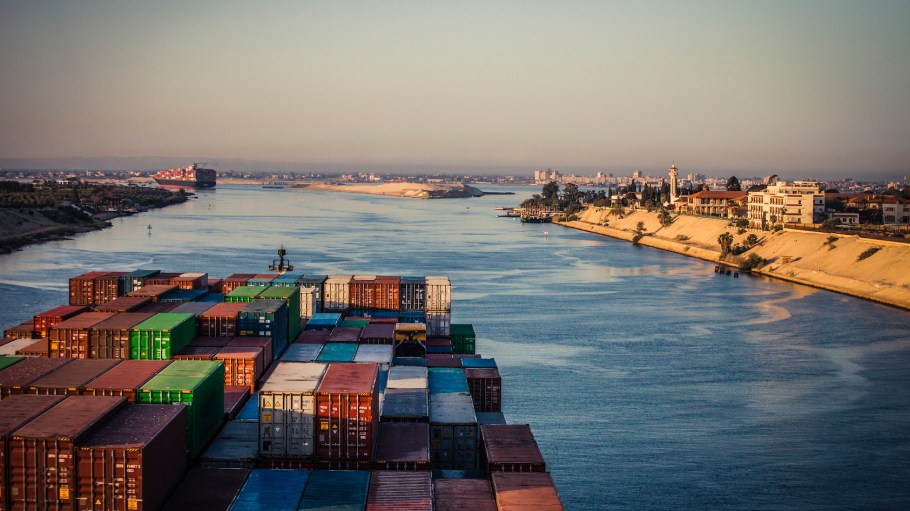
As Suez Canal traffic plummets in 2024 with ocean carriers snubbing the conflict-ridden Red Sea, the Houthi militants responsible for the chaos said they would keep escalating their attacks in the waterway, as well as the neighboring Bab el-Mandeb Strait and the Gulf of Aden.
In a televised speech Thursday morning, Abdul Malik al-Houthi, the leader of the Yemen-based Houthi movement, claims that they now have “submarine weapons” in their arsenal.
On the same day al-Houthi posed the threat, the United Nations Conference on Trade and Development (UNCTAD) released a report detailing just how big the gap in transit through the Suez Canal has been to start the year.
Related Stories
By Feb. 18, 621 container vessels had been rerouted around southern Africa’s Cape of Good Hope, according to maritime and shipping data intelligence firm Clarksons Research. In total, container tonnage crossing the canal fell by 82 percent between Dec. 1 and Feb. 12, UNCTAD said in its report, citing data from Marine Benchmark.
Last month, the United Nations’ trade and development body had expressed “profound concerns” over the combined decrease in transits across both the Suez Canal and the Panama Canal, which has dealt with a vessel backlog and increased transit restrictions due to low water levels.
Container ships have felt varying impacts from the global chokepoints, taking on the lion’s share (43 percent) of gross tonnage through the Suez Canal in 2023, the UNCTAD report said. On the other hand, they’ve been the least impacted in Panama, with total monthly transits increasing to 30.6 percent in December, according to the canal’s authority, up nearly 5 percentage points from October.
Unfortunately for the Suez Canal traffic, there is no timeline for any expected improvement in the Red Sea, with Maersk indicating that they don’t foresee any changes to the situation “anytime soon.”
With that in mind, the threat of “submarine weapons” isn’t the only ominous threat coming out of the Houthi camp.
The rebels, who have been launching repeated drone and missile strikes against commercial vessels in the Red Sea since November, sent formal notices to shipping firms and insurers outlining a ban on any vessels linked to Israel, the U.S. and the U.K. from sailing in the Red Sea and its surrounding waters.
While the Iran-backed Houthis initially established that any vessel with ties to Israel would be susceptible to an attack on claims that the strikes are result of the war in Gaza, the assaults have largely appeared to be indiscriminate.
On Sunday and Monday, the Houthis attacked other civilian ships, including the U.S.-owned and Greek-flagged Sea Champion, which was bringing corn and other food supplies to the Yemeni port cities of Aden and al Hudaydah.
The ongoing incidents have been combatted by a joint U.S. and U.K. naval coalition that has launched retaliatory air strikes on Houthi bases in Yemen. But the activity has still warded container vessels off. Ocean freight giants like Mediterranean Shipping Company (MSC), Maersk, CMA CGM and Hapag-Lloyd all diverted their vessels away from the Red Sea to instead navigate around Africa.
“A discernible lull in the frequency and effectiveness of attacks on Red Sea traffic in the last couple weeks had some hopeful that U.S.-led steps to degrade Houthi capabilities were succeeding. This week’s renewed aggression on commercial vessels though, including one that led, for the first time, to an abandoned ship, may suggest that there is still a long way to go,” said Judah Levine, head of research at Freightos in a market update.
Levine observed that ocean carriers are largely maintaining their adjusted schedules for departures and arrivals by both increasing sailing speeds and adding more vessels.
“With these strategies in place, carriers are reducing delays and have succeeded at avoiding congestion at major European and North American import hubs,” Levine said.
The delays have impacted apparel brands with European presences more heavily than their American counterparts, given that the direct link provided by the Suez Canal into the Mediterranean Sea is now largely closed off to the container shipping firms transporting their goods.
If there is a current positive for shippers, freight rates appear to continue their descent from their highs in late January, after they skyrocketed for nearly five weeks. Drewry’s World Container Index (WCI), which measures spot ocean freight rates across eight major trade lanes, declined 2 percent week over week to $3,659 per 40-foot container as of Thursday. Over the past four weeks, rates have dipped nearly 8 percent, Drewry says.