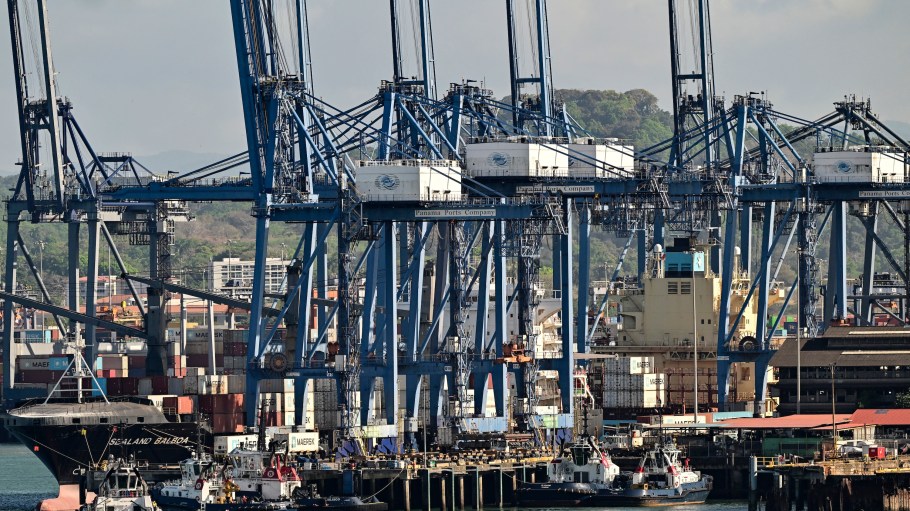
Panama’s Supreme Court has ruled that CK Hutchison’s contract to operate the Balboa and Cristóbal ports is unconstitutional, ultimately killing the Hong Kong-based company’s attempted sale of the gateways to a consortium including BlackRock and Mediterranean Shipping Company (MSC).
The decision invalidates Hutchison’s ownership of the two ports, with Panama President José Raúl Mulino affirming in a televised address Friday morning that he instructed the Panama Maritime Authority to meet immediately with the port operator’s subsidiary, Panama Ports Company (PPC), to coordinate a transition process with “no improvisation.”
Related Stories
“Until the ruling becomes final, the current operator will continue operating without any changes,” said Mulino. “Afterward, a transition period will begin, culminating in a new concession under terms and conditions favorable to our country.”
Mulino indicated that contingency plans for the Supreme Court ruling have been in place for a year, announcing the appointment of former Panama Canal administrator Alberto Alemán Zubieta to run the team tasked with coordinating all port responsibilities and overseeing the transition.
Once the final ruling becomes official, Maersk-owned APM Terminals will oversee both ports until a new concession can be bid on and awarded. There is no timeline for when the ruling will go into effect.
APM “has shown willingness to temporarily assume the operation of both terminals and has the necessary capacity and experience,” Mulino said.
According to APM, its temporary oversight will aim to mitigate any risks that could impact essential services for regional and global trade and provide support to Panama’s logistics hub.
“The company is not involved in the ongoing legal proceedings and bears no role in decisions regarding the short- or long-term structure or future administration of Balboa and Cristobal terminals,” APM said in a statement. “Any action to be taken by APM Terminals will be guided by technical criteria, supply chain integrity and the public interest.”
Hutchison had an agreement in principle to sell 43 ports including the Panama ports to the MSC-BlackRock consortium for $22.8 billion. That initial agreement became a proxy for the geopolitical rivalry between the U.S. and China, and was seen as a victory for U.S. President Donald Trump, who had made his intentions known upon his return to the White House that he wanted to “take back” the canal and rid it of any potential Chinese influence.
Washington has considered Hutchison’s operation of the ports as a national security threat to the U.S.
On the other hand, Beijing had objected to the initial sale terms, opening an antitrust probe into the deal that ended up putting it on ice. The Chinese government had demanded for a Chinese investor to be included in the deal, and upped the ante in December by threatening to block the transaction if state-owned Cosco Shipping did not get a controlling stake in the deal.
The annulment follows a government audit early last year that found contractual irregularities and the loss of approximately $1.3 billion in revenues since CK Hutchison took over the ports’ operations in 1997, before renewing the contract for an additional 25 years in 2021 without a competitive bidding process. The audit determined that CK Hutchison had owed the Panamanian government $300 million since the concession was extended.
In the wake of the audit, Panama’s comptroller general filed a lawsuit against Hutchison at the Supreme Court, alleging the contracts violated the interests of the government and taxpayers.
While CK Hutchison cannot appeal a Supreme Court ruling, it can request clarifications that could delay the termination of its operating license.
PPC said it reserves all rights including to proceed with legal action, both nationally and internationally.
The subsidiary called the Supreme Court’s decision “inconsistent” with the country’s legal framework and the law that approved the 1997 contract, saying that it has complied with its contractual and legal obligations, including the state-conducted audits.
“The new ruling, based on available information, lacks legal basis and jeopardizes not only PPC and its contract, but also the well-being and stability of thousands of Panamanian families who depend directly and indirectly on port activity, but also the rule of law and legal certainty in the country,” said PPC in a statement.
The company argued that its concession contract was the result of a transparent international bidding process and the ruling was “diametrically opposed to previous decisions” on similar contracts.
Chairman John Moolenaar (R-Mich.) of the U.S. House Select Committee on China called the high court’s ruling a “win for America, Panama and all of our allies who recognize the Canal’s importance to national security and the world economy.”
Chinese Foreign Ministry spokesperson Guo Jiakun said Friday that China “will take all measures necessary to firmly protect the legitimate and lawful rights and interests of Chinese companies.”
For China, the ruling follows another blow to the country’s ambitions in the Western Hemisphere, with the U.S. ousting Venezuela President Nicolás Maduro earlier this month. China invested billions in the country’s infrastructure and purchased most of its oil under the Maduro regime.