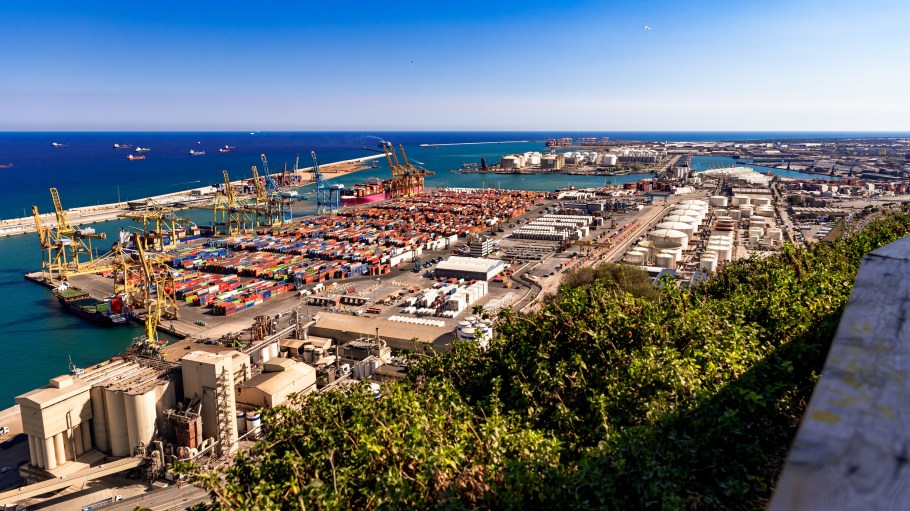
The European Commission opened an antitrust investigation into a deal that would split ownership of the Port of Barcelona’s largest container-handling terminal.
Mediterranean Shipping Company (MSC), via its terminal operator subsidiary Terminal Investment Limited (TIL), has sought to acquire joint control of Terminal Catalunya from its current owner, CK Hutchison.
But the E.U.’s executive branch said it is concerned that the transaction may lead to higher prices or reduced quality of container terminal services at the port, prompting Wednesday’s probe. This could lead to disadvantages for container shipping companies competing with MSC, the commission said.
Related Stories
Reuters initially broke the news that an investigation was looming in early December.
Terminal Catalunya operates the Barcelona Europe South Terminal (BEST), which is the main deep-sea gateway for cargo moving to and from Barcelona and elsewhere throughout Spain. Hutchison currently controls 100 percent ownership of the terminal, but would sell 50 percent of it to TIL under the potential deal.
“The merged entity may foreclose competing container liner shipping companies by providing preferential treatment to MSC for the use of BEST’s container terminal services,” said the European Commission in a statement.
In E.U. competition terms, foreclosure refers to a scenario where MSC could limit rival carriers’ access to essential port services or a critical facility, like BEST. The commission contends that such a strategy could be profitable for MSC.
“Such discriminatory treatment may notably take the form of higher prices, late access to the berth, limited availability of cranes and storage space for MSC’s competitors,” the statement adds.
The commission also indicates that foreclosed container shipping companies could have limited opportunities to switch to the other deep-sea container terminal in the Spanish port, Terminal de Contenedores de Barcelona (TCB). That terminal is owned and operated by APM Terminals, the subsidiary of MSC’s chief rival Maersk.
Switching terminals can take weeks of planning and incur likely cost increases for competing carriers, all while potentially creating new terminal capacity constraints. Western Mediterranean ports like Barcelona have dealt with congestion at several points over the past two years due to knock-on effects from the Red Sea crisis, which caused ships to take longer to travel from Asia to Europe and resulted in mass vessel bunching and scheduling shifts.
Although terms of the BEST acquisition have not been disclosed, reports from 2024 suggest that MSC’s expected range to purchase its stake would be between 250 million euros and 350 million euros ($293 million and $410 million).
Along with MSC and Hong Kong-based Hutchison, the Port of Barcelona’s board of directors had approved the transfer.
An earlier report from Spain-based logistics publication El Mercantil said that MSC already occupies 60 percent of the facility’s capacity.
MSC calls at the Mediterranean port with 12 of its services, all which dock at BEST. This includes two trans-Atlantic services, three Asia-Europe offerings, two Europe-Middle East- India services and another five regional feeders.
The commission set an April 30, 2026 deadline to end its in-depth probe. Full-scale E.U. investigations could enforce potential concessions including divestments to address the competition concerns.
This deal is separate from a higher-profile port transaction between MSC and Hutchison, in which the ocean carrier and its U.S.-based partner BlackRock would acquire 43 ports worldwide.
The scrutiny of the Spanish deal could indicate how E.U. regulators could examine the European part of the controversial $23 billion proposed acquisition.
China already had opened a probe into that deal shortly after it took place in March, delaying the transaction from closing. Their contention regarding the sale emanates from two of the ports included in the transaction, both of which sit on opposite sides of the Panama Canal.
The ongoing geopolitical battle between the U.S. and China only clouds the future of the acquisition further.
China is unhappy that the Balboa and Cristóbal ports would be changing hands from a Hong Kong-based entity to an American one, and has sought to alter the deal by including a Chinese investor.
The Trump administration has sought to rid the canal of any potential Chinese influence for what Washington considers a national security issue for U.S. vessels. Ahead of his inauguration, President Donald Trump asserted last December that he wanted to “take back” the Panama Canal, despite it being under Panama’s ownership.