Organizations are investing in logistics technology to ensure that post-pandemic supply chains are agile and resilient. It became apparent during the crisis that organizations’ rigid supply chains could not adapt to capacity constraints, rising rates and limited visibility. As a result, organizations racked up delays and added costs.
Indeed, according to material handling, logistics, and supply chain association, MHI, and consulting firm, Deloitte Consulting LLP’s 2023 MHI Annual Industry Report, 87 percent of the more than 1,000 manufacturing and supply chain leaders surveyed noted that the pandemic elevated the strategic importance of their supply chains. Nearly 78 percent of supply chain leaders surveyed indicated that their digital transformation accelerated due to the pandemic, and 64 percent increased their digital supply chain investments.
Related Stories
The types of logistics technologies that organizations are investing in are those that automate labor-intensive tasks such as pick and pack in warehouse operations, the ability to ‘see’ beyond tier-1 and tier-2 suppliers and utilizing the piles of available data to analyze for new services, optimize supply chains and better understand customers. Emerging technologies organizations are keenly interested in technologies that assist in producing spare parts closer to customers and tracking sustainability metrics.
Here are five areas that executives and brands are looking toward when considering new investments.

Automation
During the pandemic, many organizations found that their available labor supply was finite, and turnover was even higher. Warehousing employment, for example, ramped up to meet strong consumer spending for goods ranging from clothing and sporting equipment to furniture. Employers raised wages and benefits to attract and retain workers.
Warehouse employment peaked at an all-time high in June 2022, with almost two million people in the warehousing and storage sector. Since then, employment in that area has begun to taper off.
However, turnover rates average about 40 percent, according to the U.S. Bureau of Labor Statistics, so the need to replenish workers is constant and expensive. According to the third-party logistics provider, Kane Logistics, it costs an average of $8,500 to replace a warehouse worker.
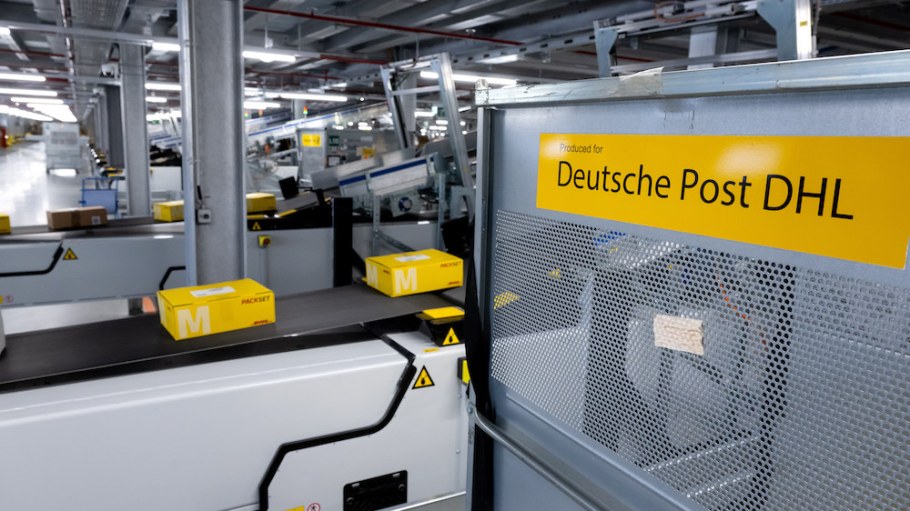
As such, automation investments are being made. DHL Supply Chain, for example, is focusing automation of its most labor-intensive processes, such as picking boxes or individual items and loading and unloading pallets or separate boxes, which it estimates contributes about 33 percent of total direct hours today. With its collaborative robots that assist in picking, DHL Supply Chain estimates that it has increased productivity by 70 percent and reduced training time by 80 percent.
Visibility
Supply chains are intricate and involve numerous partners to manufacture, transport, store, and deliver goods. The pandemic highlighted “broken links,” that is, a lack of visibility within supply chains which resulted in the inability to completely track goods end-to-end in real-time.
Such questions as, “are the goods with a tier-3 supplier?” or “how long have the goods been sitting at a port waiting to be loaded on an ocean vessel or a truck?” require visibility technologies such as IoT devices or sensors to understand where goods are in the supply chain or their condition and cloud-based platforms for collaboration among suppliers and other supply chain partners.
Such technologies enable organizations to improve customer service and cost controls by providing proactive status updates, limiting disruptions and risk mitigation, and managing inventory from the manufacturer to the final customer.
One such example comes from Nordstrom. “We are also enhancing our capabilities to manage inventory with greater precision at the unit level through investments in RFID. [This] will help us deliver a fresh and relevant assortment at the store level for our customers. It will also improve our ability to buy, allocate and track merchandise across our network, provide us greater visibility in the profitability at the unit level, increase efficiency, and reduce shrinkage,” Nordstrom president and chief brand officer Pete Nordstrom told analysts during the company’s earnings call on March 2.
Data Analytics
Data from visibility technologies and other connected sources is helping organizations to identify and analyze various supply chain outcomes and customer needs. According to the consulting firm EY, 93 percent of companies plan to increase investments in data and analytics.
Investments in artificial intelligence (AI) driven data analytics are assisting organizations in optimizing supply chains to ensure they are efficient and cost-effective, identifying new opportunities, and anticipating future disruptions.
The MHI/Deloitte report found that data analytic solutions can help in waste reduction and help provide more accurate forecasting.
In addition, data analytics helps organizations understand customers beyond just demographics. For example, Lands’ End CEO Andrew McLean highlighted the importance of data in the company’s March 16 earnings call. “We have an amazing amount of data. We stopped looking at the customer just in terms of a demographic and started looking at behavioral cohorts,” he said. “And as we got further into those behavioral cohorts, we saw patterns in the customer that we could use to help them connect the dots across our categories. So, whereas we have had cohorts for the customer who tend only to shop one item, outerwear, that might be the shop that they are, swim, that might be the shop that they are, we will look for ways to connect them across our categories.”
Emerging Technologies
Organizations are also looking beyond standard technologies to address issues such as spare parts shortages and measuring sustainability goals to meet rising government requirements and customer requests for more sustainable goods.
Additive manufacturing or 3D printing has been around for years but has yet to fully take off as an option to manage spare parts until, perhaps, now. Supply chain disruptions and geopolitical issues such as the Ukraine war are causing manufacturers to consider onshoring or nearshoring parts, or even all, of their supply chains. This trend could benefit additive manufacturing by allowing manufacturers to print parts on-site in hours or days instead of the months it might take to get what they need from across the world. As a result, this strategy could help manufacturers bring products to market faster and with fewer disruptions.
We have an amazing amount of data. We stopped looking at the customer just in terms of a demographic and started looking at behavioral cohorts.
Andrew McLean, Lands’ End
While additive manufacturing has been around for some time, quantifying sustainability is still in its early stages. Perhaps one of the positives to emerge from the pandemic is an increase in consumers’ desire to associate with companies that embrace greener practices. Additionally, more organizations face mandatory disclosures per government, association, or corporate policies to assess their carbon footprint, energy consumption, climate risk, and other metrics. What and how to measure is still very much in an infant period, with much of the process still being done in Excel spreadsheets because of the unstructured nature of the data.
Digitazation – The Ultimate Goal
Organizations are picking up where they left off before the pandemic hit in 2020 in terms of technology investments but now with an even greater sense of urgency. The pandemic highlighted pain points and the need for agility and resilience to address existing and future uncertainties.
These investments come as organizations rethink strategies such as supplier locations, transportation partners, warehousing networks, regionalized or global supply chains, or perhaps a combination of all of the above. Technology is a crucial glue to connect and provide more significant insights. Still, ultimately it is the people that make the decisions, establish the strategies and drive change.
This article ran in Sourcing Journal’s Logistics report. To download the full report, click here.