Mass roadblocks reported in western Mexico on Sunday could impact the movement of cargo throughout the country as well as cross-border trade into the U.S., possibly leading to multi-day delays.
The U.S.’s top trade partner has endured ripples of violence throughout the country in the wake of the capture and killing of Mexico’s most wanted drug kingpin, Nemesio Oseguera Cervantes.
Cartel groups responded to the killing of Oseguera, known as “El Mencho,” with scattered violence across Mexico, including blockading roads, setting fire to vehicles and attacking businesses.
Related Stories
“While freight is still flowing on the main highways to key border crossings including Laredo and El Paso, anything touching western Mexico is likely to run behind schedule,” said Veronica Gonzalez, director of surface transportation, Mexico at C.H. Robinson, in an update on LinkedIn Monday. “From our 35 years of experience in Mexico, I’d say shippers should plan for delays through at least the first half of the week.”
The disruptions have impacted primary freight routes from the western port city Manzanillo to Guadalajara all the way into Tamaulipas, Mexico’s most northeastern state that borders Texas. Tamaulipas includes Laredo and another major border crossing, Reynosa.
Among the areas worst affected by the violence are Guadalajara and Puerto Vallarta, cities inside the western state of Jalisco, where Mexican special forces captured and killed Oseguera.
“The situation is not directly related to cargo criminals, however it is likely cargo criminals will take advantage of the situation,” said supply chain risk prevention technology provider Overhaul in a customer alert Monday.
Echo Global Logistics, another third-party logistics (3PL) company with significant operations in Mexico, said disruptions could continue with increased roadblocks, vehicle inspections and temporary closures of key corridors.
On Sunday, Mexico’s National Chamber of Freight Transportation (CANACAR) called on freight operators to take refuge in safe areas or return to their operating yards until the situation normalizes and there are adequate conditions for the flow of goods.
“It is important to emphasize that highways are the operational backbone of freight transport, a strategic activity for ensuring the continuous supply of food, medicine, fuel, industrial inputs and essential goods throughout the country,” CANACAR said in a statement. “Any prolonged disruption directly impacts both the economy and the daily lives of millions of people.”
CANACAR said it is committed to providing drivers support in the event of any harm, incident or risk involving operational personnel or transport units.
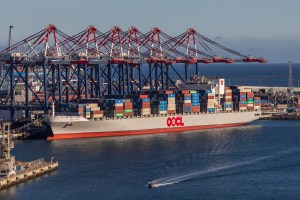
The Port of Manzanillo, Mexico’s busiest container port, had briefly closed Sunday but had reopened before the end of the day. But although the port itself was operating normally on Monday, blockades and fires outside the port continued to interrupt freight movement.
“With many carriers unwilling to send drivers into parts of western Mexico, trucking capacity in the region tightened very quickly,” said Gonzalez.
Mexico’s Secretariat of the Navy said security at the port had been reinforced at the port with drone surveillance, additional patrols and monitoring of vessel traffic.
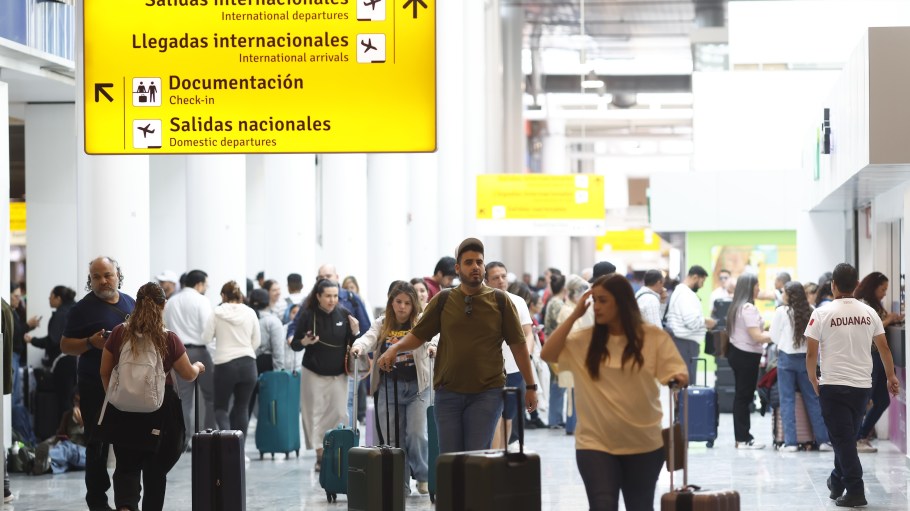
Mexico City International Airport maintained operations, but morning flights to Guadalajara and Puerto Vallarta were canceled.
Several international carriers, including United Airlines, Southwest Airlines, Alaska Airlines, Air Canada, and WestJet, suspended service to Guadalajara, Puerto Vallarta and Manzanillo.
“We are not yet aware of any impacts to air cargo,” according to the update from Gonzalez.
During her daily morning press conference, Mexican President Claudia Sheinbaum said that all commercial flights are expected to resume by Tuesday.
Ahead of the outbreak of hostilities, cargo theft had already been a significant problem in Mexico due to the excess violence that takes place during most incidents.
According to the country’s National Public Security System, 82 percent of thefts from carriers involved some type of violence.
Last year, the same percentage of cargo thefts nationwide were concentrated in Mexico’s central (51 percent) and western (31 percent) regions, according to Overhaul’s annual cargo theft report.
The primary mode of theft in Mexico remains the interception of cargo units in transit, accounting for 64.1 percent of cases. However, that figure represents a 12 percent decrease compared to 2024.
The theft of parked units filled the void where the in-transit interceptions dropped. This method was the second-most commonly observed by Overhaul, at 33.1 percent of incidents. The mode saw an 11.9 percent increase in 2025.
Most of these events occurred in high-risk areas such as “cachimbas” (roadside diners) or “huachicoleras” (clandestine fuel stops), the report said.
The escalating cargo theft and violence prompted Mexico’s truckers and other transportation workers to hold a blockade of their own throughout many of the country’s major highways in November.