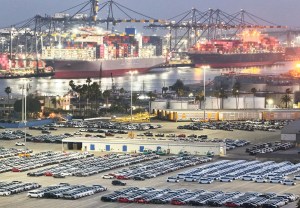
The Trump administration’s Maritime Action Plan released Friday packs a punch that could open the door for an expansion of fees to call at U.S. ports, tighter cargo preference rules and a long-term push for U.S.-flagged commercial shipping capacity.
The Maritime Action Plan aims to increase domestic shipbuilding capacity, incentivize investment in U.S. shipyards via tax credits and financial aid and establish “maritime prosperity zones” to spur on the investments.
Last April, President Donald Trump signed an executive order geared at reviving the U.S. shipbuilding industry, requiring several government departments to submit the Maritime Action Plan by November.
Related Stories
The launch of the action plan apparently was delayed amid various setbacks, including the administration’s cuts to the newly formed shipbuilding office as part of a wider reshuffling of the National Security Council (NSC). Last July, the office was moved under the purview of the Office of Management and Budget and director Russell Vought.
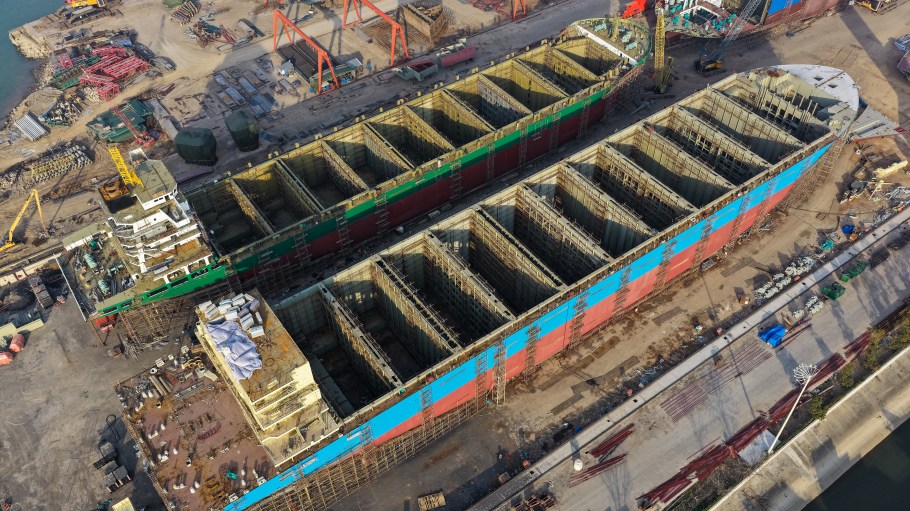
The long-awaited launch of the plan is designed to give a second wind to an industry that has been significantly outpaced by China, South Korea and Japan throughout the past 50 years.
According to the 37-page document, less than one percent of new commercial ships are built in the U.S. As of last June, China-made ships accounted for 34.8 percent of the global maritime fleet, while South Korean vessels comprised 30.9 percent, according to data from maritime consultancy Clarksons.
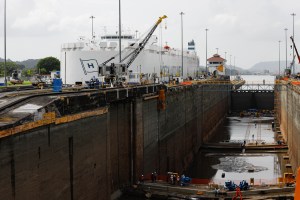
Currently, the U.S. has 66 total shipyards, consisting of just eight active shipbuilding yards. Eleven yards have some capacity to make new ships, but have not constructed a naval ship or major oceangoing merchant vessel in the past two years. Twenty-two are repair yards with dry docking capability, while 25 can perform repairs but don’t have a dry dock repair capability.
“The U.S. does not have the capacity necessary to scale up the domestic shipbuilding industry to the rate required to meet national priorities,” wrote Vought and Secretary of State Marco Rubio in the plan’s introduction. “Strategic competitors, meanwhile, dominate the market and build ships at a fraction of the cost of U.S. production. This status quo poses significant security and supply chain dependency issues.”
The shipbuilding push and ensuing action plan followed the U.S. Trade Representative’s determination that China violated Section 301 trade laws in having an unreasonable dominance over the global maritime, logistics and shipbuilding sectors.
One recommendation within the document would establish a universal fee on foreign-built commercial vessels docking at U.S. ports regardless of their origin country. This would expand on the port docking fees that were briefly slapped on Chinese-built and -operated ships in October before the U.S. postponed the fees for one year.
The newly recommended charges would be framed as an “infrastructure or security fee” to be assessed on the weight of the imported tonnage arriving on the vessel.
According to the action plan, a fee of 1 cent per kilogram on foreign-built ships would yield roughly $66 billion in revenue over 10 years. A higher estimate of 25 cents per kilogram would yield close to $1.5 trillion in revenue, which could be used for a newly established Maritime Security Trust Fund aimed at ensuring long-term investments into American shipbuilding.
The document rationalizes the charges by saying that foreign-built vessels benefit from U.S. market access.
When the port docking fees on Chinese vessels were being workshopped last year, they generated criticism from beyond the container shipping industry, including retailers, port dockworkers and farmers. Concerns were largely due to the potential to pass higher costs along to the consumer, alongside skipped port calls that could lead to lengthier delivery times and job losses.
The International Chamber of Shipping (ICS) supports the wider action plan and the U.S. focus on revitalizing its shipbuilding capabilities, but is opposed to any proposed port fees, noting that they would represent “a substantial additional cost burden on maritime transport.”
“Such measures risk distorting trade, increasing costs for U.S. consumers and businesses, disrupting the smooth flow of global commerce, and could encourage retaliatory measures,” the ICS said. “ICS strongly advocates for shipping to be able to move trade freely, efficiently, and without unnecessary barriers.”
The action plan also recommended to establish a U.S.-flagged strategic commercial fleet consisting of internationally trading U.S.-built vessels that would help provide logistics capabilities for military stationed worldwide, while also ensuring the continuous flow of goods to the U.S. economy.
This recommendation did not specify the levels of expected expansion, but noted “the size of today’s internationally trading U.S.-flagged fleet is insufficient to meet long-term contingency requirements or withstand attrition in a prolonged conflict.”
In line with the strategic fleet expansion, the administration is recommending another protectionist policy measure in requiring high-volume exporting economies to transport a gradually increasing percentage of their U.S.-bound containerized cargo on qualifying U.S. vessels.
The White House also recommends expanding cargo preference requirements so that more than the current obligatory 50 percent of civilian U.S. government agency cargo moves on U.S.-flagged vessels.
U.S. lawmakers hope the Maritime Action Plan will help build momentum for another maritime bill aimed at solving many of the current shipbuilding gap concerns in Washington. The bipartisan SHIPS for America Act was introduced in Congress in December 2024, before an updated version was reintroduced four months later. The bill would provide more national oversight and federal funding for shipbuilding, mariner training and for rapidly expanding the U.S.-flagged fleet.