Maersk will take steps to return to the Red Sea “as soon as conditions allow,” but still does not have a hard date set for a return to the waterway.
In a joint press conference with the Suez Canal Authority (SCA) on Tuesday, Maersk CEO Vincent Clerc again asserted that the resumption of navigations through the Suez Canal will be dependent on the safety of its crew members.
“Given the significant progress in both Gaza and [the] Bab el-Mandeb [Strait], Maersk will take steps to resume navigation around the East-West corridor via the Suez Canal and the Red Sea, and normalize transit over time,” Clerc said.
Related Stories
The SCA and Maersk signed a strategic partnership agreement during the joint press conference.
A Tuesday morning report from Egyptian newspaper Ahram Online had indicated that the ocean carrier would begin a phased return to the Suez Canal in December as part of that agreement, but according to Reuters, a Maersk spokesperson denied that a date was set.
Sourcing Journal reached out to Maersk.
At the meeting, Suez Canal Authority chairman Osama Rabie said the passage is fully prepared to receive vessels and restore services to normal levels in the wake of the ceasefire between Israel and Hamas.
The authority is exploring new areas of cooperation with Maersk within the partnership, according to Rabie. This includes ship scrapping, container manufacturing and repair, shipyard development and logistics services.
Rabie added that the authority is exploring new areas of cooperation with Maersk, including ship scrapping, container manufacturing and repair, shipyard development, and logistics services.
The Suez Canal Authority had been calling on Maersk and other container shipping firms to return to the trade conduit in recent meetings with company representatives.
Ocean carriers including Maersk and Mediterranean Shipping Company (MSC) had avoided the route for nearly two years due to ongoing attacks on commercial ships by the Houthi militant group based out of Yemen. Instead, the liners would travel around southern Africa’s Cape of Good Hope, tacking on 10-14 days on most voyages.
After September’s ceasefire, the Houthis said they would suspend the attacks as long as the truce holds up.
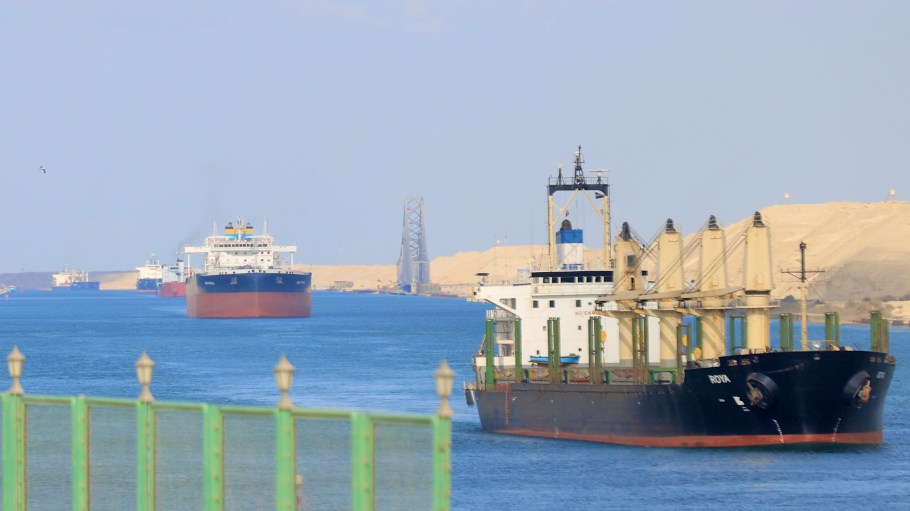
As for the Suez Canal, its operator announced the waterway had a rebound in recent traffic, with 229 ships resuming transit through the Suez Canal in October. This was the highest monthly figure since the start of the Red Sea crisis, according to the SCA.
Suez Canal revenues rose 14.2 percent year over year between July and October.
ZIM indicated in its own recent earnings call that the container shipping firm was awaiting approval from its insurance companies, as well as the owners of its chartered ships, before making a Red Sea return.
The carrier’s CEO, Eli Glickman, was optimistic about his company’s timeline, saying a return “in the near future now appears increasingly likely.”
Of the major carriers, CMA CGM had been the most willing to risk traversing through the Red Sea throughout the crisis as its ships could be escorted through by the French Navy. But the container shipping company kicked its return further into gear this month with four ultra-large container ships sailing through the canal—the first instances of vessels of that size making the journey since before the Houthi attacks.
The return of more carriers to the Red Sea could mean potential congestion and vessel bunching at European ports, analysts have warned.
Carriers have plans for a gradual phase-in of the transition back to the Red Sea, with smaller vessels starting to transit first. This approach would still cause vessel bunching, but would be aimed at minimizing the impact of the reset as much as possible,” said Judah Levine, head of research at Freightos in a Tuesday update. “But some carriers are skeptical that an orderly phase-in will happen, as they expect pressure from customers who will want a return to the shorter route as quickly as possible.”
According to data from Sea-Intelligence, an industry return to the Suez Canal would release approximately 2.1 million 20-foot equivalent units (TEUs) of container capacity back in the market.
Last week, on the second anniversary of the start of the Houthi attacks, the American Apparel & Footwear Association (AAFA) commended the Trump administration for its actions to protect commercial shipping and urged “sustained deterrence” to ensure freedom of navigation worldwide.
The AAFA also welcomed the administration’s decision to designate the Houthis as a foreign terrorist organization.
“This action appropriately recognized the severity of their attacks, strengthened the legal tools available to disrupt their financing, and sent an unmistakable signal that violence against commercial shipping will not be tolerated,” read the letter from Steve Lamar, president and CEO of the AAFA.