Maersk has transited the Red Sea for the first time in nearly two years, signaling a possible shift for the ocean carrier as it weighs a more regular return to the waterway.
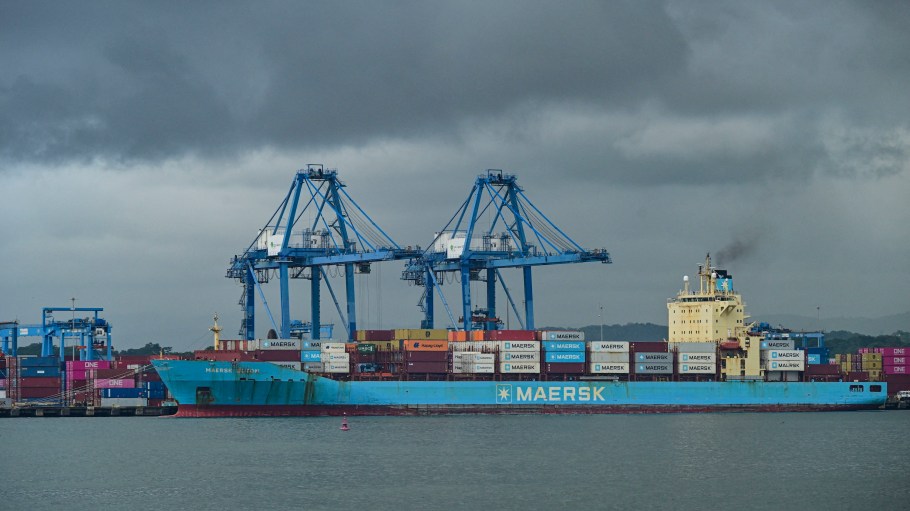
On Dec. 18-19, the Singapore-flagged vessel Maersk Sebarok currently operating on the liner’s MECL service transited the Bab el-Mandeb Strait and the southern Red Sea. Within that service, vessels sail from several Middle Eastern and Indian ports to and from stops on the U.S. East and Gulf Coasts.
Most major ocean carriers including Maersk rerouted vessels around Africa’s Cape of Good Hope starting in December 2023 after Houthi rebels based out of Yemen started attacked ships in the Red Sea with drones and missiles. The militant group continued the onslaught for all of 2024 and sparingly in 2025 in what they said was a show of solidarity with Palestinians in Gaza during the Israel-Hamas war.
Related Stories
The Houthis have since stopped the attacks in the wake of the ceasefire between Israel and Hamas, but industry concerns still remain.
“Irrespective of the limited and cautious approach, it does indicate we could be nearing a gradual normalization,” said Lars Jensen, CEO of container shipping consultancy Vespucci Maritime, in a Saturday LinkedIn update.
According to MarineTraffic, the Sebarok is stationed at the Suez Canal’s southern anchorage as of Monday, so it has not traversed the trade artery yet.
The 6,500-container ship is expected to pass through the canal on Tuesday, before making a trans-Atlantic voyage to the U.S. The container ship is expected to arrive at the Maher Terminal at the Port of New York & New Jersey on Jan. 13. From there, it will travel south to the ports of Charleston, Savannah and Houston in the days after.
According to the advisory, the initial navigation will be followed by a limited number of additional trans-Suez sailings. However, Maersk says there are currently no planned sailings.
“The safety of our crew, vessels and cargo remains of utmost importance to us, and the highest possible safety measures were applied during transit,” said Maersk in a statement. “Whilst this is a significant step forward, it does not mean that we are at a point where we are considering a wider East-West network change back to the trans-Suez corridor.”
Maersk’s decision follows the limited return of container shipping rival CMA CGM to the Red Sea, as well as the recent launch of a Red Sea-to-China line by Ocean Network Express (ONE). For ONE, the Red Sea return is part of a charter agreement with three regional carriers—Regional Container Lines (RCL), TS Lines and Global Feeder Shipping.
The Premier Alliance, which ONE is a part of alongside Hyundai Merchant Marine (HMM) and Yang Ming, unveiled in its 2026 network plans that the carriers will still navigate the Cape of Good Hope until stated otherwise.
Maersk has been guarded about its Red Sea plans, having reiterated throughout 2025 that the company will only return full time when safety and security are guaranteed. CEO Vincent Clerc said it would cost hundreds of millions of dollars for Maersk to return to the Red Sea on a larger scale, only to have to revert to the Cape of Good Hope route.
Last month, the Suez Canal Authority had indicated Maersk would begin a phased return to the waterway in December as part of a new strategic partnership. But in the hours after the announcement, the container shipping giant asserted that it did not commit to a timeline.
As Maersk takes more steps for a Red Sea return, its Gemini Cooperation alliance partner Hapag-Lloyd has largely stayed out of the conversation.
A Thursday report from supply chain publication Journal of Commerce said that customers transporting goods on the India America Express (TPI) shipping route were against the Red Sea return.
The report said freight forwarder Expeditors International remained cautious about the potential for another Houthi attack due to the increased liabilities and costs attached. The elevation of war-risk premiums by insurance companies has been a major factor in the container shipping industry largely avoiding traffic through the Red Sea.
A series of attacks in July more than doubled the premiums from roughly 0.3 percent of a vessel’s insured value to 0.7 percent in a weeks’ span, according to Reuters, forcing carriers to pay up more if they wanted to travel the conflict-ridden waterway.
According to the JOC report, Expeditors was unable to convince many of its core shipper clients to sign on for a return, since it would have required them to absorb the terrorism and war-risk liabilities.
Hapag-Lloyd CEO Habben Jansen had previously said last month that the company has a plan for how it would return, but noted that the company did not set a date.