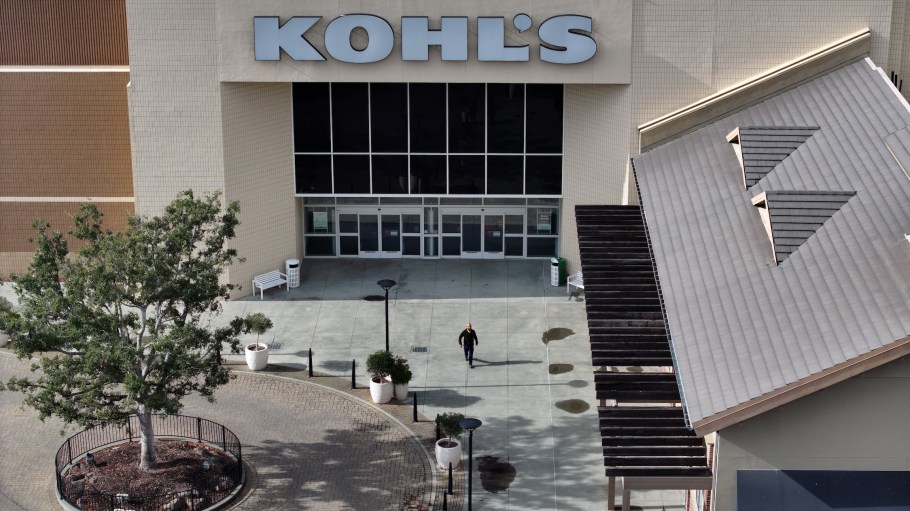
Just as department store contemporary Macy’s unveiled a new slate of store closures, Kohl’s is dialing back real estate of its own across its retail operations and supply chain.
The retailer said it is closing 27 underperforming stores by April, and will shutter an e-commerce fulfillment center in San Bernardino, Calif. when its lease ends in May.
“We always take these decisions very seriously,” said Tom Kingsbury, Kohl’s outgoing CEO, in a statement. “As we continue to build on our long-term growth strategy, it is important that we also take difficult but necessary actions to support the health and future of our business for our customers and our teams.”
Related Stories
The 575,000-square-foot San Bernardino facility has been in operation for Kohl’s since 2010, and is part of a wider network of 15 fulfillment and distribution centers in the retailer’s nationwide supply chain.
Kohl’s said that in recent years, the department store has bolstered efficiency at its newer fulfillment facilities with new technology capabilities, and has expanded its ability to fulfill customer orders from store locations.
These actions have helped the Menomonee Falls, Wisc.-based retailer maintain its ability to fulfill orders without the San Bernardino facility, the company said.
According to a Worker Adjustment and Retraining Notification Act (WARN) notice filed Wednesday, 690 employees will be laid off on March 28 ahead of the closure.
Coincidentally, Nordstrom also shuttered a San Bernardino fulfillment center in mid-2024 as it streamlined its West Coast fulfillment operations. That move was designed to transition more of its merchandise to its heavily automated 1-million-square-foot Riverside, Calif. facility, which fulfills online customer orders and ships merchandise to stores.
In August, Nordstrom also scrapped plans for an omnichannel fulfillment center in the Pacific Northwest as it further consolidated logistics on the West Coast.
Like Kohl’s and Nordstrom, Macy’s is rethinking its logistics and distribution as part of a wider plan to cut $235 million in supply chain costs by the end of 2026. The company said last March that it would close multiple distribution centers that had higher processing costs, but hasn’t shuttered any of its 25 distribution centers yet.
As for Kohl’s store closures, the brick-and-mortar cuts are a small portion of the more than 1,150 locations Kohl’s operates, making it a much smaller downsizing than the one seen at Macy’s, where 66 stores are set for closure in 2025. In early 2024, Macy’s unveiled it would close 150 “underproductive” stores by the end of the 2026 fiscal year, leaving roughly 350 locations.
All associates have been informed of the closures, and have been offered a severance package or the ability to apply to other open roles at Kohl’s.
Ten of the 27 stores shuttered are in California. Separate WARN notices indicate that 239 employee layoffs will occur across four of the locations in San Diego, Sacramento, Westchester and Pleasanton. Virginia, Ohio and Illinois all host two soon-to-be-closed stores each.
One store each will close in Alabama, Arkansas, Colorado, Georgia, Idaho, Massachusetts, New Jersey, Oregon, Pennsylvania, Texas and Utah.
Kohl’s closures come as the retailer, and the department store sector at large, has been treading water.
Net sales at Kohl’s in the third quarter declined 8.8 percent from the year prior, with same-store sales dipping an even further 9.3 percent—the 11th consecutive quarter the retailer has seen such a decline. Net income for the beleaguered Amazon and Sephora partner fell 63 percent to $22 million.
In a November earnings call, chief financial officer Jill Timm had hinted that Kohl’s may be in line to trim its physical footprint, straying away from its approach in recent years.
“We’re always evaluating our fleet to optimize it, and I think we’re always going to have moves that I would consider more from a hygiene perspective,” Timm said in the call. “But I would definitely say that there are places that we’ll look at, but over 90 percent of our stores are still four-wall cash-positive.”
That would indicate that nearly 10 percent of the 1,150-store fleet, or 115 locations, are losing money.
“It’s a difficult financial decision to make, but obviously, on the periphery…there’s going to be some opportunities for us to address those underperformers, which we will do,” Timm said.
Kohl’s real estate contraction comes as Kingsbury preps his exit from the role on Jan. 15, ending a tenure that lasted roughly two years. Michaels CEO Ashley Buchanan is stepping into position, with Kingsbury staying on as a board member until his contract runs out in May.