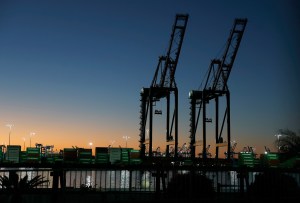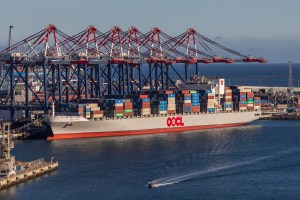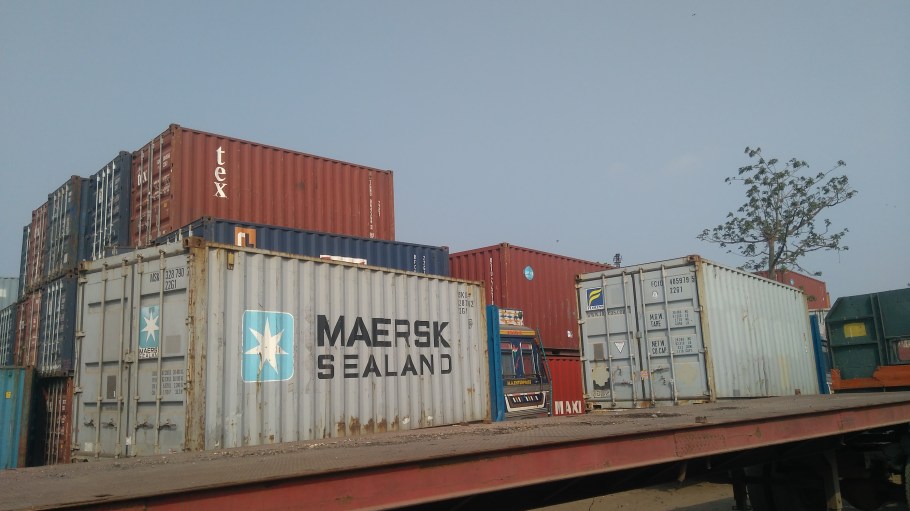
A proposed indefinite strike across 12 major ports in India could halt a significant portion of ocean freight entering and exiting the country if more than 18,000 dockworkers walk off the job on Dec. 17.
On Thursday, roughly 400 workers held a demonstration in India’s western port city of Mormugao as a coalition of six dockworkers unions keeps demanding movement on wage adjustments and productivity-linked rewards (PLR) that have not been fulfilled as part of a new contract agreement.
Related Stories
The federations previously deferred a planned strike in late August after first agreeing to new deal, with the Indian government later approving the wage revisions and reward plans. But the unions say retired employees are not seeing all the retroactive pay they were owed.
One Monday morning report from the Loadstar is optimistic that the labor issue may be resolved ahead of the coalition’s Dec. 15 deadline to fully implement the new terms.
That report indicates that officials at India’s ministry of ports, shipping and waterways had finally received a mandatory “go-ahead” to approve revised contract conditions and issue a formal order that would enforce the settlement.
“A formal order is expected quickly, mostly by tomorrow,” said the Loadstar report. “Officials have already been instructed.”
The ministry first issued the order to the Indian Ports Association (IPA) to conclude the settlement of the PLR plan on Oct. 15.
The planned strike by Indian port workers is expected to primarily affect the state-owned ports governed by the IPA.
The 12 IPA member ports include Kolkata; Chennai; Paradip; Visakhapatnam; V.O. Chidambaranar; Cochin; New Mangalore; Mormugao; Mumbai; Jawaharlal Nehru; Deendayal; and Kamarajar.
Workers at India’s privately operated seaports, such as those run by Adani Ports and Special Economic Zone Limited (APSEZ), are not expected to take part in the strike. This means that gateways like Mundra Port, which is the country’s largest private container-handling port, should still be fully operational for importers and exporters.
Private container terminals operating within the state-owned ports under public-private partnerships may also be partially operational, depending on the involvement of state-employed dockworkers, according to a Monday update from logistics giant Kuehne + Nagel. For example, several ports at Jawaharlal Nehru Port are ran by major global terminal operators like DP World, Maersk-owned APM Terminals and India’s JM Baxi & Co.
Cargo traffic at India’s state-owned ports declined nearly 5 percent to 67.5 million metric tons in November, from 71.1 million metric tons in the same period a year ago, according to recent data released by the IPA. While most of the ports experienced the year-over-year declines, Jawaharlal Nehru had the highest growth rate at a 12.3 percent increase in cargo traffic. Deendayal Port also managed solid year-on-year growth of 10.1 percent.
Canada Post strike reaches 25th day
While the India labor disruption has the ocean freight world on edge, a currently ongoing work stoppage in Canada has put postal mail and parcels on ice for 25 days as of Monday morning.
After the Canadian Union of Postal Workers (CUPW) spurned a Dec. 1 proposal from the Canada Post last Wednesday, the delivery company shared another set of proposals through a government-appointed mediator Friday afternoon. The CUPW, which represents 55,000 Canadian postal workers, confirmed it had been reviewing the latest proposals that day.
According to a statement from the Canada Post, its proposals include “significant moves to close the gap on key issues like weekend delivery, pensions and wages.”
Union negotiator Jim Gallant took the public route in response, saying in a Friday night interview on Canadian news channel CTV News that the union was “extremely disappointed” with the offer.
“What we can see from the offer that we received today is that Canada Post is moving in the opposite direction than we need to get to a negotiated collective agreement,” Gallant said.
On Saturday, Canada Post responded in its own statement, indicating that both parties had agreed to operate within a confidence process. While the agency said it strongly disagreed with the public response, it is encouraging CUPW to share positions through the formal process.
“Our focus should be on moving forward and focusing on the key issues, rather than causing added concern for those most impacted by the national strike,” said the Canada post in a statement Saturday. “With the strike now into its fourth week, CUPW remains persistent in their demands to represent people outside their bargaining unit, such as making our cleaning staff, and other contracted support services, permanent Canada Post employees.”