The prospect of an indefinite port strike in India could be getting closer to reality.
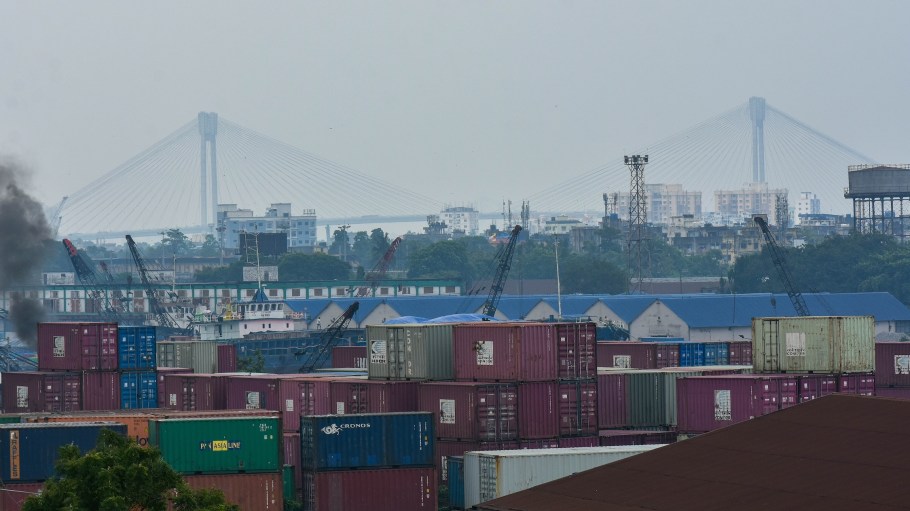
Dockworkers hosted protests at several of the country’s ports Thursday due to the lack of progress on several anticipated settlements from a new five-year contract tentatively reached in late August.
A mass demonstration at the ports’ administrative buildings is scheduled to take place Dec. 10. Retired port employees who would collect pension benefits are expected to join those protests.
Related Stories
In late November, six federated dockworkers unions determined that they would go on strike on Dec. 17 due to the delays, impacting 12 of the country’s state-owned ports.
The labor federations first deferred a planned strike in August after the unions reached a settlement with the Indian Ports Association (IPA) and the country’s Bipartite Wage Negotiation Committee. While that contract tacked on an 8.5 percent wage increase over five years, backdated to Jan. 1, 2022, the approval of the wage revisions has been delayed, thus leading the unions to resurrect the strike threat.
If the Indian government fails to enforce the IPA to implement initially agreed upon conditions including wage revisions and a productivity-based reward plan by Dec. 15, the dockworkers say they will walk off the job two days later. A work stoppage would involve roughly 18,000 workers, and cost Indian exporters nearly $15 million daily, according to The Hindu Business Line.
The reward plan had government approval in October, but the unions said that some of the ports’ former employees did not receive the retroactive pay they were owed.
Ocean carrier giant Hapag-Lloyd said Wednesday its teams are working to assess any impact on operations as the situation unfolds.
The container shipping giant is “in close communication with all relevant parties” to notify shippers of how to handle cargo planning and minimize impacts from the strike.
Apparel and textiles businesses will be waiting over the next 10 days with bated breath if a strike takes place. After all, India is the fifth-largest apparel exporter in the world, after China, Bangladesh, Vietnam and Turkey, according to data from the World Trade Organization (WTO).
India’s textiles and apparel exports increased by 3.8 percent to $14.7 billion between April and August 2024, according to India’s Ministry of Commerce and Trade.
Although there’s plenty of uncertainty regarding the near-term future of labor at the ports, their productivity has continuously improved over the past decade.
The average turnaround time for vessels at India’s 12 major ports has declined by nearly half (48.7 percent) from 93.6 hours in 2013-2014 to 48.1 hours in 2023-2024, announced India’s minister of ports, shipping and waterways Sarbananda Sonowal on Tuesday.
Sonowal told Indian publication The Economic Times that the government has taken various steps to improve the turnaround times, including the construction of new berths, terminals and parking plazas, the modernization of existing berths and terminals, digitization and expansion of connectivity through rail and road.
As productivity improves, India continues to pour money into the countrywide expansion of its seaports, with the government laying the foundation for the $9 billion Vadhvan Port in September. That port is expected to be operational by 2030, and would be one of the top 10 ports by capacity in the world by completion.
Adani Ports and Special Economic Zone Limited (APSEZ), which operates a network of 13 private ports in India including the country’s largest container seaport, Mundra Port, is targeting to double its cargo handling volume to reach 1 billion metric tons of cargo by 2030.
On Wednesday, APSEZ unveiled that it completed the first phase of the Vizhinjam Port, with the gateway handling 70 cargo ships and 147,000 containers in the first few months of its trial run, which started in July.
And DP World, the UAE-based port and terminal operator giant, said it plans to expand further in India to alleviate trade bottlenecks seen across ports throughout southeast Asia due to the impacts of the Red Sea crisis, CEO Sultan Ahmed Bin Sulayem said in a Bloomberg Television interview Thursday morning.