The International Longshoremen’s Association (ILA) has filed a lawsuit suit against the Virginia Port Authority (VPA) and its CEO Stephen Edwards, claiming the parties sought to implement semi-automated cranes at the port without consulting the union first.
In the complaint filed in a Virginia federal court, the ILA accused the VPA of directing the union’s employers, terminal operator Virginia International Terminals (VIT), to install the technology without following protocol required by its master contract agreed upon in February.
Related Stories
Automation had been a central point of contention in the two-year contract negotiations between the East and Gulf Coast port dockworkers’ union and the United States Maritime Alliance (USMX).
The issue had gotten so contentious that the ILA went on strike for three full days in October, largely due to the ports’ use of automated and semi-automated technologies like rail-mounted gantry cranes (RMGs).
“The ILA has repeatedly raised concerns and filed contractual grievances against VIT about this purchase, installation and implementation of semi-automated technology in violation of the master contract,” the lawsuit said. “But VIT has consistently argued that it’s unable to comply with its contractual obligations because it is VPA—not VIT—that was purchasing, installing and implementing the new equipment, such as semi-automated stacking cranes, semi-automated cantilever RMG cranes and semi-automated RMG cranes.”
While the VPA holds statutory authority to own, lease, and develop port assets, the ILA maintains that this mandate does not extend to overriding or directing VIT’s obligations under the coastwide contract.
VPA was not a signatory of the master contract, while USMX member VIT was.
By instructing VIT to proceed with semi-automation, the union argues, VPA and Edwards are effectively forcing violations of Article 11 of the master contract, which establishes “a specific and thorough review process prior to the implementation of new technology.” The ILA claims the employer is obligated to notify the local port unions where the cranes would be implemented, before engaging in negotiations.
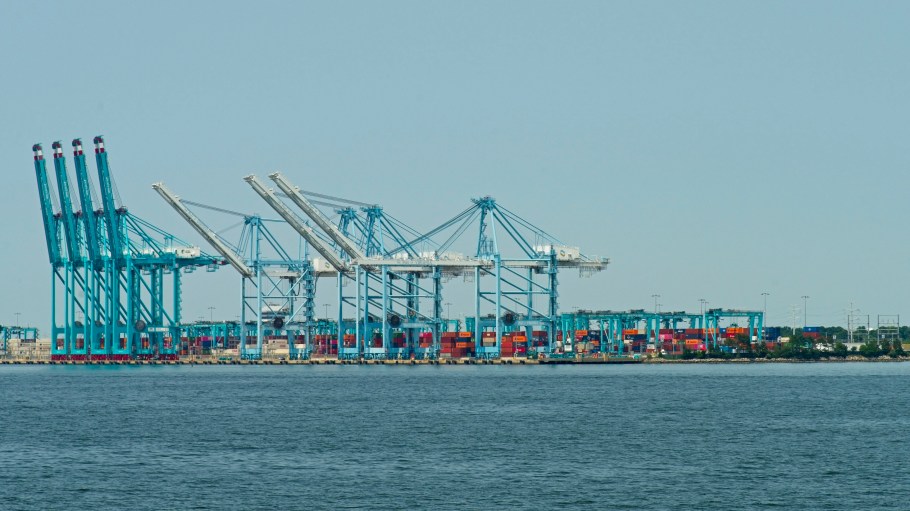
In April, the automated stacking cranes were being set up and installed on the north berth of the Norfolk International Terminal without any prior notice to the ILA, or without any opportunity for the union to bargain.
The VPA purchased 36 of these cranes in May 2023 for $150 million, nearly two years before the ILA and USMX ratified their new deal. The port secured the first batch of 18 this year, while the second batch is expected to be delivered by mid-2027.
With the six-year master contract in effect, the union says the Port of Virginia has “been the most resistant to complying with the new technology provisions” when compared to every other East and Gulf Coast port.
The union is seeking a permanent injunction that prohibits both the VPA and Edwards from interfering with the master contract’s grievance and dispute resolution procedures, in an effort to ultimately halt the rollout before any new negotiations. The ILA called for a jury trial.
The VPA did not comment on the matter.
While the ILA takes up issue with the implementation of cranes, the ports are seeking tax breaks on those that are produced domestically.
The National Association of Waterfront Employers (NAWE), which includes the USMX and the West Coast’s Pacific Maritime Association as its members, is calling on Congress to include the bipartisan Strengthening American Maritime Dominance Act within next year’s national defense budget.
The proposed bill, introduced in June, would expand the Capital Construction Fund (CCF) program to allow marine terminal operators to use a tax-deferred account to purchase American-made cargo handling equipment. The legislation includes some “Buy America” provisions and bans the purchase of equipment manufactured in China using CCF funds.
The proposal comes as ship-to-shore cranes and other cargo-handling from China are expected to see 100 percent tariffs, with the NAWE suggesting a three-year transition period to implement the duty so that the industry can have time to source equipment domestically and from other markets.
Another bill introduced in August wants to tackle the problem by bolstering domestic manufacturing of cranes.
The proposed Port Crane Tax Credit Act of 2025 would grant tax incentives to companies that manufacture ship-to-shore or mobile harbor cranes in the U.S. The bill does not include gantry cranes like RMGs.
Under the act, a U.S. company can get a production credit of 40 percent of the sale price of a domestically produced crane. If its component materials amount to 90 percent of the total crane, the production credit increases to 60 percent of the sale price.