The Houthi militants that have targeted more than 100 commercial vessels with missiles and drones since the breakout of the Israel-Hamas war now claim they are ceasing attacks on non-Israeli ships traveling the Red Sea. But ocean carriers and maritime security firms alike aren’t convinced just yet that a near-term return to the Suez Canal is imminent—or safe.
After a ceasefire between Israel and Hamas went into effect Sunday, the Houthi-aligned Humanitarian Operations Coordination Center issued an email to shipping stakeholders announcing that the Yemen-based group would cease military operations against vessels in the area.
Related Stories
For Israeli ships, those “sanctions…will be stopped upon the full implementation of all phases” of the ceasefire.
However, shipping cannot be too certain of a Red Sea return just yet. The center left the door open to resume attacks against both the U.S. and the U.K., which have repeatedly launched joint airstrikes targeting the Iran-backed rebels due to their onslaught on shipping.
“In the event of any aggression…the sanctions will be reinstated against the aggressor state,” the center said. “You will be promptly informed of such measures should they be implemented.”
Global maritime risk management firm Ambrey noted that while the threat to non-Israeli ships is reduced, it is still “subject to flashpoint escalation if the Houthi consider Israel in breach of the ceasefire agreement.”
The firm said that commercial vessels continue to be at risk due to fragility of the ceasefire and potential for Houthi subjectivity resulting in singular attacks. The company shared some cautious optimism, despite the assessment.
“A return of shipping to the region is almost certain to occur gradually, provided the ceasefire holds,” said Ambrey in a Monday update. “The threat to shipping in the Red Sea and Gulf of Aden continues to be conditional and future escalation beyond the present conditionality of the ceasefire may occur.”
The Joint Maritime Information Center also warned the maritime industry to remain skeptical of the Houthi claims, maintaining that risks remain “high” for vessels associated with Israel, the U.S. or the U.K.
The largest container shipping company in the world still doesn’t want to make a commitment to the Red Sea without any further clarity.
“The situation in the Suez Canal remains fluid and the security situation is unclear,” said Mediterranean Shipping Company (MSC) in a statement on Tuesday. “In order to guarantee the safety of our seafarers and to ensure consistency and predictability of service for our customers, MSC will continue to transit via the Cape of Good Hope until further notice.”
MSC previously prepared a Suez Canal option on its upcoming East-West service set to launch in February, alongside the Cape of Good Hope route it had been regularly traversing since December 2023. But the new statement means it is unclear when the network will be available.
The company, which as of Feb. 1 will be the only lone standalone container shipping network, had not made a public statement on the Red Sea situation since it unveiled the dual offerings in September.
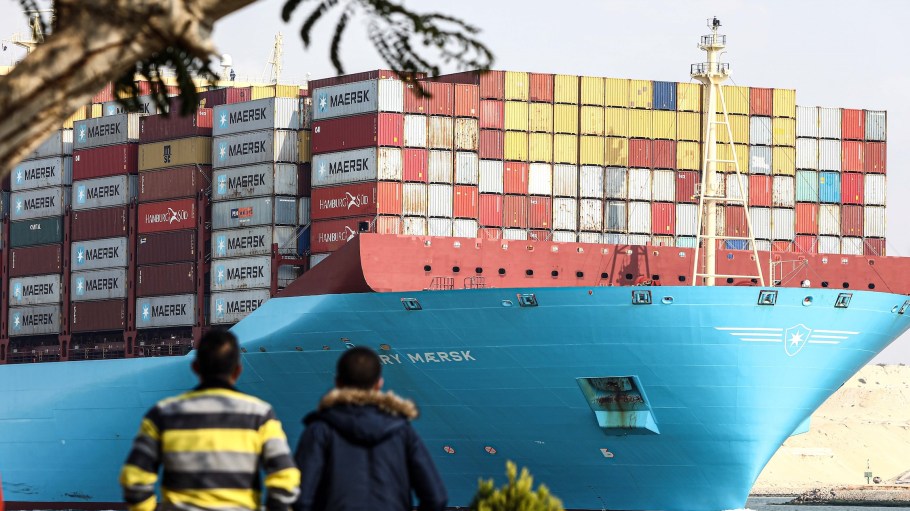
With MSC staying out of the Suez Canal for now, that leaves roughly 20 percent of global shipping capacity away from the Red Sea. According to Alphaliner, the Swiss shipping giant operates 884 owned and leased vessels.
CMA CGM, which has intermittently traveled the Red Sea and Suez Canal with escorts from the French Navy since the attacks began, deployed a ship set to sail southbound in the canal on Thursday. However, that ship is part of a single ad hoc call to the Port of Jeddah, Saudi Arabia, and not an indicator of a wider return, the company said.
Maersk and Hapag-Lloyd have indefinitely delayed their own Suez plans for their upcoming Gemini Cooperation vessel-sharing alliance, with both expressing after the ceasefire that they will only return to the canal when it is sufficiently safe to do so.
Another factor playing into whether the major ocean carriers return to the Red Sea is the level of war-risk premiums they would pay to their insurance providers.
These premiums insure container shipping firms against losses sustained in the event of an attack on a vessel, and can be passed on to customers as surcharges.
At one point in early 2024, underwriters were charging up to 1 percent of the value of an entire ship to sail through the region. According to security firm Diaplous, war-risk rates had fallen closer to around 0.4 percent of values in recent months as attacks became less frequent.
“What has kept shipping out of the region has been escalated War Risk. If the clubs reduce the cost, down from a peak of about 1 percent, the ships will return,” said Sal Mercogliano, container shipping expert and Campbell University associate professor, in a post on X.
Mercogliano said these costs would dip further, but only if the Houthis kept to their word of not attacking, and released the Galaxy Leader vessel that they first hijacked back in November 2023. It would also require a “marked” presence by both the European Union’s naval security operation, Aspides, and the U.S. Naval Forces Central Command, he noted.
“As the ceasefire will take several months to phase in, expect any return to the region by ships to follow a similar strategy,” said Mercogliano.