The trucking market is still feeling malaise even as more capacity continues to exit the market.
Declining volumes persist as a common theme across the biggest players in U.S. trucking, whether it be XPO, Old Dominion, TFI International or FedEx Freight.
Findings of the U.S. Bank Freight Payment Index released Thursday indicated that the third quarter saw setbacks in freight demand compared to the second quarter, which had previously suggested a bounce back in the market could be in the cards.
Related Stories
According to the index, national shipment volumes decreased 2.9 percent sequentially, offsetting that period’s 2.4 percent quarter-over-quarter increase. At the time, Q2 had been the only quarter in three years that shipping volumes increased.
On an annual basis, shipment volumes fell by 10.7 percent, with total shipments having declined more than 40 percent since late 2020. For the year to date, volumes were down 11.5 percent compared to the same three quarters in 2024.
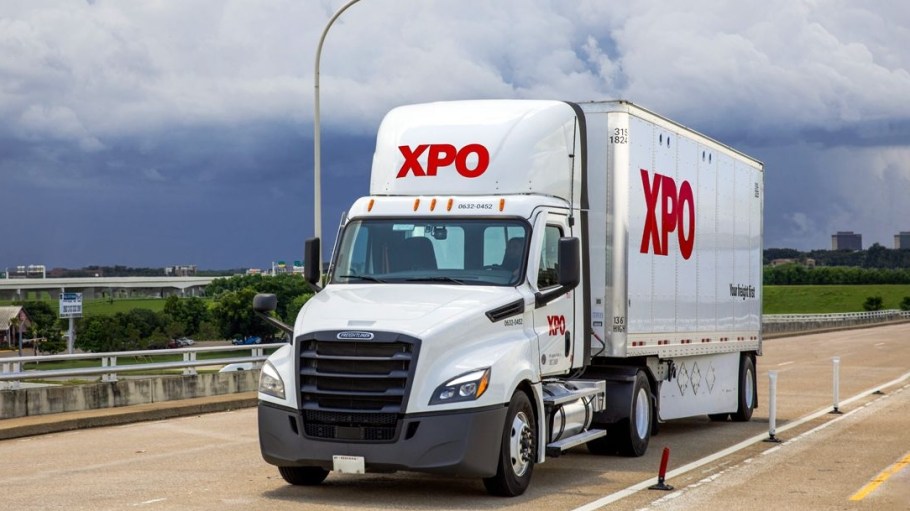
Of the major trucking companies, XPO managed to best offset volume dips, counteracting a 6.1 percent tonnage decline per day with a 5.7 percent increase in less-than-truckload (LTL) revenue per hundredweight.
But the company gave a positive outlook for the future in its earnings call upon indicating that tonnage per day is expected to be down in the 3 percent range in October, in line with normal seasonality.
XPO CEO Mario Harik attributed the pricing gains to adding more local customers, including 2,500 in the third quarter alone, as well as the trucking company’s ability to attract more customers to its premium services like guaranteed on-time delivery for retailers, cross-border shipping and trade show services.
Old Dominion had a sharper 9 percent decrease in LTL tonnage per day, with revenue per hundredweight increasing 4.7 percent year over year. However, ODFL’s October outlook doesn’t look as promising, with daily tonnage expected to see an 11.6 percent drop in the month. LTL revenue during October is also expected to be down 6.5 percent to 7 percent.
“Our tonnage is underperforming seasonality a little bit,” Old Dominion’s chief financial officer Adam Satterfield said in a recent earnings call. “If you just roll normal seasonality out from kind of the current trend where we are, it certainly would lend itself that if we don’t have a major inflection, we could be looking at continued declines on a year-over-year basis, at least for the first quarter.”
FedEx Freight, the LTL subsidiary of the logistics giant set to be spun off next year, saw average daily freight pounds decline 12 percent, while keeping revenue per pound up at a 4 percent pace.
Across its U.S. and Canadian LTL operations, TFI International’s total tonnage declined 7.4 percent, with revenue per hundredweight decreased 2.5 percent.
For October, tonnage per day declined 7 percent. Nevertheless, TFI CEO Alain Bedard says “a very slow start” to the fourth quarter should make way for an improved 2026.
“Going into 2026, we are starting to have a feeling that after three years of a very, very difficult freight recession, we believe finally all the effects of the Big Beautiful Bill and the fact the consumer will probably get some tax refund and investment will take place in the industrial sector in the U.S.,” Bedard said. “We feel way, way better about 2026 than 2025. I think finally the sun is going to start coming up in 2026.”
Reflecting some of the earnings results, in which carriers were able to generate more relative spend despite the low volume demand, shipper spending managed to increase for the second consecutive quarter. According to U.S. Bank, shipper spend on freight rose 2 percent sequentially.
“Shippers paid more to move less freight in the third quarter—a clear signal that industry capacity is exiting. While higher fuel prices played a role, it doesn’t fully explain the increase in spending,” said Bobby Holland, U.S. Bank director of freight business analytics, in a statement. “The impact of fleet exits is showing up in pricing, pushing rates higher even as volumes remain soft.”
On a year-over-year basis, spending is still down 1.7 percent from the 2024 second quarter.
Data from the TD Cowen/AFS Freight Index suggests pricing remains stable in the LTL field, as costs per shipment were down 0.7 percent year over year in the third quarter despite a total weight decrease of 7.4 percent.
As for truckload, costs per shipment saw a 1.5 percent annual increase in the quarter, bucking what the index called a “prolonged” year-over-year decline. However, that report was quick to note that the market continues to face headwinds from the sluggish demand and shifting U.S. trade policies, which do not indicate relief from the excess capacity that has suppressed rates for nearly three years.
While trucking numbers continue to pour in, domestic manufacturing keeps sliding downward amid the policy shifts, with American factory activity shrinking for the eighth straight month in October.
The Institute for Supply Management’s Manufacturing PMI Index eased 0.4 percentage points to 48.7, as per data released Monday, below market forecasts of 49.5. Readings below 50 indicate contraction.
Domestic manufacturing is often viewed as a bellwether for the trucking industry, as more activity means more demand for goods movement across the U.S., and ultimately increased volumes and rates.
Although demand indicators including new orders, inventories and order backlogs improved over the prior month, they are all still in contraction territory. Production contracted 2.8 percentage points after experiencing a brief one-month expansion in September.