As the future of Yellow Corp. hangs in the balance, there’s no end to the intrigue in the logistics landscape.
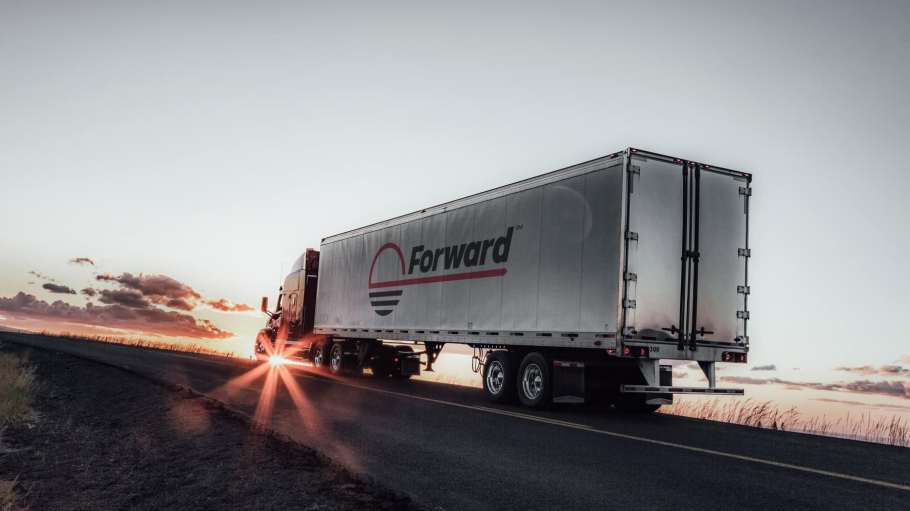
On Tuesday, Omni Logistics filed a lawsuit to enforce a proposed merger with Forward Air, a transportation and logistics services provider.
The lawsuit came nearly two weeks after supply chain software provider Slync filed for bankruptcy as it shut down and worked on finding buyers for its technology and intellectual property. Slync was trying to turn itself around after former CEO Chris Kirchner was indicted in May for money laundering and defrauding investors out of at least $25 million.
Related Stories
Both Omni’s complaint and Slync’s petition were filed in the Delaware Court of Chancery.
The $3.2 billion Forward-Omni merger had been on rocky footing since day one, with Forward stock falling more than 25 percent on Aug. 10, when the deal was announced.
While the move would make way for another national less-than-truckload (LTL) network in the wake of Yellow’s bankruptcy, minority shareholder ClearBridge Investments told Forward to reconsider the acquisition because it might lose customers as a result of the “too big and too complicated” deal. Others, including investors and forwarders, have noted that the Omni acquisition would effectively turn many of its forwarder customers into competitors.
On Sept. 29, a Tennessee court temporarily blocked the merger, before reversing course a month later. Activist investor Ancora Holdings had also pressured Forward by saying it wanted the company to replace CEO Tom Schmitt and the board of directors. Ancora was the catalyst in the recent ousting of Pitney Bowes CEO Marc Lautenbach.
Last Thursday, Forward said it was considering terminating the merger agreement, accusing Omni of failing to comply with certain obligations. Forward also believes closing conditions won’t be satisfied.
In the release, Forward said it has withdrawn its 2024 adjusted EBITDA guidance for the combined entity.
Forward Air declined to provider additional commentary on the lawsuit.
Omni wants the court to confirm that it has complied with the obligations required under the agreement, and is seeking a trial before the deal expires on Feb. 10.
In an open letter to Forward Air shareholders, Omni Logistics CEO J.J. Schickel laid out the case for why the merger should still go through, noting the industry’s evolution into a more integrated service model for customers.
“Just as our customers want to work directly with their LTL provider, Forward Air wants to work directly with shippers; as they’ve said publicly, that was a key driver for this transaction,” Schickel said. “Despite Forward Air’s leadership position in the expedited space, they are the only publicly traded LTL provider without a direct relationship with the overwhelming majority of its end customers—and that is not a position for long-term strength.”
Schickel argued that the direct connections reduce costs for both Forward and Omni’s existing customers and can also attract shippers who currently engage with traditional LTL carriers.
As for Slync, the freight tech firm’s $24 million funding round in March wasn’t enough to buoy the company, which is engaged in a legal battle with its former CEO.
Kirchner sued his former company in September, demanding they pay his legal fees in two suits filed against him by the Department of Justice and the Securities and Exchange Commission (SEC). The former CEO claims Slync is required by to pay the fees because of an indemnification agreement between the parties.
Sourcing Journal reached out to Slync and current CEO John Urban for comment.
Urban, who was hired to replace Kirchner in the role in August 2022, had previously told the Journal of Commerce that Slync couldn’t grow while it was doling out the legal fees. He also said Slync was unable to raise new capital and that selling wasn’t an option because of liability concerns.
Aside from the legal issues, Slync’s supply chain tech wasn’t making much revenue to begin with. The filing stated that the company reported a combined revenue of more than $1.7 million between 2019 and August 2022, and that it had never been profitable. From 2019 to 2022, Slync reported net losses of roughly $3.7 million, $28 million, $26 million and $21 million.
Slync’s bankruptcy filing is different from a traditional Chapter 11 or 7 bankruptcy. It’s pursuing an assignment for the benefit of creditors, or an “ABC” petition, which accelerates the winding down process by assigning all rights to another entity.
According to the petition filed Oct. 18, Slync’s board has selected Chicago-based restructuring and insolvency consulting firm Development Specialists Inc. (DSI) to handle the process, which involves transferring Slync’s assets to DSI. The company is responsible for quickly selling those assets to pay back creditors.