FedEx is targeting 4 percent compound revenue growth through its 2029 fiscal year as it plans to focus on its high-margin verticals and continues its companywide network transformation program.
The expected $98 billion revenue in 2029 would be an increase from a projected midpoint guidance of $85 billion generated in 2026 when excluding the soon-to-be-spun-off FedEx Freight business.
In the same time frame, operating income is forecast to jump from current 2026 projections of $5.3 billion to $8 billion, which would take operating margins from an expected 5.6 percent of sales to 8 percent at the end of 2029.
Related Stories
The focus areas expected to power these margin increases for FedEx include its high-value B2B and specialized B2C segments. These segments often touch industries including healthcare, automotive, aerospace, data centers, and the premium end of e-commerce.
Margin is also expected to improve in the premium global air freight segment, which focuses on high-value, time-sensitive cargo. According to chief customer officer Brie Carere, FedEx currently holds a 12 percent share in the $22 billion premium air freight market.
“Our air freight strategy is still in the early innings, but I can absolutely tell you that it’s working,” Carere said. “Fiscal year to date, we have seen high single-digit revenue growth, and we’ve seen continued strong flow-through to the bottom line.”
While the shipping company did not delve much into its near-term projections, it said in a Thursday news release that it forecasts fiscal third-quarter earnings ahead of Wall Street estimates on the back of “exceptional execution” during the holiday peak season.
As of Wednesday, consensus estimates compiled by LSEG forecasted third-quarter earnings per share of $3.99.
FedEx also aims to build on its data and artificial intelligence capabilities to improve network planning and better predict global trade flows.
In one example, FedEx has consolidated nine sort processes into a single streamlined workflow, simplifying clearance processes by using digital self-service and AI to replace hundreds of legacy applications.
The company’s embedding of predictive AI has also bolstered maintenance processes in its physical networks.
“By combining rich sensory data with proprietary AI models, we can anticipate equipment failures in our sorting systems before they occur. This shift is already saving us $10 million annually,” said Vishal Talwar, chief digital and information officer of FedEx,” during the investor day call. “The success of this AI-driven intelligence was also proven during this year’s peak. We experienced no significant technology disruptions, enabling our operations team to execute flawlessly amid surging volumes and deliver strong service during our most critical period.”
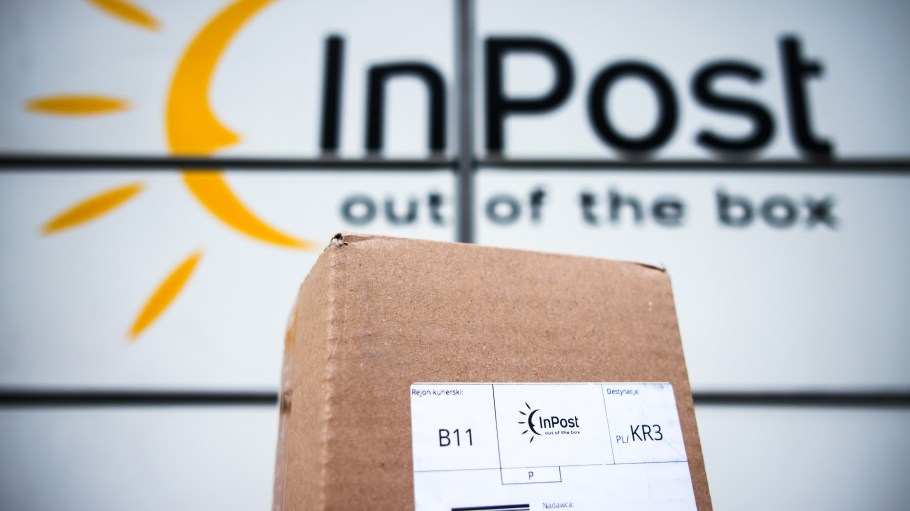
Europe was a major focus of the investor call following Tuesday’s news that FedEx is co-leading a consortium to acquire Poland-based parcel pickup and delivery company InPost.
“Of the $1.4 billion of [margin] improvement in international, $600 million comes from Europe,” said FedEx CEO Raj Subramaniam said in the call. “So that’s the centerpiece of the strategy.”
That deal is worth 7.8 billion euros ($9.3 billion), significantly expanding the U.S. logistics giant’s operations in Europe, which the CEO calls “our largest long-term value unlock.”
According to Subramaniam, the acquisition will give the company’s customers access to InPost’s B2C last-mile delivery network, which includes 61,000 automated parcel lockers and more than 33,000 pick-up and drop-off (PUDO) points across nine European countries.
Additionally, the consortium wants to leverage FedEx’s network to support InPost’s European growth strategy, where further expansion is expected across markets including France, Spain, Portugal, Italy, Benelux and the U.K.
“Our investment in InPost reflects our disciplined approach to capital allocation and long-term value creation,” Subramaniam said in a statement. “Together with InPost’s leadership and our fellow consortium members, we see a clear path to unlocking growth, improving the efficiency of our B2C last mile operations, enhancing returns and better serving customers across Europe.”
FedEx and InPost will not integrate their operations and remain independent competitors. The deal is expected to complete in the second half of 2026, and is expected to be accretive to FedEx’s earnings in the first year after closing.
FedEx and private equity investor Advent International will both each own 37 percent of shares in the company, with investment firms A&R and PPF holding 16 percent and 10 percent stakes, respectively.
Under a majority-privately held ownership, InPost says it will operate more efficiently and better achieve its goals and implement its strategy, without the need to depend on short-term expectations driven by public markets.