The United States Postal Service (USPS) has been under intense lawmaker scrutiny throughout the past year as a wider network overhaul led to late deliveries in certain markets—and the upcoming presidential transition only leaves more questions for the future of the government agency.
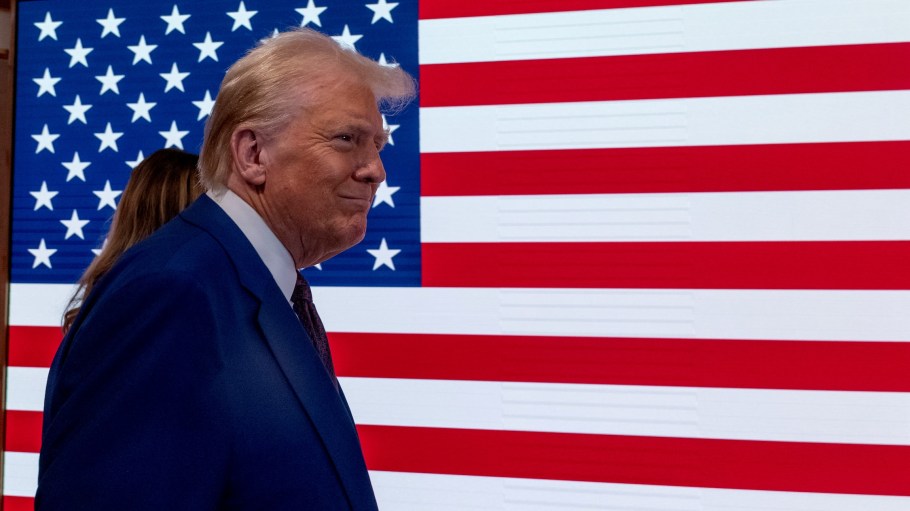
In a Monday press conference, President-elect Donald Trump confirmed a report from The Washington Post that his upcoming administration is considering taking the courier private, saying, “we’re looking at it.”
Related Stories
Trump called privatization “not the worst idea I’ve ever heard” and “an idea that a lot of people have liked for a long time.”
The ability for a sitting president to carry out the privatization of the USPS remains murky. According to the U.S. Constitution’s Article I, Section 8, only Congress has power to establish post offices and post roads.
While a president can propose budget cuts, advocate for policy changes or appoint members to the USPS board of governors, they cannot unilaterally make decisions or operational changes to the agency without congressional approval.
Trump had already called for the privatization of the USPS during his first term in 2018 to lower its cost structures, but the movement gained no traction in Congress, even as the Republicans held a House and Senate majority before that year’s midterm elections.
That was years before Trump-appointed Postmaster General Louis DeJoy launched the Delivering for America 10-year turnaround plan in 2021, which was aimed at helping the USPS break even by fiscal 2023 after years of losses.
Congress already sought to assist soon after by approving a major legislative overhaul in 2022—The Postal Service Reform Act—that relieved billions of dollars of debt from USPS books.
However, the USPS is still bleeding money to the tune of $6.5 billion in 2024 net losses and expects to lose another $6.9 billion in 2025. The agency is implementing $5 billion in cost cuts through the end of next year, including consolidated mail processing that cut transportation costs but led to delivery delays in multiple major U.S. markets like Atlanta and Houston.
As these financial hurdles appear tougher to clear, a Republican-led Congress has more leverage if they wanted to narrow the USPS’ “universal service obligation,” which is designed to ensure that all U.S. postal users receive a baseline level of service at a reasonable price.
Such decisions could result in delivery being scaled back in unprofitable areas—a major benefit other carriers don’t provide as consistently—or a cut in company headcount.
But any alterations would fly in the face of general consumer support of the USPS. A July survey from the Pew Research Center said 72 percent of Americans have a favorable opinion of the federal agency.
Satish Jindel, president of logistics consultancy ShipMatrix, said privatizing would be a “huge shock” to both the post office and the consumers, namely due to the added costs expected in different service areas.
According to Jindel, the cost of First-Class mail will “increase dramatically” in the wake of privatization and a more profit-driven incentive. The agency already has hiked 2025 prices to ship via several of its services, and increased the price of its First-Class Forever stamps in July.
“My view is that this is not a good idea and will bode ill for folks in rural areas because they would likely see deterioration of service and/or substantial price increases if the USPS’s universal service obligation was eliminated,” said Jason Miller, interim chairperson, department of supply chain management at Michigan State University’s Eli Broad College of Business.
Miller noted that USPS employment has already seen significant decline since late 1990s, when it had roughly 880,000 workers. That number has since dwindled to roughly 600,000.
“The Post Office was never conceived to operate on the logic of a for-profit enterprise, so applying the same type of logic that would apply for UPS or FedEx doesn’t make sense (e.g., neither of those carriers has a universal service obligation),” Miller said. “I personally believe, as noted in the Washington Post, this is President-elect Trump having an ongoing grievance with this organization because, in his eyes, it isn’t profitable.”
Jindel was more bullish on the prospects of privatization in the long run, comparing it to a smoker or an alcoholic going “cold turkey” in their attempts to break their habits. But it’s not going to be an immediate fix, he noted, recommending that the Trump administration ensures the agency makes more internal structure changes before any go-private effort is put in motion.
This would include a switched focus on its original mail delivery value proposition, rather than trying to compete in the heavier parcel shipping ecosystem with companies like UPS, FedEx and Amazon.
“Its real monopoly is the access to the mailbox. That’s where everything gets delivered—mail. When it comes to parcels, why are they handling parcels that are bigger than the ones that can fit in a mailbox?” said Jindel. “Right now, they handle a 30-pound package, a 50-pound package and a 70-pound package. That ends up costing the post office a lot more, and it gets spread to everything else. Limit them to only handling what they can that can fit in the mailbox.”
Currently, the USPS delivers more than 30 million packages a day, up from the 24 million each by UPS and Amazon, and ahead of FedEx’s 16 million, according to ShipMatrix data.
“To an extent, [USPS] is the only government-related entity that competes in the private sector, when you got plenty of carriers in the private sector who can provide parcel service and will have the ability to ramp up if needed, to do the parcel deliveries,” said Jindel.