The container shipping industry’s largest players are foreign-owned, but the recently concluded 2024 U.S. presidential election could have plenty of implications on the future of ocean carriers, and where they’ll most often be picking up and dropping off cargo.
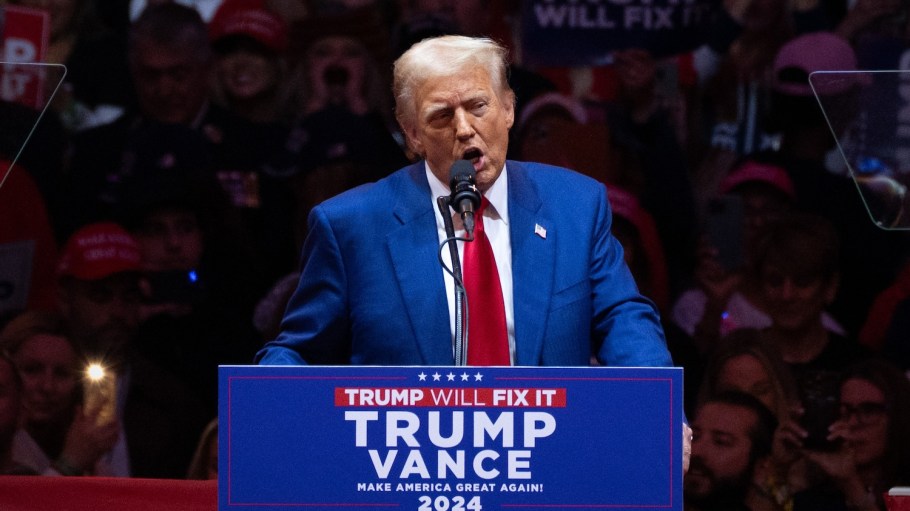
A recent analysis from Drewry said the victory for Republican presidential candidate Donald Trump “carries more disruptive risk for the container shipping market based on past performance,” noting that a trade war escalation is much more likely under a second Trump administration.
Related Stories
Trump is expected to impose universal tariffs of 20 percent on all U.S. imports, while China-made goods could get slapped with a 60 percent tariff.
“Such levies would ultimately be paid by U.S. consumers, inevitably dampening overall demand for containerized imports and especially those from China,” said Simon Heaney, senior manager of container research at Drewry, during the consultancy’s Freight Loop.
Freight rates could see another uptick after escalating in 2024. Data from Xeneta’s Shipping Index indicated that average spot freight rates out of China to the U.S. West Coast doubled from $1,340 per 40-foot container on June 29, 2018—shortly ahead of the tariffs former President Trump first introduced in July that year—to $2,692 per container on Nov. 1. These numbers did decline to $1,679 per container by Jan. 2, 2019, but were still 25 percent ahead of the late June prices.
Throughout his presidential campaign, Trump has stated that the proposed tariffs would not result in price hikes.
A disruption to the supply chain status quo would not solely include negative connotations. Trump’s first wave of tariffs spurred on more supply chain diversification into the U.S. via container ship, coinciding with a large market share erosion for China.
“More diversification of trade on its own isn’t really a problem for container shipping,” Heaney said. “In fact, it’s a positive as greater fragmentation of production would mean more shipping of intermediate parts…Any escalation in the trade war would further encourage U.S. businesses to seek alternatives to China such as Vietnam, India or Mexico.”
China’s value share in dollars of U.S. container imports has shrunk by around 13 percentage points from before Trump’s first term in office, according to data from Trade Data Monitor, falling from 40 percent in 2016 to 27 percent after eight months of 2024.
Conversely, Vietnam more than doubled its share of U.S. imports by container ship to 44 percent in the same period.
Heaney observed that the container market would have a problem if the U.S. decides to retreat into more America First isolationist policies.
Citing Drewry research, Heaney said loaded imports at major U.S. ports are a main growth driver in the container market right now increasing 15 percent year-to date after eight months of 2024, but he noted “that upward trajectory could be in danger if some of the more extreme policy ideas are realized” like the tariffs.
“More reshoring of manufacturing in the U.S. might boost exports, but growth in outbound trade is likely to be stymied by tit-for-tat retaliatory tariffs elsewhere in the world,” Heaney said.
An executive vice president at the world’s largest container shipping firm, Mediterranean Shipping Company (MSC), already shared concern that another Trump presidency would likely pose more challenges for industrywide decarbonization efforts.
A second Trump term is likely to see additional regulatory rollbacks on climate legislation, as well as repeals of tax incentives for corporations to adopt renewable energy. This could be tough on ocean carriers as they build out more green methanol-enabled vessels, particularly as the low-carbon alternative remains scarce and more expensive than regular fuel.