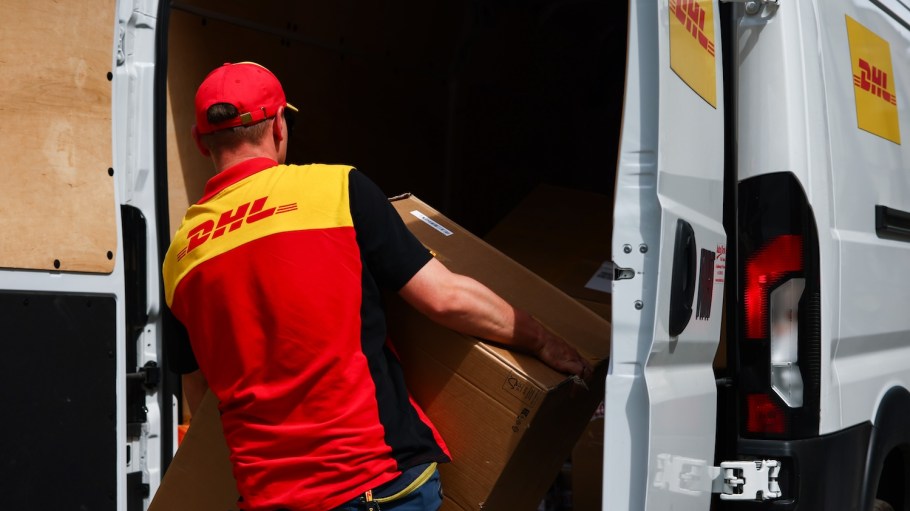
DHL Express Canada suspended operations nationwide on Friday as the company no longer could continue using replacement workers to fill the void of the more than 2,100 employees it locked out earlier this month.
But the logistics giant is still holding out hope to be exempt from Canada’s “anti-scab” Bill C-58 legislation that went into effect Friday so it can resume regular business. That law bans replacement workers from being used in labor disputes such as strikes or lockouts, and subjects companies to a $100,000 per day fine.
Related Stories
DHL locked out the series of couriers, truck drivers and warehouse workers on June 8 when months-long contract negotiations ended with no new deal in place, with the union workers opting to go on strike in retaliation.
On June 14, DHL Express Americas CEO Andrew Williams and DHL Express Canada CEO Geoff Walsh co-penned a letter to Prime Minister Mark Carney and jobs minister Patty Hajdu, saying that the new legislation poses significant risks to Canada’s supply chain, particularly the essential services the company provides.
The CEOs reasoned that while some organizations may be able to temporarily shift production during a work stoppage, “as a service provider we are either open or we are closed.”
They argued that the ripple effects of a temporary closure of the business could lead to increased consumer prices, reduced availability of goods and further job losses across the economy.
“Our operations not only facilitate trade and bolster local economies but also ensure that essential goods are delivered efficiently and reliably,” the DHL execs wrote. “However, the ban on replacement workers during strikes threatens to severely undermine our operational capabilities, forcing us to halt operations and communicate to our global network that Canada is effectively closed for trade. This is a very difficult position for any organization and especially one such as DHL Express, that just a few years back was deemed an essential service during the pandemic.”
Lana Payne, the national president of Unifor, the union representing the DHL Express employees, pushed back against claims in her own letter to Canadian government officials.
Payne said that in the month ahead of the start of contract negotiations on Oct. 1 last year, both Unifor and DHL agreed that there were no “essential services” performed by members of the bargaining unit which were necessary to prevent an immediate and serious danger to the safety or health of the public.
“This is in stark contrast to the grandiose position DHL is taking today in which it characterizes its operations as ‘critical’ to the supply chain and the economic wellbeing of Canada as a whole,” said Payne. “To be clear, DHL is not even one of the top four express package delivery companies in Canada and DHL workers represent fewer than 0.7 percent of all local delivery workers and less than 15 percent of all courier workers in the country.”
And while Williams and Walsh also accused Unifor of intentionally stalling discussions to coincide with the impending implementation of Bill C-58, Payne denied the allegations.
She also said that DHL knowingly triggered the lockout on June 8 despite knowing that the law was going into effect just 12 days later.
Unifor is seeking a 22 percent salary increase for hourly employees, as well as a 42 percent salary increase for owner-operators of trucks, with the DHL execs saying in their letter that “such demands jeopardize our operational viability.” The company had proposed a 15 percent wage increase over five years for hourly workers.
The union’s DHL bargaining committee responded to the letter with its own statement, indicating that the company “throws out numbers to make the union’s proposals seem unreasonable.”
The labor group said its proposals reflect the reality of rising costs.
“For owner-operators, any proposed increases are directly tied to soaring fuel prices, growing vehicle operation costs and a fair wage increase that keeps pace with inflation, realities DHL has consistently refused to recognize,” the statement read.
Unifor gave its gripes about DHL’s demand of “significant concessions that would severely hurt workers,” making claims that the company has changed the driver pay system in a way that would result in less money for drivers, and attempted to reduce the daily minimum guarantee for them. Additionally, the union brass repeated a claim that truck drivers have been able to travel up to 100 kilometers with no compensation.
The union said DHL refuses to acknowledge and provide wage adjustments to customer service reps and employees within other classifications, and accused the logistics company of not recognizing any potential job losses that may occur using AI.