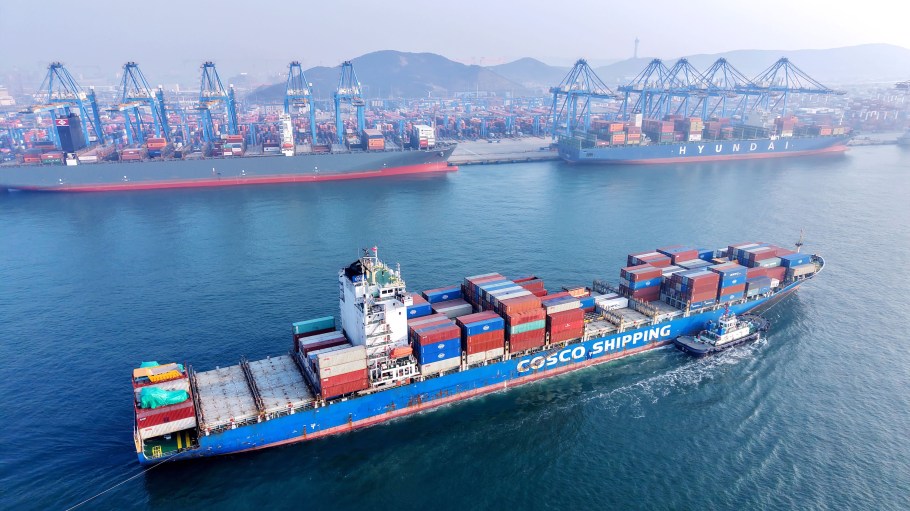
Cosco Shipping is under fire from an American logistics company on claims of unreasonable billing practices and failing to meet its service commitments.
The San Clemente, Calif.-based MAC Container Line filed a complaint with the Federal Maritime Commission (FMC) on Dec. 18 alleging that the Chinese state-owned ocean carrier unfairly tacked on detention charges, suspended bookings, refused to accept future bookings and attempted to cancel a contract without cause, among other charges.
Related Stories
MAC is a non-vessel operating common carrier that doesn’t own container vessels, but rather leases space on other ocean carriers like Cosco and operates as a freight forwarder for shipper clients.
The logistics company is seeking between $700,000 and $1.2 million in damages with the complaint, blaming the loss on diverted business to alternative carriers, which resulted in reduced margins, lost volume and “lost customer confidence and market share.”
MAC says Cosco forced it to cancel 27 active bookings, and incurred nearly $490,000 in losses after losing two customers, Supreme Rice and Gemini Logistics. The company also lost high-margin volumes that were shipped from California ports like Los Angeles and Oakland to Port Klang in Malaysia.
Cosco put MAC on the hook for $157,000 in detention charges, which carriers impose when they hang onto a shipper’s cargo for longer than previously agreed. The charges were for a shipment to India in January that was confiscated by the country’s customs agency due to import irregularities.
MAC disputes the charges, which were billed for the period of Jan. 29 to July 25, as unlawful since the cargo remained under government control, while Cosco had internally taken custody of the empty container.
“Once confiscated and subsequently auctioned, Cosco no longer maintained legal basis to accrue detention as though MAC or the consignee retained container control,” the complaint read.
MAC claims that Cosco retaliated to the detention dispute in a series of actions, including the bookings cancellations, the refusal of new bookings and an attempt to lower the minimum quantity commitment it would ship.
On Nov. 12, Cosco also attempted to scrap another year-long contract with MAC, just 42 days after it went into effect. On Dec. 11, Cosco returned the contract term back to its original expiration date of Sept. 30, 2026.
“Cosco’s reversal occurred without any intervening change in MAC’s conduct, performance, or contractual compliance, and without Cosco identifying any lawful or commercial justification for its earlier suspension of cooperation, booking cancellations, or attempted contract termination,” MAC said in the complaint.
Cosco has 25 days from Dec. 22—the date the FMC notified the carrier of the complaint—to respond.
The initial decision of the presiding judge is expected be issued by Dec. 22, 2026, with the commission anticipating to issue a final decision by July 6, 2027.
MAC’s demand pales in comparison to other FMC claims levied earlier this year by U.S. retailers against ocean carriers for violations of the Shipping Act.
QVC and subsidiary Cornerstone Brands alleged that they incurred $18 million in higher freight rates during the Covid-19 pandemic after Ocean Network Express (ONE) refused to offer the cargo space initially committed to under their contract.
Similarly, Dollar General is seeking $14.8 million in damages from Yang Ming for not providing the agreed upon contracted space, accusing the company of instead allocating the intended space to more expensive cargo from other shippers.
In both cases, the complainants sought alternative carriers on the spot market, which they say forced them to spend more money to have their products shipped to the U.S.
The various complaints escalated in the years after Congress expanded the powers of the FMC in 2022 with the Ocean Shipping Reform Act (OSRA). The bill was designed to ensure U.S. shippers were not unfairly bypassed for service by carriers, the majority of which are foreign-operated entities.
Cosco Shipping, the fourth largest carrier in the world by tonnage with a fleet that can carry 3.58 million 20-foot equivalent units (TEUs), according to data from container shipping market research database Alphaliner, has gone through the wringer in 2025 amid China’s ongoing trade tensions with the U.S.
To kick off the year, the carrier was designated as a Chinese military asset by the Department of Defense.
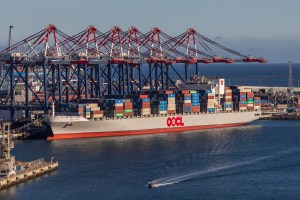
Upon President Donald Trump’s return to the White House in late January, the shipping firm and its subsidiary, Orient Overseas Container Line (OOCL), were the primary targets of proposed port calling fees for Chinese-owned and -operated container vessels.
Those fees reportedly cost Cosco and OOCL a combined $42.8 million to dock at U.S. ports in the first week after they went into effect on Oct. 14, according to data from S&P Global’s maritime tracking database Sea-Web.
Later that month, the enforcement of the port fees was suspended for one year amid a meeting between Trump and Chinese President Xi Jinping. During that meeting the U.S. agreed to cut down its punitive fentanyl-related tariffs on Chinese goods from 20 percent to 10 percent.