CK Hutchison’s deal to sell dozens of ports to a consortium including Mediterranean Shipping Company (MSC) and BlackRock will not be completed this year, but a top company exec still believes a sale has a “reasonable chance” of occurring.
Frank Sixt, the co-managing director of CK Hutchison, said during the port operator’s earnings call on Thursday that the deal’s size and complexity would prevent it from closing in 2025, even if binding agreements were already agreed upon.
Related Stories
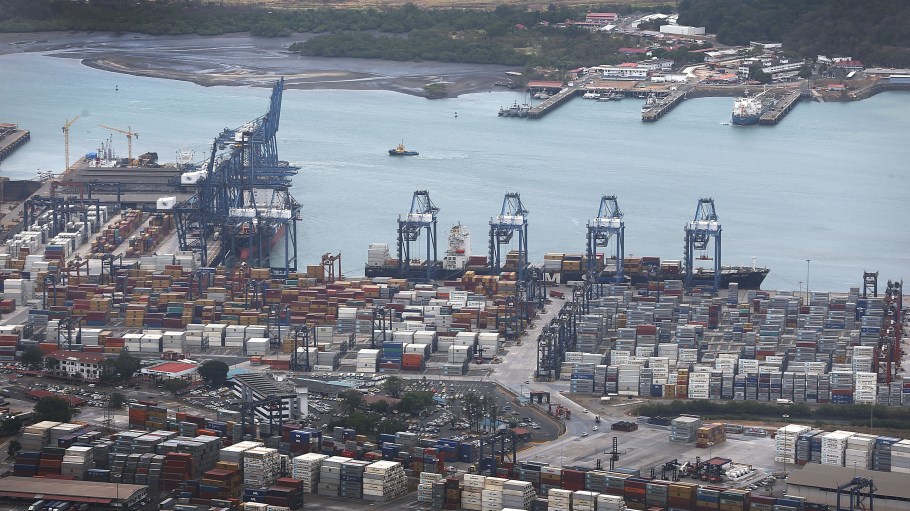
At the heart of the controversial transaction is the sale of two ports on opposite sides of the Panama Canal—which has drawn attention from the U.S. and China alike in another extension of their ongoing geopolitical tug-of-war.
U.S. President Donald Trump has sought to rid the canal of potential Chinese influence and heavily praised the initial deal upon its announcement. That came off the heels of the president’s ongoing calls to “take back” the canal, reflectin gWashington’s national security concerns regarding CK Hutchison’s Hong Kong roots. On the other hand, Chinese President Xi Jinping was reportedly furious when the sale took place, with state media trashing the deal and the country’s antitrust regulator opening a probe into the transaction.
Sixt remained optimistic despite the hurdles of the deal.
“It is taking much longer than we had expected when we announced in March. But frankly, that’s not particularly troublesome,” said Sixt. “The ports group are having a very good year. They’re generating stronger earnings and cash flow than we had expected when we set this year’s budget.”
The $22.8 billion deal also covers 41 other ports worldwide.
When asked about whether the acquisition needs regulatory approval from China, Sixt said Hutchison would not proceed with any deal that doesn’t have the approval of all the relevant authorities. He named the U.S., China, the U.K., the European Union as markets requiring regulatory approval.
Panama’s government also needs to approve a sale, with recent legal actions from the country’s attorney general and comptroller general indicating that the transaction as currently constituted would not hold up. Those lawsuits could potentially invalidate the 25-year contract extension signed between the government and CK Hutchison in 2021 to keep operating the Cristóbal and Balboa ports.
“With exclusivity having expired on July 27, we are into a new stage of our deal and that includes, as we have said, discussions with a major strategic Chinese investor,” Sixt said. “I believe that there is a reasonable chance that those discussions will lead to a deal that is good for all of the parties, ourselves included.”
The Chinese investor has not been disclosed, but reports have tied Cosco Shipping to a possible entry into the acquisition. Cosco, a major ocean carrier and competitor of MSC, is reportedly seeking a stake between 20 percent and 30 percent in the ports deal.
A Wall Street Journal report said China had threatened to block the ports sale if Cosco does not get a stake in the deal. MSC, Hutchison and BlackRock all are open to Cosco’s involvement.
The inclusion of a Chinese investor would garner approval from the country’s antitrust investigator, but would generate blowback from the U.S. if the Panama ports were still included.
A Financial Times report suggested that multiple options are on the table for a Cosco deal, including a version where the ocean carrier would get a stake in 41 ports, but not the two Panama ports central to the transaction’s controversy.
Another container shipping giant, CMA CGM, also said late last month that it was watching the situation closely, and that it was “very interested in participating” if the deal as is doesn’t go through.
As the dozens of ports remain in play, the port operator reported interim results on Thursday.
CK Hutchison’s underlying earnings grew 11 percent to 11.3 billion Hong Kong dollars ($1.5 billion) in the first half of 2025. During the six-month period, revenue grew 3.4 percent to 240.7 billion Hong Kong dollars ($30.8 billion).
Total throughput increased 4 percent at the company’s ports to 44 million 20-foot equivalent units (TEUs).
In the call, Sixt said the recent 90-day tariff delay between the U.S. and China was “probably a good augury” for the ports business, “because that falls right into the Christmas inventory goods sort of shipment period” between the countries.
The “reciprocal” tariffs that recently went into effect is not expected to significantly impact overall port volumes, according to Hutchison co-managing director Dominic Lai.