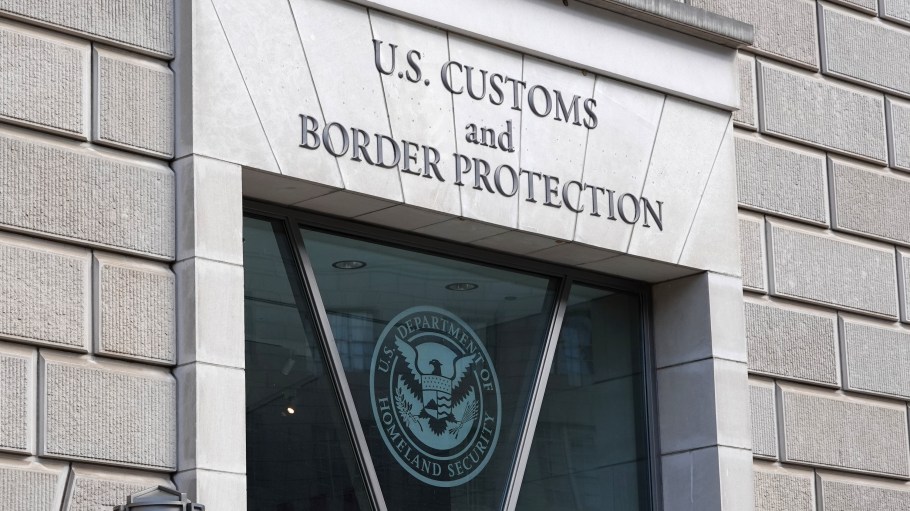
In the wake of the closure of the de minimis provision for packages from all countries, U.S. Customs and Border Protection (CBP) has identified 12 companies qualified to collect duties for low-value shipments entering the country.
CBP listed 12 customs brokers and clearance providers that are certified to collect and pay duties on international mail, including: Advance Customs Broker & Logistics; BoxC; Evolve Trade Services; Flexport; Importal Customs; International Bonded Couriers; James CB TX; JFS; North American Ecommerce Solutions; R&H International Brokerage; SafePackage; and Zonos.
Related Stories
SafePackage and Zonos had already been authorized as third-party providers list ahead of the Aug. 29 ban on de minimis.
The agency is still taking applications to be certified for duty collection.
The CBP-approved companies are taking on the role that many international mail carriers had struggled adapting to in the leadup to the de minimis ban. The executive order issued by President Donald Trump shifted the burden of collecting duties and taxes for former de minimis-eligible shipments from the importer to the global carriers.
Dozens of postal and parcel companies began to temporarily restrict shipments to the U.S. in the days before the ban took effect, with companies like DHL parent Deutsche Post and Correos de Mexico seeking answers to unresolved questions amid the changes.
Upon suspending U.S.-bound shipments valued at more than $100, Japan Post had noted that the procedures to comply with the new guidelines were unclear, making implementation difficult. PostEurop, the association that includes DHL and France’s La Poste, among other European postal companies, said some technical details had only been revealed to them Aug. 15, just two weeks before the deadline.
Some of the international postal carriers, like the U.K.’s Royal Mail, Canada Post and Ukraine’s Ukrposta, have since returned service to the U.S.
Royal Mail now provides postal delivery duties paid (PDDP) services powered by cross-border logistics provider Fulfillment Bridge, which enable merchants to calculate and collect duties from the customer at checkout.
To cover the customs clearance costs, Royal Mail tacks on a 50 pence (67 cents) per parcel handling charge.
Canada Post and Ukrposta both work with Zonos, a cross-border tax and customs compliance software Zonos, to collect duties before the shipment is accepted. These duties are remitted directly to the CBP. On Monday, Ukrposta said more than 4,000 parcels to the U.S. have passed customs clearance.
As for the CBP-certified agencies, they must tender payment to CBP for the duties no later than the seventh business day of the month following the month of entry into the U.S.
Under the de minimis provision, all parcels that included products worth less than $800 could enter the U.S. tax-free, posing an advantage for foreign sellers like Shein and Temu that scaled their business on shipping products directly to American consumers.
President Trump first axed the provision for goods exiting China in early May, following years of criticism by U.S. lawmakers that businesses were taking advantage of it as a “loophole.” On top of that, concerns in Washington were mounting over the trafficking of the deadly narcotic fentanyl within mail and small packages. The provision enabled 1.36 billion packages to enter the U.S. tax-free in 2024, accounting for $64.6 billion in total value, the CBP says.
With the ban now in place for all countries, international postal companies must now keep track of, collect and pay duties based on one of two methodologies.
These carriers could pay ad valorem duties equal to the tariff rates imposed under Trump’s International Emergency Economic Powers Act (IEEPA) tariffs, which depend on the effective rate of the country of origin.
Under the alternative, packages are subject to duties ranging from $80-$200 per item based on the country’s tariff rate. In this example, countries with an effective IEEPA tariff rate of less than 16 percent will cost $80 per parcel, while a rate between 16 percent and 25 percent would tack on $160.
If products from multiple countries of origin are contained within the package, only the highest IEEPA rate will be used to determine the specific duty rate.
After Feb. 28, 2026, all covered shipments to the U.S. must comply with the ad valorem model.
For all international postal shipments, the carrier must declare the duty collection method and country of origin of the parcel to CBP via a monthly worksheet.