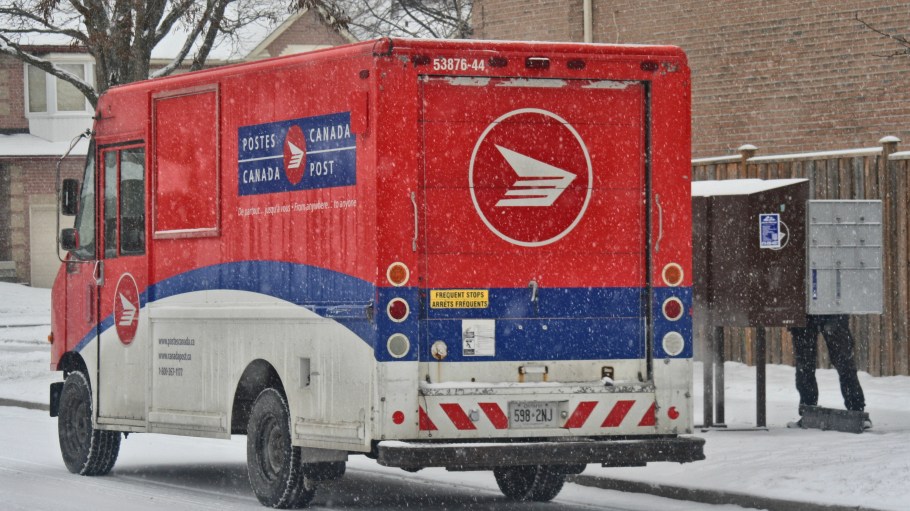
Canada Post and its largest labor union still don’t have a date set for 55,000 postal workers to vote on the national courier’s “final” contract offers, nearly a month after Canada’s federal jobs minister ordered the employee ballot.
The Canadian Union of Postal Workers (CUPW) has been steadfast that it wants union members to vote “no” on two separate contract proposals set aside for its unit of rural and suburban employees, as well as its urban worker segment.
The parcel delivery agency has a different opinion, saying the vote “gives employees the opportunity to have a voice, especially as we begin to implement needed changes for the postal system.”
Related Stories
The union postal workers have not worked overtime hours since May, when the deadline contract negotiation period between both parties passed.
Canada Post presented the latest offers on May 28 include a wage increase of more than 13 percent over four years, as well as a signing bonus of $1,000 ($730), alongside plans to institute weekend mail service. The CUPW is seeking a 19 percent pay bump for both unions.
The Canada Industrial Relations Board (CIRB) will determine when the union’s vote will take place, saying in a statement that it is “currently working diligently with all involved parties to proceed with this complex vote.”
Ahead of the vote, the board directed the union to encourage members to update their email addresses with Canada Post. Within two hours of the site launch on June 27, 10,000 employees had already updated, modified or confirmed the email address, according to the courier.
But union president Jan Simpson described the voter registration process as a “situation of confusion, chaos and delay,” noting that the experiences of the members may have created “severe credibility issues” for the vote process.
The union shared its concerns with the email sign-up process ahead of its Monday night deadline, calling it confusing that the process only provides members with a code used to verify each email address, but not a PIN to vote.
Monday was the deadline for the sign-up, but the CUPW asked for an extension given the issues.
“We are concerned that Canada Post is focused on speed rather than ensuring members get access to vote,” CUPW national grievance officer Carl Girouard said.
The back and forth endures as the Crown corporation has struggled to find its financial footing in recent years, in a scenario like what is going on at its American counterpart, the U.S. Postal Service (USPS).
Since 2018, the courier has racked up pre-tax losses of $3.8 billion Canadian dollars ($2.8 billion), including $841 million ($614.6 million) of that in 2024. When the agency went on strike for four weeks in November and December, Canada Post saw losses worth $208 million Canadian dollars ($152 million).
The losses have put the agency’s ability to operate in the long term into question. To kick off 2025, Canada Post got a $1 billion ($755.6 million) lifeline loan for the country’s federal government to help maintain its solvency.
Over the past year, the agency says it has lost more than 60 percent of its business since it began its overtime ban in May, with customers shifting volume to other logistics providers like UPS, FedEx, DHL or Canada’s own Purolator.
This intensifies the firm’s already decelerating share across the parcel delivery market across the country. Canada Post has seen its market share decline from 62 percent in 2019 to 27 percent in 2024, furthering the Crown corporation’s financial turmoil.
Michael Ashley Schulman, chief investment officer at wealth management company Running Point Capital, told Reuters that the lingering contract negotiations could cause Canada Post’s share to drop into the teens by December 2026.
Last month, the courier’s other ongoing labor dispute was resolved when Canada Post’s second-largest postal workers union, the Canadian Postmasters and Assistants Association (CPAA), agreed to new terms.
The CPAA represents more than 8,500 employees who are primarily responsible for managing post offices in rural Canada.
The agreement includes an 11 percent wage increase over three years, retroactive to Jan. 1, 2024. The deal will last until Dec. 31, 2026 and includes a 6 percent hike in year one.
Both parties had been negotiating for 18 months and went to arbitration to reach the deal.