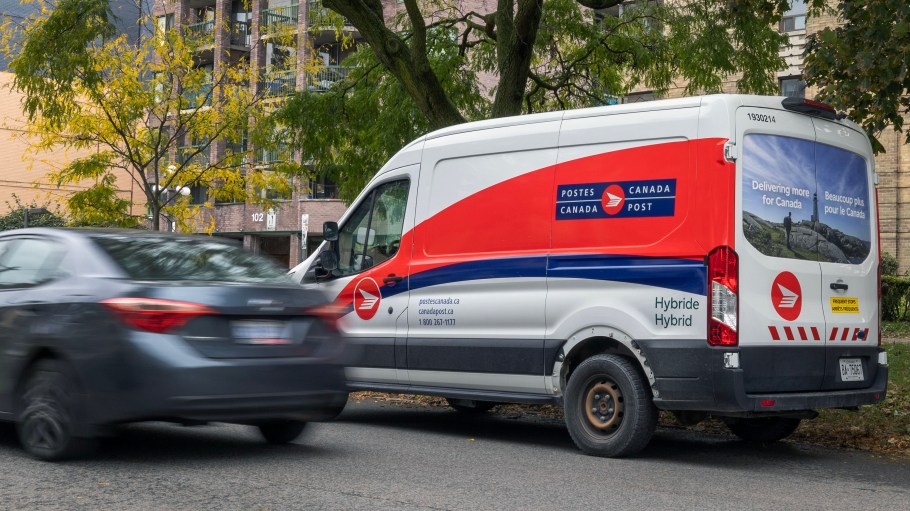
Canada‘s postal worker’s union agreed to suspend all strike activity Friday after agreeing “in principle” to a new collective bargaining agreement with Canada Post.
A tentative deal still has to be ironed out, both parties said. But the current agreements bring the courier and its 55,000 union employees closer to ending more than two years of negotiations. Those talks resulted in multiple work stoppages, with the postal workers having engaged in rotating strikes since October.
Related Stories
As the parties work to finalize the tentative agreements, Canada Post said it will not comment on the details of any potential deal.
The agreements cover both postal bargaining units—its urban workers and rural and suburban mail carriers—at the Canadian Union of Postal Workers (CUPW), according to the labor group.
“Both sides have agreed on the main points of the deals, but we need to agree on the contractual language that will form the collective agreements that would be put to a vote by the members,” said CUPW national president Jan Simpson in a statement.
CUPW added it will retain the right to strike until the new agreements are ratified.
The contract negotiations have lingered amid the backdrop of a Canada Post in financial disarray. Canada’s federal government has pushed the national courier to make substantial changes to its business model to prevent it from going bankrupt.
Since 2018, Canada’s postal service has incurred cumulative operating losses exceeding $5.5 billion Canadian dollars ($3.9 billion).
Of the changes, the government called on Canada Post to end door-to-door delivery for 4 million addresses, instead converting those addresses to community mailboxes. That move is estimated to save nearly $400 million ($283.5 million) annually.
Other proposed measures are designed to allow the Crown corporation to offer more flexible services that reflect lower volumes and reduced market share. Letters mailed dipped from 5.5 billion in 2006 to 2 billion in 2024. And while Canada Post delivered 62 percent of parcels nationwide in 2019, that number has since dropped to below 24 percent.
Building on recommendations made in a May report by a government-appointed commission, Ottawa is pushing for the postal service to more heavily rely on ground transportation to reduce mail traveled by air, as well as close some rural post offices.
On Friday, Canada Post said in its third quarter earnings report that it was beginning the modernization, and would also review the process for increasing stamp prices.
Losses have piled up throughout the year as the labor tensions lingered.
In the first nine months of 2025, Canada Post has recorded operating losses of $1.04 billion ($740 million).
And for the third quarter, the firm recorded a pre-tax loss of $541 million ($383.4 million), marking the largest quarterly loss in its history.
Canada Post said the strike activity and uncertainty has continued to drive customers to competitors, leading to parcels revenue declining 39.8 percent to $297 million ($210.5 million). Volumes declined 42.5 percent.
In the third quarter, the courier received the first tranche of cash injections promised by the federal government to kick off 2025. Canada Post received $755 million ($535.3 million) in total payments in the quarter, which is the majority of the $1.03 billion ($730 million) in funding it will receive by Dec. 31.
Those bailout finds are being used to cover operating expenses that cannot be sufficiently supported by the company’s projected revenues, Canada Post says.
However, this funding will not be enough to keep the service on its two feet, the delivery firm says. According to the courier, it will need to access to more short-term financing facilities to maintain solvency and support operations over the following 12 months.
The CUPW’s labor action has took various forms since last year, when the union went on strike for four weeks in the 2024 holiday season.
In May, when it seemed the contract negotiations were going nowhere, Canada Post’s union workers began an overtime ban. Four months later, that national ban was scrapped, with the union instead putting a stop to the delivery of unaddressed direct mail.
With the talks still not resulting in a new deal, CUPW launched its nationwide strike in late September. That strike lasted more than three weeks, before the work stoppage was rolled back to the rotating strike.