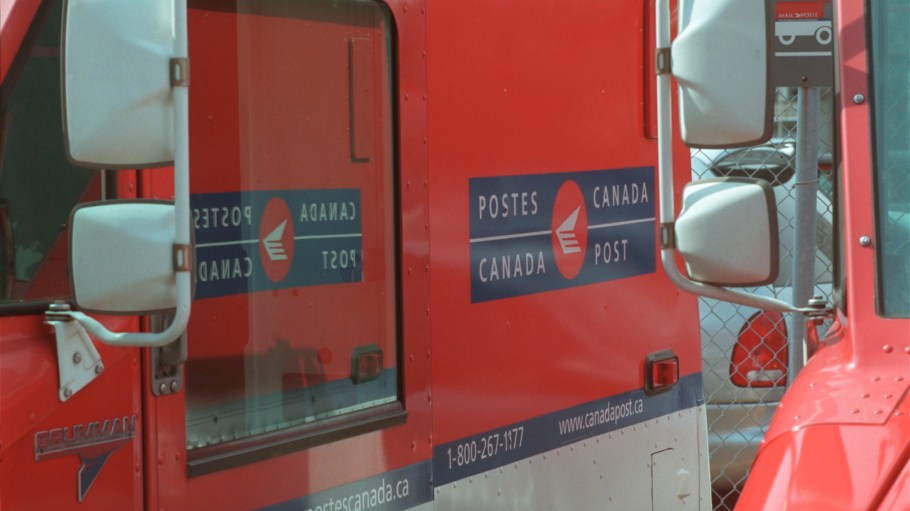
Canada’s 55,000 postal workers will end a month-long strike Tuesday, four days after the federal government asked the country’s labor relations board to issue a back-to-work order.
After two days of hearings over the weekend, the Canada Industrial Relations Board (CIRB) ordered the Canadian Union of Postal Workers (CUPW) to return to work in a determination that the union and the Canada Post were unlikely to reach a new contract by the end of the 2024.
Operations remain closed Monday.
Related Stories
The decision gets the postal service back up and running just a week before Christmas Eve, with the movement of parcels and packages having been halted for a full month throughout the country.
The backlog of deliveries got so overwhelming that third-party delivery firms like Canada Post-owned Purolator and UPS both had to temporarily suspend shipments from other courier companies.
“Given the timing and duration of the strike, when our operations resume we will need to begin processing the mail and parcels trapped in our network,” Canada Post said in a Monday morning statement. “It will take time to clear our network, so customers should expect delays in processing and delivery.”
According to the nationwide courier, some limitations will apply for the first 48 hours after operations resume, both for pickups and drop-offs.
Because of this, Canada Post will not receive or pick up new product until Thursday, Dec. 19, just five days before Christmas Eve.
“Canadians are rightfully fed up,” Canadian Labour Minister Steven MacKinnon said at a Friday news conference. “Canadians from coast to coast, small businesses, as well as those living in remote regions and in Indigenous communities, have suffered greatly.”
Unfortunately, the numbers provided by a major trade association in Canada appear to suggest that. As of Friday, the strike has cost small businesses $1.6 billion Canadian dollars ($1.1 billion), the Canadian Federation of Independent Business (CFIB) said in a news release.
“This will be too late to salvage any of the Christmas holiday season for small businesses. With a massive backlog, it will be nearly impossible for any new shipments to make it to Canadians before Christmas through Canada Post,” said Dan Kelly, president of the CFIB, in a statement.
It’s not all bad, according to Kelly, who said “the temporary order will help businesses that are desperately waiting for check-based payments from other business customers. Millions of dollars have been frozen in the mail making it difficult for small firms to pay their bills.”
As part of the back-to-work order, the terms of the existing collective agreements between Canada Post and CUPW will be extended until May 22, 2025. The previous contracts expired on Dec. 31, 2023 for the union’s rural and suburban mail carriers unit and on Jan. 31, 2024 for the urban unit.
Canada Post said the CUPW has already agreed to a wage increase of 5 percent for employees retroactive to the day after each collective agreement expired.
The increase will remain in effect going forward, and the retroactive portion will be paid out to current employees in two portions.
An upfront payment before Christmas of $1,000 Canadian dollars ($703) for all full- and part-time regular union employees and $500 Canadian dollars ($351.50) for temporary employees based on a minimum number of hours.
The wage increase and retroactive payment will be made no later than Jan. 31, 2025, Canada post says.
The union sought a first-year wage increase of 9 percent, and sought hikes in three following years of 4 percent, 3 percent and 3 percent.
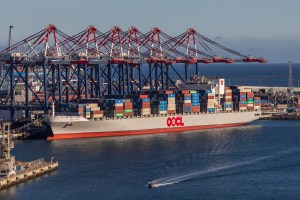
The breakup of the strike marks the third time that the Canadian government has asked the CIRB intervene in a labor dispute since August. That month, the board issued back-to-work orders at both of the country’s Class I railroads after a day-long lockout. Three months later in November, twin labor lockouts at ports in British Columbia and Quebec were squashed by the board.
Both of those labor disputes were sent to arbitration, but neither have settled on new contract terms.
According to MacKinnon, an industrial inquiry commission will be established to examine the issues that plagued the negotiations. On May 15, the commission will issue a report to MacKinnon designed to deliver recommendations on how the parties can better come to a resolution.
“The inquiry will have a broad scope as it will examine the entire structure of Canada Post from both a customer and business model standpoint, considering the challenging business environment now facing Canada Post,” the Labour Minister said.
Canada Post could experience some long-term struggles in the wake of the labor dispute, with the company incurring $748 million Canadian dollars ($525 million) in losses already in 2023. Like its American counterpart, the United States Postal Service (USPS), Canada Post has had structural challenges as its share of the parcel market dwindles compared to competitors like Amazon, UPS and FedEx.