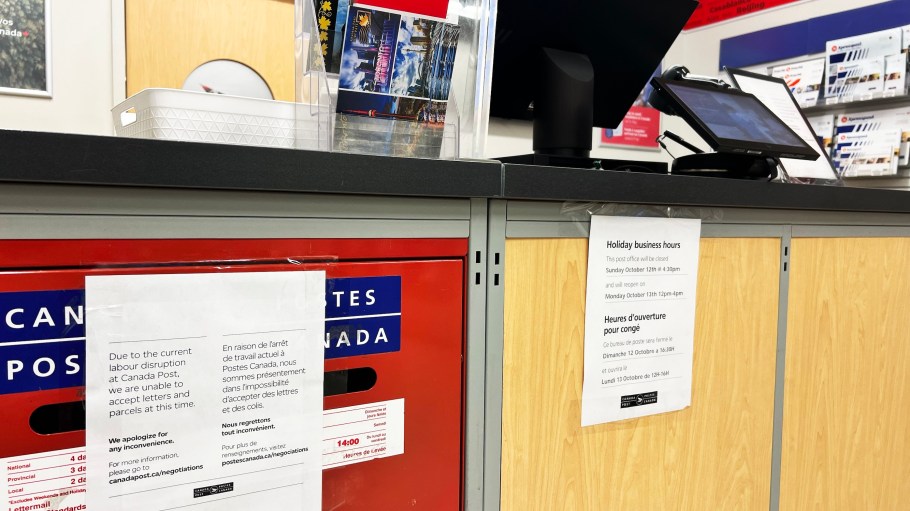
Canada Post resumed mail delivery Saturday after the courier’s postal workers scaled back their nationwide strike.
The Canadian Union of Postal Workers (CUPW), consisting of 55,000 Canada Post employees that had been off the job since Sept. 25, opted to switch to rotating strikes.
According to Canada Post, the previous disruptions will force the carrier to take time to clear the mail and parcels that had been sitting idle within its network. Customers should expect delays in processing and delivery.
Related Stories
The shift comes as the union and the employer are still trying to iron out a new labor contract, all while Canada’s federal government is pushing Canada Post to make major structural changes to improve its financial standing.
Rotating strike activity may be isolated to specific locations, affecting those areas for a specified period, the Crown corporation said, without revealing any details.
“During a rotating strike, Canada Post will accept, process and deliver mail and parcels in unaffected areas, but you can still expect delays,” Canada Post said in a statement. “Once an item is inducted in our network, it will be secure but cannot be retrieved if that facility is affected by a rotating strike. Items will be delivered as quickly as possible after a disruption is over and operations resume.”
New commercial volumes will not be accepted into the network until Wednesday, so Canada Post will not pick up or accept mail or parcels at plants or depots until this date.
On-time delivery guarantees for parcel services remain suspended and date-specific Neighbourhood Mail will not be available. The CUPW had not been delivering items within the direct Neighbourhood Mail offering since mid-September. That decision was itself a pivot from the union’s previous labor action it started in May, when workers stopped working overtime hours for nearly four months.
The shift to a rotating strike came after a Thursday meeting with transformation and public services minister Joël Lightbound, with union brass raising concerns about the government’s planned cutbacks and their impacts on the frequency of delivery and delivery standards. Despite the pushback, the union said Lightbound told them that any proposed service cuts would stand.
The government is implementing measures to minimize losses at Canada Post, to the chagrin of the CUPW. The largest change would be the eventual ending of door-to-door mail delivery to all Canadian households. The instruction from the government prompted the national strike.
Other government measures would include an end to a ban on community mailbox conversions, so that the parcel shipping firm could “convert” the remaining 4 million addresses that still receive door-to-door delivery and save an estimated $400 million per year.
The government also said it would end a moratorium on closing rural post offices that has been in place since 1994, covering close to 4,000 locations. It said closing some offices in regions that are no longer rural will reduce duplication in overserved areas, and create more flexibility to raise prices.
The courier plans to shift non-urgent letter mail to be moved by ground instead of air and reduce the number of delivery days in a week.
In a post on X on Friday, Lightbound said he was “encouraged” by the shift to rotating strikes.
CUPW plans to have a follow-up meeting with Lightbound’s office this week, according to union president Jan Simpson.
Canada Post has urged CUPW to return to the bargaining table to reach new collective agreements. The firm is waiting to hear back directly from the union on its latest offers presented on Oct. 3, which the labor group publicly said was worse than previous offers due to the inevitable reduction in headcount.
In line with government recommendations, Canada Post cut its previously offered signing bonuses, as well as a “job security for life” provision for urban employees. That provision requires the company to continue to provide full pay to an employee until they decide to leave, even if there is no work for them.
Canada Post has already said that it would offer voluntary buyouts to staff with up to 78 weeks of pay. Layoffs would only begin if attrition and departure incentives were insufficient to reduce the size of the workforce.
Citing that the proposals were “affordable,” the courier said “the need to align the business to the current needs of the country to reduce the dependency on taxpayer dollars grows more urgent each day this strike continues.”
According to a report from the Canadian Federation of Independent Business (CFIB) released Thursday, 87 percent of small businesses support reforming Canada Post in some fashion.
Half of businesses support reduced residential mail delivery (52 percent) and replacing door-to-door delivery with community mailboxes (51 percent), the survey said. Another 42 percent support limiting or freezing employee compensation packages over the next few years.