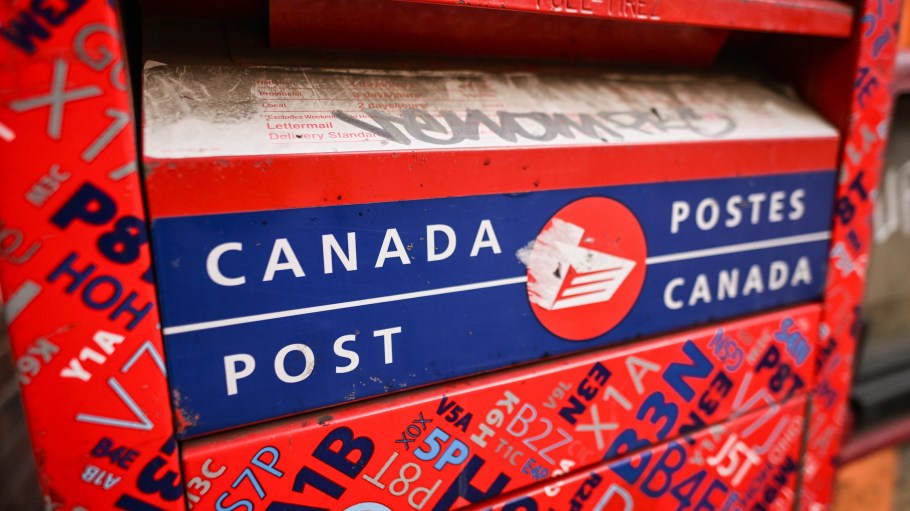
Canada’s postal workers could be gearing up for another work stoppage later this month as two existing labor agreements are set to expire May 22.
On Wednesday, Canada Post and the Canadian Union of Postal Workers (CUPW) agreed to resume negotiations on two separate contracts for urban postal workers and rural and suburban mall carriers.
The union went on a month-long strike starting in mid-November before the country’s labor relations board issued a back-to-work order that extended the prior collective bargaining agreements to late May. But new contracts between both parties have still never been ironed out. A first attempt at negotiations kicked off in March, but the talks broke down after two days.
Related Stories
As the talks reignite, Canadian businesses have started to prepare for the potential second labor action that could take place, according to Alison Layfield, director of product development at international parcel and mail shipping solutions provider ePost Global.
“Businesses already made up their minds that with this potential threat coming May 22, they have already started shifting volumes, some as early as today, May 1,” Layfield told Sourcing Journal. “Others are looking at dates next week. And the reason for that is, they don’t want to get caught again in that bottleneck of their shipments not moving.”
The latest mediator-supervised contract talks took place over a two-day stretch through Thursday, according to both negotiating parties.
According to Layfield, many retailers were dependent on Canada Post before the winter strike, which ultimately led to some parcel and mail delays around Christmas.
“They didn’t have alternative options, especially the smaller retailers specifically here in Canada,” said Layfield.
She noted that this time is different, highlighting that one shipper partner that was exclusively reliant on the national courier in November has already reached out to another carrier if another work stoppage takes place.
“This time around, companies know the threat is real, and they’re taking it much more seriously,” Layfield said. “As a business, you are impacted in so many areas like your customer service and your operations. ‘What do we do with these parcels if we can’t move them via Canada Post? Where do we store them?’ There’s just so many components of the business that have to be looked at. But again, I think everyone is ready this time around.”
There are still four possible scenarios if a new agreement between Canada Post and the CUPW is not reached.
Canada Post can lock the union out, like what the Canadian ports and railroads did during their respective labor negotiations last year. The postal service could also impose major changes to working conditions or start issuing layoff notices to union members.
For the union, they could strike again if they aren’t locked out.
According to Layfield, the likelihood of a lockout is higher than a strike at this point due to the costs Canada Post would likely bear if the workers walked off the job.
“They can’t afford to pay union wages if their volumes deteriorate like we anticipate they will, because everybody is looking at contingencies,” Layfield said. “Some have already actioned them, and others in our industry are all looking at what we can do to ensure that our customers find alternatives. We don’t have all our eggs in one basket with Canada Post.”
Finally, the government could intervene for a second time, similar to how they ended the work stoppages at the ports and on the rail.
Canada Post, like its American counterpart, the U.S. Postal Service, is under significant financial distress. In January, the federal government had to lend $1 billion Canadian dollars ($720 million) to the courier to ensure it “can maintain its solvency” through the 2025-26 fiscal year.
That month, the struggling Crown corporation terminated three senior executives including chief financial officer Jan Faryaszewski. One month later, nearly 50 non-union managers were laid off.
Layfield stressed that Canada Post will have to modify its business model as more final mile carriers take up market share and the courier keeps burning through cash.
“They cannot compete in the market as it is today. The days of a letter carrier walking down the street putting mail in your mailbox—we all know those are, those are really over,” Layfield said. “A lot of the neighborhoods have the ‘super’ mailboxes, so you don’t have a letter carrier. You have someone driving up in a Canada Post vehicle, opening those boxes, putting in your parcels and mail. A letter carrier is not going to be lugging around parcels to deliver by hand to these neighborhoods.”
For retailers that haven’t prepared for the possible upcoming work stoppage, ePost is educating customers on nuances including rerouting rural and P.O. box shipments, which only Canada Post can reach.
“We’ve been recommending to our customers that they make sure that they alert the consumer to use their street address,” Layfield said. “Putting a little message out on checkout is a good way of sending that message.”